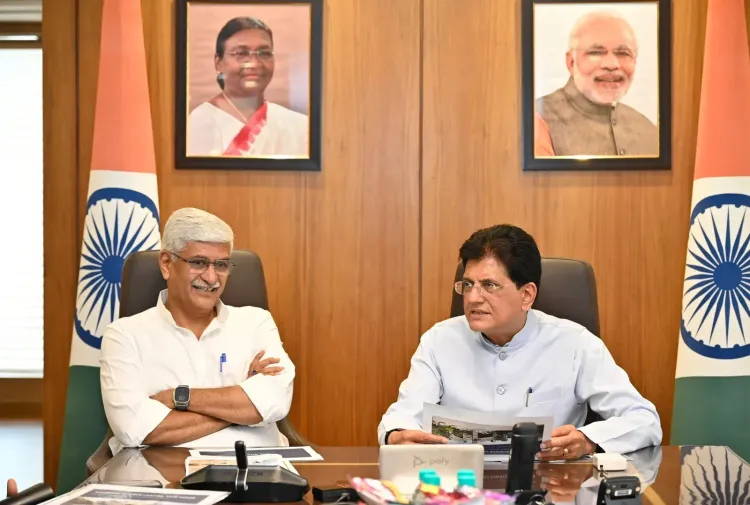
Piyush Goyal, Shekhawat Review Tourism & Heritage Projects
Synopsis
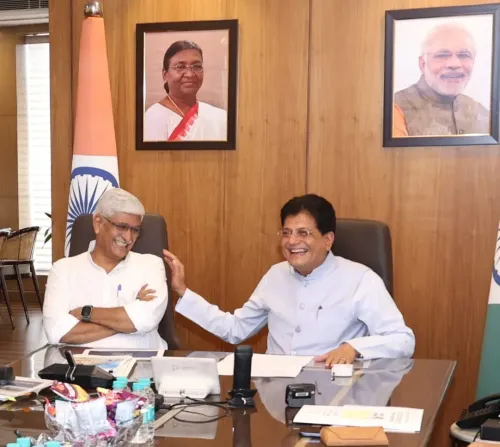
Union Commerce Minister Piyush Goyal and Culture and Tourism Minister Gajendra Singh Shekhawat held a review meeting on 10 July 2026 to assess progress on tourism infrastructure, visitor experience, and heritage preservation, reinforcing the government's push for sustainable, world-class destination development.
Key Takeaways
Union Commerce Minister Piyush Goyal and Culture and Tourism Minister Gajendra Singh Shekhawat met on 10 July 2026 for an inter-ministerial review of tourism and cultural infrastructure projects.
The meeting focused on strengthening tourism infrastructure, enhancing visitor experience, and preserving India's cultural and heritage assets.
Developing world-class destinations and promoting sustainable tourism were explicitly cited as priorities in the review.
The Swadesh Darshan scheme (launched 2015 ) and the PRASAD scheme (initiated 2014-15 ) form the core policy framework underpinning these efforts.
Inter-ministerial coordination between Commerce and Culture portfolios is a recurring mechanism to align investment, promotion, and conservation objectives.
Parliamentary budget sessions are the likely next venue for concrete funding and project-timeline announcements.
Union Commerce and Industry Minister Piyush Goyal on Friday, 10 July 2026, held a review meeting with Union Minister for Culture and Tourism Gajendra Singh Shekhawat to assess the progress of key tourism and cultural infrastructure projects across India.
Context
The inter-ministerial meeting brought together the Commerce and Culture portfolios to take stock of ongoing initiatives aimed at strengthening tourism infrastructure, improving visitor experience, and preserving India's cultural and heritage assets. Goyal noted the shared focus on 'developing world-class destinations and promoting sustainable tourism.'
Shekhawat, a BJP leader from Jodhpur, holds charge of both the Culture and Tourism ministries, making him the nodal figure for coordinating policy across heritage conservation and destination development.
Policy Backdrop
The review sits within a well-established policy architecture. The Swadesh Darshan scheme, launched in 2015, has been the central government's flagship programme for developing theme-based tourist circuits across the country. Alongside it, the PRASAD scheme, initiated in 2014-15, targets the integrated development and beautification of pilgrimage and heritage destinations.
Together, these programmes reflect a dual-track approach: boosting economic activity through tourism while simultaneously safeguarding the cultural fabric that draws visitors. The Commerce Ministry's involvement underscores the government's framing of tourism as a driver of economic diversification, not merely a cultural endeavour.
Stakeholders and Impact
The tourism industry and heritage conservation groups are the primary stakeholders watching such high-level reviews. For the industry, ministerial coordination signals potential acceleration of infrastructure investment — from connectivity upgrades to hospitality facilities at heritage sites.
For conservation groups, the emphasis on 'preserving India's rich cultural and heritage assets' alongside commercial development raises questions about the balance between access and protection. Sustainable tourism models, which the meeting explicitly flagged, are increasingly seen as the mechanism to manage that tension.
Inter-ministerial engagement between the Commerce and Culture portfolios has become a recurring mechanism to align investment priorities, promotional strategies, and conservation objectives — reflecting a whole-of-government approach to tourism policy.
What's Next
Concrete project timelines and funding announcements are expected to emerge through parliamentary channels, with the next budget session likely to provide the clearest signal on resource allocation for tourism infrastructure. Stakeholders will watch for any formal announcements on new tourist circuits, heritage site upgrades, or sustainability guidelines flowing from this review.
The meeting signals that inter-ministerial coordination on tourism will remain active, with the Commerce Ministry's weight potentially helping accelerate approvals and investment pipelines for projects that straddle cultural preservation and economic development goals.
Point of View
The government is reinforcing its broader narrative of tourism as an engine of economic diversification. This pattern of inter-ministerial review also serves a coordination function — ensuring that investment pipelines, promotion strategies, and conservation mandates do not work at cross-purposes. The explicit mention of 'sustainable tourism' suggests the government is aware of the reputational and ecological risks of rapid infrastructure expansion at heritage sites, even if the operational details remain to be seen.
NationPress
9 Oct 2026
Frequently Asked Questions
Why did Piyush Goyal meet Gajendra Singh Shekhawat on tourism?
Piyush Goyal, as Union Commerce and Industry Minister, met Culture and Tourism Minister Gajendra Singh Shekhawat on 10 July 2026 to review the progress of key tourism and cultural infrastructure projects, aligning commerce and tourism priorities under a coordinated government approach.
What is the Swadesh Darshan scheme?
The Swadesh Darshan scheme was launched in 2015 by the central government to develop theme-based tourist circuits across India, with the aim of boosting domestic and international tourism while preserving cultural heritage.
What is the PRASAD scheme in India?
The PRASAD scheme, initiated in 2014-15, stands for Pilgrimage Rejuvenation and Spiritual, Heritage Augmentation Drive. It focuses on the integrated development and beautification of pilgrimage and heritage destinations across India.
Who is Gajendra Singh Shekhawat?
Gajendra Singh Shekhawat is a BJP leader from Jodhpur serving as Union Minister for Culture and Tourism, making him the nodal minister for heritage conservation and tourism development at the central government level.
What does sustainable tourism mean in India's policy context?
In India's policy context, sustainable tourism refers to developing visitor infrastructure and promoting destinations in a way that balances economic growth with the long-term preservation of cultural, heritage, and ecological assets, a principle explicitly referenced in the July 2026 inter-ministerial review.