Shekhawat highlights tourism sites developing across India
Synopsis
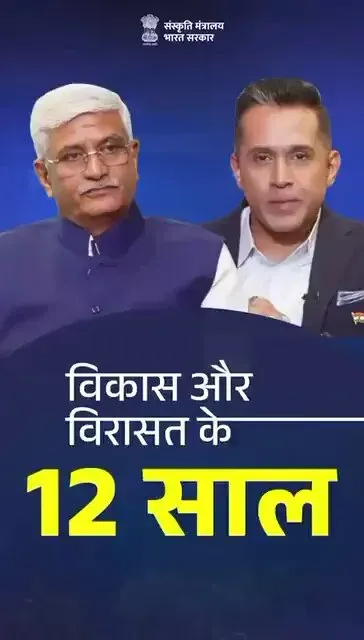
Union Culture and Tourism Minister Gajendra Singh Shekhawat on 9 June 2026 highlighted the development of tourist sites across India, signalling the government's continued push to expand tourism infrastructure under schemes such as Swadesh Darshan 2.0 and PRASAD, with a focus on economic growth and cultural preservation.
Key Takeaways
Union Minister Gajendra Singh Shekhawat posted on 9 June 2026 highlighting tourist sites being developed across India.
The post was accompanied by a video showcasing sites in various stages of development.
Central schemes Swadesh Darshan (launched 2014–15 ) and PRASAD form the policy backbone for this infrastructure push.
The National Tourism Policy 2022 positions tourism as a key contributor to GDP and employment.
State tourism departments are primary implementation partners, coordinating with the Central government on site-level projects.
Progress under Swadesh Darshan 2.0 and upcoming budget allocations will be key indicators of the programme's next phase.
Union Culture and Tourism Minister Gajendra Singh Shekhawat on Tuesday, 9 June 2026, drew attention to the ongoing development of tourist destinations across the country, sharing a video that underscores the Central government's push to build and upgrade tourism infrastructure at multiple locations simultaneously.
Context
The minister's post, 'Deshbhar mein viksit ho rahe paryatan sthal' ('Tourist sites being developed across the country'), is brief but pointed. It signals the Ministry of Tourism's continued emphasis on expanding India's tourism footprint beyond the established, high-traffic heritage corridors. The accompanying video is understood to showcase sites in various stages of development under centrally funded programmes.
Shekhawat, who holds both the Culture and Tourism portfolios, has consistently framed tourism development as a dual economic and cultural mission — generating livelihoods while preserving India's heritage landscape.
Policy Backdrop
The development push draws from a layered policy architecture. The Swadesh Darshan scheme, launched in 2014–15, funds theme-based tourist circuits with integrated infrastructure, and its successor iteration — Swadesh Darshan 2.0 — has shifted focus toward sustainable and responsible tourism development. In parallel, the PRASAD scheme (Pilgrimage Rejuvenation and Spiritual Augmentation Drive) targets holistic upgrades at identified pilgrimage destinations.
The National Tourism Policy 2022 formally positioned tourism as a significant contributor to GDP and employment generation, providing a strategic framework under which both ministries — Culture and Tourism — coordinate site-level interventions with state governments. This cross-ministry approach is particularly relevant given that many of India's culturally significant sites fall under the protection of the Culture Ministry even as they serve as major tourism draws.
Stakeholders and Impact
The beneficiaries of this development wave span a wide spectrum: the organised tourism industry — hotels, tour operators, and transport providers — stands to gain from higher visitor volumes at newly developed circuits. State tourism departments are key implementation partners, channelling central funds into local infrastructure such as approach roads, visitor facilities, and signage.
Communities living around heritage sites and pilgrimage towns are among the most directly affected stakeholders. When tourism infrastructure improves, local service economies — guides, artisans, food vendors — typically see a measurable uptick in activity. The government's stated intent is also to reduce pressure on over-visited landmarks by making lesser-known sites accessible and attractive.
The approach aligns with a broader economic strategy that treats the services sector, including tourism, as a growth driver running alongside manufacturing-led initiatives. Tourism's ability to generate employment with relatively modest capital investment makes it a politically attractive portfolio for any central government.
What's Next
Attention will now turn to state-level implementation progress reports under Swadesh Darshan 2.0, as well as any fresh budget allocations or new circuit announcements in the forthcoming Union Budget session. The minister's social media activity suggests an intent to keep tourism development visible in the public discourse ahead of what is typically a high-footfall travel season. Whether specific project completions or inauguration events follow this post will be closely watched by the tourism industry and state governments alike.
Point of View
Though spare in text, is a deliberate piece of political communication — reinforcing the BJP-led government's claim that tourism development is both broad-based and ongoing, not confined to marquee projects. By holding both the Culture and Tourism portfolios, Shekhawat is positioned to project a unified narrative that links economic development with cultural stewardship, a combination that resonates strongly with the party's core voter base. The timing, ahead of a potential budget cycle, suggests the ministry may be building a public case for continued or enhanced allocations. More broadly, the post fits a pattern of governance-by-visibility that has characterised the current administration's communication strategy across infrastructure sectors.
NationPress
16 Sept 2026
Frequently Asked Questions
What did Tourism Minister Shekhawat post about on 9 June 2026?
Shekhawat shared a video post on 9 June 2026 highlighting tourist sites being developed across India, with the caption translating to 'Tourist sites being developed across the country.'
What is the Swadesh Darshan scheme?
Swadesh Darshan is a Central sector scheme launched in 2014–15 to develop theme-based tourist circuits with integrated infrastructure funding. Its updated version, Swadesh Darshan 2.0, focuses on sustainable and responsible tourism.
What is the PRASAD scheme in tourism?
PRASAD stands for Pilgrimage Rejuvenation and Spiritual Augmentation Drive. It is a Central government scheme aimed at the holistic development and beautification of identified pilgrimage destinations across India.
Who is Gajendra Singh Shekhawat?
Gajendra Singh Shekhawat is a senior BJP leader and Lok Sabha MP from Jodhpur, Rajasthan. He currently serves as Union Minister holding both the Culture and Tourism portfolios in the Central government.
What is India's National Tourism Policy 2022?
The National Tourism Policy 2022 is a framework adopted by the Central government that formally positions tourism as a major contributor to India's GDP and employment generation, guiding investment and development priorities across the sector.