Kerala Grand Mufti's 'women stay home' remark draws sharp rebuke from Muslim Rashtriya Manch
Synopsis
Kerala's Grand Mufti compared women to gold necklaces requiring safe storage to justify keeping them out of public life — and the Muslim Rashtriya Manch fired back with a pointed reminder that India's women are fighter pilots, surgeons, and judges. The exchange has reignited a long-running tension between religious authority and constitutional guarantees of gender equality.
Key Takeaways
Kerala Grand Mufti Sheikh Abubakr Ahmad argued in a public speech that women should remain at home and avoid public life, citing the Quran and defending purdah .
He used a gold necklace analogy — comparing women to jewellery kept safely stored — which became the focal point of the backlash.
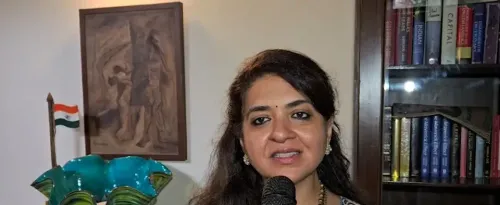
Muslim Rashtriya Manch (MRM) leader Dr Shalini Ali called the remarks “highly objectionable and reflective of a regressive mindset.” Dr Ali argued that Indian women serve as fighter pilots, scientists, doctors, engineers, and judges, and that restricting them limits half the country’s potential.
MRM maintained that whether a woman focuses on family or public life, the choice must belong to the woman herself.
The Grand Mufti clarified his remarks were intended to ensure women’s protection and respect, not to demean them.
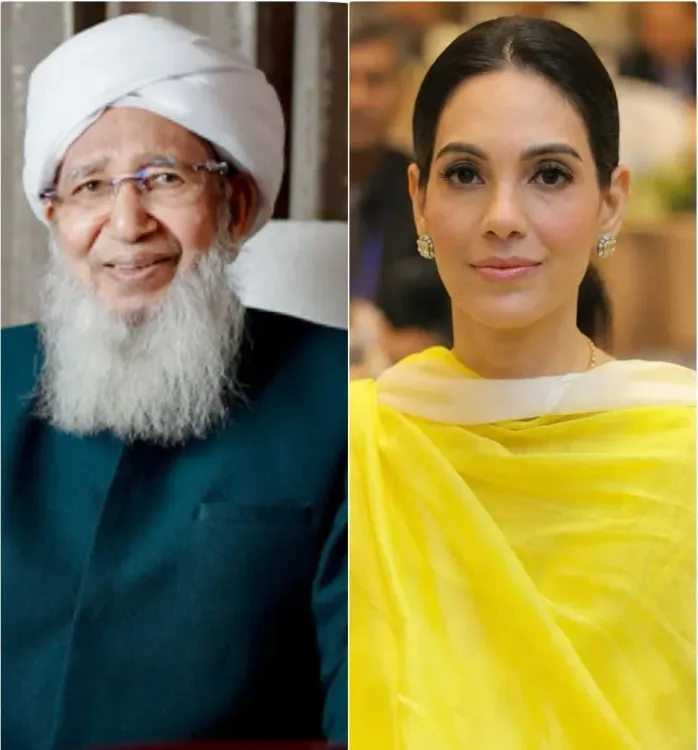
Kerala Grand Mufti Sheikh Abubakr Ahmad's assertion that women should remain confined to their homes and withdraw from public life has ignited a fierce national debate, with Muslim Rashtriya Manch (MRM) leader Dr Shalini Ali mounting a pointed rebuttal on 31 August, declaring that “India’s daughters need an open sky, not confinement.” The remarks, made during a public speech by the Grand Mufti, have drawn criticism from multiple quarters for their framing and the analogy used to defend them.
What the Grand Mufti Said
In his speech, Sheikh Abubakr Ahmad argued that the Quran advocates that women remain within their homes and avoid public life. He also defended the practice of purdah, describing it as a system designed to safeguard women’s dignity and security. To illustrate his position, he drew a comparison between a gold necklace and a stone-grinding machine: a gold necklace, he argued, is kept securely inside a cupboard and protective packaging, while a grinding machine is left by the roadside. He suggested that exposing women to public life could lead to “great destruction,” and framed purdah as a preventive measure against such outcomes.
Seeking to walk back the backlash, the Grand Mufti clarified that his intention was not to demean women but to ensure their protection and respect. He further cited Islamic history, noting that Islam had ended female infanticide and granted women rights over property and inheritance, arguing that restrictions on public participation should be understood as protective rather than discriminatory. He also asserted that religious scholars have a responsibility to speak on matters of faith and indicated he would continue to do so.
MRM's Rebuttal: 'A Woman Is Not Anyone's Property'
Dr Shalini Ali of the Muslim Rashtriya Manch called the remarks “highly objectionable and reflective of a regressive mindset,” arguing that women cannot be treated as possessions whose freedom must be curtailed in the name of dignity or security. She directly challenged the gold necklace analogy. “A woman is neither a gold necklace nor a decorative object that can be locked away in a box. She is a free human being with dreams, talent, hard work and the right to make her own decisions,” she said.
Dr Ali contended that confining women within the home, rather than educating and empowering them, pushes society backwards. She argued that real respect for women lies in recognising their capabilities and granting them the freedom to determine their own paths. “A woman is not anyone’s property. She is the owner of her own life. Her education, career, public participation and right to make decisions cannot be curtailed in the name of protection,” she added.
Women in Every Sector: The Counter-Argument
Dr Ali pointed to the extensive presence of women across India’s most demanding professions as evidence that the country has moved well beyond the notion that a woman’s role is limited to home and family. Indian women today serve as fighter pilots, scientists, doctors, engineers, judges, journalists, entrepreneurs, and sportspersons, she noted, contributing across all three branches of the armed forces and representing India on global platforms.
“They are defending the nation’s borders, conducting scientific research, treating patients, shaping public discourse and representing India globally. Restricting women to the home is not merely limiting their aspirations; it is restricting the potential of half the country’s population,” she said. She further argued that a woman capable of defending national borders is fully capable of deciding her own future, and called on society to trust and respect women’s abilities rather than circumscribe them.
MRM's Position: Choice Must Belong to the Woman
The Muslim Rashtriya Manch drew a clear distinction between personal choice and imposed restriction. The organisation stated that if a woman chooses to focus on her home and family, that decision deserves respect — but so does the choice to join the armed forces, pursue medicine, practice journalism, run a business, or participate in public life. “The decision must belong to the woman herself. No one else has the authority to decide the course of her life on her behalf,” the organisation said.
Critics of the Grand Mufti’s remarks also questioned the fundamental premise of the analogy, arguing that while a piece of jewellery can be owned and stored, women are autonomous individuals with constitutional rights and independent identities. The controversy is likely to fuel broader conversations around religious authority, gender rights, and the boundaries of public speech in India.
Point of View
The MRM, rather than from outside it. That internal dissent is the real story. The gold necklace analogy, however well-intentioned its author claims it to be, is precisely the kind of framing that conflates protection with ownership — a conflation that Indian constitutional law firmly rejects. The debate also exposes a gap that mainstream coverage rarely examines: the difference between a religious leader’s right to articulate doctrinal positions and the social consequences when those positions are amplified as prescriptions for half the population.
NationPress
31 Aug 2026
Frequently Asked Questions
What did Kerala Grand Mufti Sheikh Abubakr Ahmad say about women?
The Grand Mufti argued in a public speech that women should remain within their homes and avoid public life, claiming the Quran supports this position. He also defended purdah as a system to safeguard women’s dignity and used a gold necklace analogy to illustrate his view, which drew widespread criticism.
What was the gold necklace analogy and why did it cause controversy?
The Grand Mufti compared women to a gold necklace that is kept securely inside a cupboard and protective packaging, contrasting it with a stone-grinding machine left by the roadside. Critics argued the analogy reduces women to inanimate objects that can be owned and stored, ignoring their constitutional rights and autonomous identities.
How did Muslim Rashtriya Manch respond to the Grand Mufti's remarks?
MRM leader Dr Shalini Ali called the remarks highly objectionable and reflective of a regressive mindset. She argued that women are free human beings with rights, dreams, and capabilities, and that confining them in the name of protection undermines their aspirations and constitutional rights.
Who is Dr Shalini Ali and what organisation does she represent?
Dr Shalini Ali is a leader of the Muslim Rashtriya Manch (MRM), an organisation that rejected the Grand Mufti’s interpretation and asserted that whether a woman chooses family life or a public career, that decision must belong to the woman herself.
Did the Grand Mufti clarify or retract his remarks?
The Grand Mufti clarified that his intention was not to demean women but to ensure their protection and respect. He cited Islamic history, including the religion’s role in ending female infanticide and granting property rights, but maintained his position that restrictions on public participation are protective rather than discriminatory.