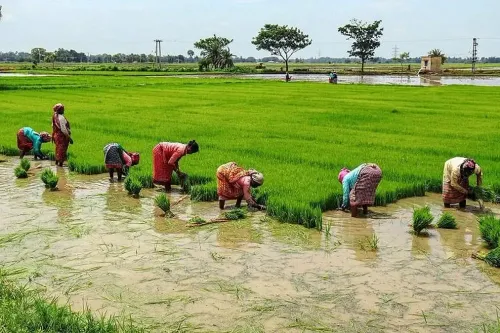
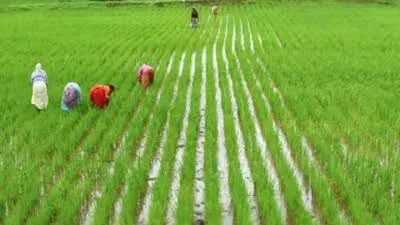
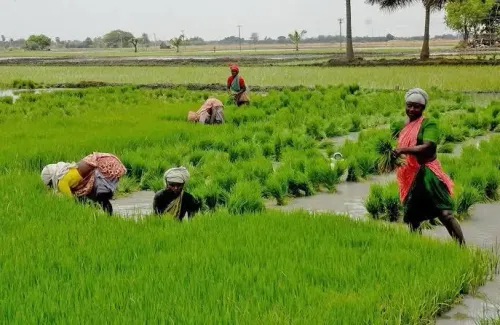
Cauvery Delta groundwater crisis threatens kuruvai paddy season in Tamil Nadu
Synopsis
Tamil Nadu's Cauvery Delta is staring at a failed kuruvai season — not just because Mettur Dam opened late, but because groundwater, the fallback for borewell farmers, has itself hit alarming lows. With 14 lakh pump sets in the Delta straining under erratic power supply and the WRD confirming a steep May decline in aquifer levels, the crisis now threatens to spill into the samba season too.
Key Takeaways
The Cauvery Delta is unlikely to meet its kuruvai cultivation target of 3.5 lakh acres this season due to groundwater depletion.
A Water Resources Department (WRD) survey confirmed a steep decline in groundwater levels across all Delta districts during May .
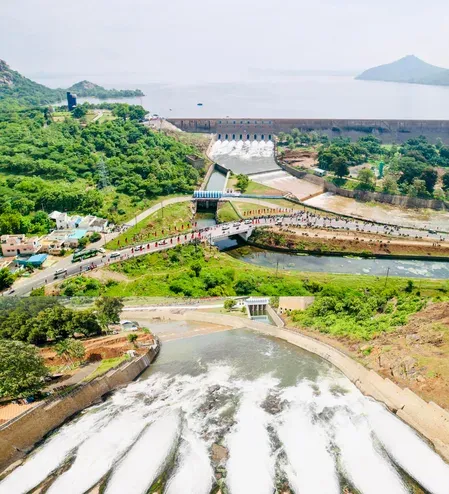
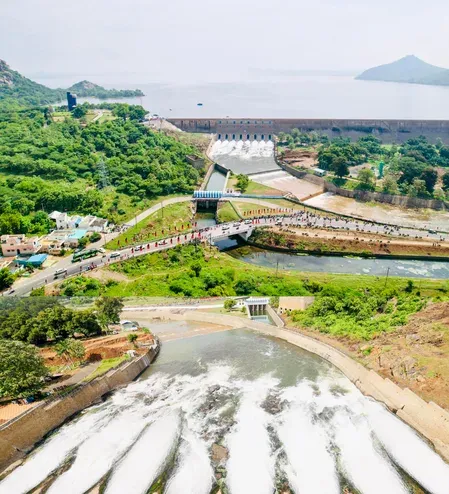
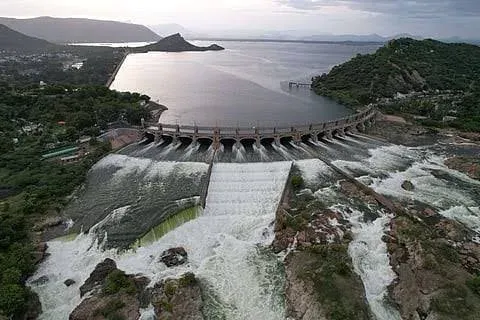
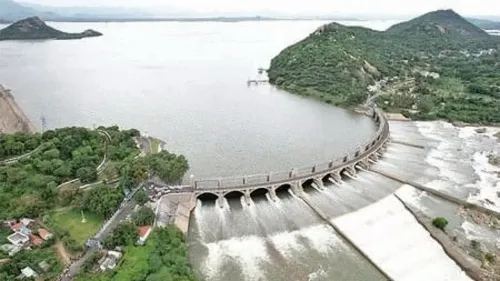
The delayed opening of Mettur Dam — traditionally on 12 June — has cut off surface water for most Cauvery-dependent farmers.
Nearly 14 lakh functional pump sets in the Delta depend on borewells, but erratic power supply limits irrigation to fewer than the required 8 hours per acre .
Cauvery Farmers Protection Association president V.
Dhanapalan warned that the upcoming samba season is also at risk if aquifers are not recharged in time.
The IMD has forecast a favourable southwest monsoon, but experts note rainfall alone may not restore groundwater without full Cauvery river flow.
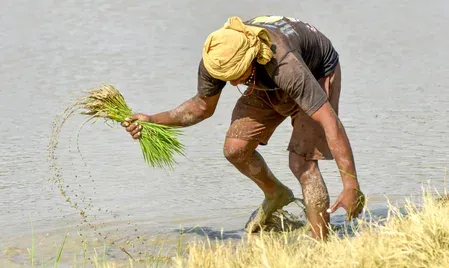
Rapidly depleting groundwater levels are casting a long shadow over kuruvai (summer paddy) cultivation in Tamil Nadu's Cauvery Delta, with farmer groups warning that the region is unlikely to meet its target of 3.5 lakh acres under the crop this season. The crisis, centred around Tiruchi and surrounding Delta districts, has been compounded by the delayed opening of Mettur Dam — traditionally unlocked on 12 June for irrigation — leaving most Cauvery-dependent farmers with no surface water to rely on.
Scale of the Groundwater Crisis
A recent survey by the Water Resources Department (WRD) found that groundwater levels across all Delta districts recorded a steep decline during May, raising serious concerns about the sustainability of irrigation through the critical agricultural season. The findings have alarmed farmer leaders, who say the situation is deteriorating faster than seasonal norms would suggest.
Of the roughly 21 lakh borewells used for agricultural irrigation across Tamil Nadu, nearly 14 lakh functional pump sets are concentrated in the Delta region alone, according to Cauvery Farmers Protection Association president V. Dhanapalan. With surface water unavailable, this borewell network has become the last line of defence for kuruvai cultivation — but it is under severe strain.
Power Cuts Add to Farmers' Burden
Effective borewell irrigation requires at least eight hours of uninterrupted electricity to irrigate a single acre of farmland, Dhanapalan said. Erratic power supply across the Delta has made that benchmark nearly impossible to meet, compounding the water scarcity challenge for cultivators who have already abandoned surface-water irrigation.
Farmer leaders describe the combination of falling groundwater tables and unreliable electricity as a pincer squeeze that is shrinking the cultivable area week by week. Only a limited number of borewell-equipped farmers have proceeded with kuruvai this season, and even they are reporting mounting difficulties.
What the Monsoon Can — and Cannot — Fix
The India Meteorological Department (IMD) has forecast a favourable southwest monsoon for the region. However, Dhanapalan cautioned that rainfall alone may not be sufficient to restore depleted aquifers in time. Groundwater levels in the Delta traditionally recover only when the Cauvery and its distributaries flow at full capacity, enabling water to percolate gradually and recharge underground reserves — a process that requires sustained river flow, not just surface rainfall.
This distinction is critical: even a good monsoon season may not translate into aquifer recovery if the Cauvery does not run at adequate volumes through its distributary network.
Samba Season Also at Risk
The immediate concern is kuruvai, but farmers warn the consequences could extend well beyond this season. If groundwater is not replenished before the samba cultivation cycle begins — the Delta's principal paddy season — the region could face severe agricultural distress. The Cauvery Delta is one of Tamil Nadu's most important rice-producing belts, and a back-to-back failure across kuruvai and samba would have significant food security and livelihood implications for farming communities across multiple districts.
With the WRD survey data now in the public domain, pressure is mounting on state authorities to address both the power supply irregularities and the broader question of groundwater governance in the Delta before the situation becomes irreversible.
Point of View
Yet the structural fixes — regulated borewell extraction, assured power supply for pump sets, and coordinated dam-release scheduling — remain unaddressed year after year. Blaming a delayed monsoon obscures the fact that 14 lakh pump sets drawing from the same shrinking aquifer is an extraction problem, not a rainfall problem. If the samba season is also compromised, Tamil Nadu's rice bowl will have failed twice in a single year, and that demands more than weather forecasts as an answer.
NationPress
29 Jun 2026
Frequently Asked Questions
Why is kuruvai cultivation in the Cauvery Delta under threat this year?
Kuruvai cultivation is under threat due to a combination of depleted groundwater levels, the delayed opening of Mettur Dam beyond its traditional 12 June date, and erratic power supply that prevents farmers from running borewells for the required eight hours per acre. The Water Resources Department confirmed a steep decline in groundwater across all Delta districts in May.
What is the kuruvai cultivation target for Tamil Nadu's Cauvery Delta?
The target for kuruvai paddy cultivation in the Cauvery Delta this season is 3.5 lakh acres. Farmer leaders and officials say this target is unlikely to be achieved given the current groundwater and power supply situation.
Will the southwest monsoon solve the groundwater problem in the Delta?
Not necessarily. While the IMD has forecast a favourable southwest monsoon, farmer leaders point out that groundwater in the Delta recovers only when the Cauvery and its distributaries flow at full capacity, enabling gradual aquifer recharge. Rainfall alone, without adequate river flow, may not be sufficient.
How many borewells are used for farming in the Cauvery Delta?
According to Cauvery Farmers Protection Association president V. Dhanapalan, approximately 21 lakh borewells are used for agricultural irrigation across Tamil Nadu, of which nearly 14 lakh functional pump sets are located in the Delta region.
Is the samba paddy season also at risk?
Yes. Farmer leaders warn that if groundwater is not replenished before the samba season begins — the Delta's primary paddy cycle — the region could face severe agricultural distress. A failure across both kuruvai and samba would have significant consequences for Tamil Nadu's rice production and farming livelihoods.