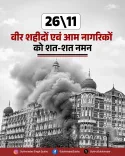
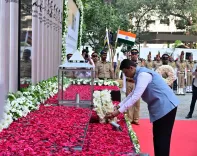
Gujarat CM Bhupendra Patel pays tribute on 26/11 anniversary

Synopsis
Gujarat CM Bhupendra Patel paid homage on the 26/11 anniversary to civilians killed in Mumbai and to security personnel who fell. He said the 2008 assault still shakes the country and restated a zero-tolerance policy against terrorism.
Key Takeaways
Gujarat Chief Minister Bhupendra Patel paid tribute on the 26/11 anniversary to civilians killed and to security personnel who fell.
He called the 2008 Mumbai assault a cowardly attack that still shakes the hearts of Indians.
The coordinated Lashkar-e-Taiba attacks from 26 to 29 November 2008 killed 166 people.
NSG commandos led the response at the Taj, the Oberoi and Nariman House and suffered casualties.
Patel restated a government zero-tolerance policy to eradicate terrorism.
The attacks led to the creation of the National Investigation Agency in December 2008.
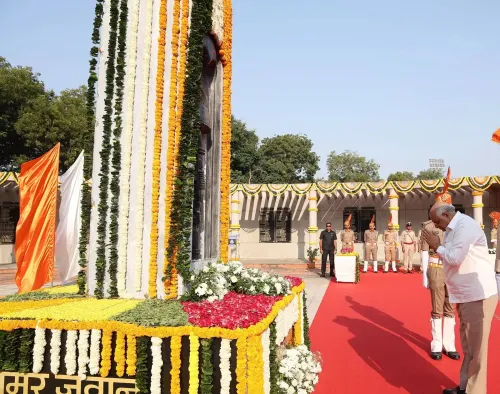
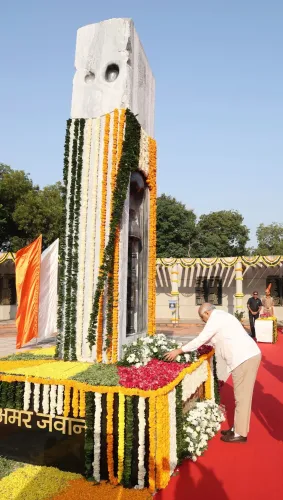
On the anniversary of the 26/11 Mumbai terror attacks, Gujarat Chief Minister Bhupendra Patel paid heartfelt homage to the innocent civilians killed and offered countless salutations to the security personnel who made the supreme sacrifice confronting the gunmen. Issuing the tribute on Thursday, he said the cowardly assault still shakes the hearts of the country's people and called on Indians to remain united against terrorism.
Writing in Gujarati, Patel offered bhavpurna shraddhanjali (heartfelt tribute) to the innocent citizens who lost their lives in the Mumbai attacks. He said the cowardly strike still shakes the hearts of countrymen. He extended koti koti naman (countless salutations) to the brave security personnel who gave the supreme sacrifice while confronting the terrorists. The nation, he wrote, will always remember their indomitable courage and devotion to duty with gratitude.
166 dead across a three-day siege
The coordinated assault ran from 26 to 29 November 2008. Lashkar-e-Taiba militants struck hotels, a railway terminus, a cafe and a Jewish centre in Mumbai. 166 people were killed, including foreign nationals.
That is why the date still lands with force. Stations, hotel corridors and a residential centre became killing grounds in a single night, then a three-day siege. Families of the dead remain the first stakeholders of every 26 November remembrance.
Salute to NSG commandos and fallen personnel
The National Security Guard led the fightback at the Taj Mahal Palace hotel, the Oberoi and Nariman House. Commandos died in that operation. Patel's message placed those personnel at the centre of the tribute, not as a footnote to the civilian toll.
He said the country will remain grateful for their courage and sense of duty. The salute is annual. The names are not abstract. They are the men who walked into the siege.
Zero tolerance, written into law after 2008
Patel said the government is on duty to eradicate terrorism with a zero-tolerance policy. He closed with an appeal: remain united against terrorism and take a pledge for the nation's unity and security. No new measure was announced in the message itself. The line he restated is older than this anniversary.
The 2008 attacks prompted the creation of the National Investigation Agency through an ordinance in December 2008, to investigate and prosecute terror offences. Indian governments have since restated the zero-tolerance doctrine in law and in operations. Centre and states issue similar tributes each 26 November: honour the dead, salute the forces, restate resolve.
The unfinished legal trail of remaining accused still sits behind the wreaths. On this date, Patel's argument was simple. Remember them. Then refuse to blink.
Point of View
State leaders convert grief into a security doctrine. Patel's message fits that arc: homage first, then the zero-tolerance line that took legislative form after 2008 with the NIA. The political content is not a new scheme but a restatement that counter-terror remains a central claim of governing parties. The sharper test is whether unfinished 26/11 cases and cross-border pressure move at all between one anniversary and the next.
NationPress
26 Nov 2026
Frequently Asked Questions
What did Gujarat CM Bhupendra Patel say on 26/11?
He paid heartfelt tribute to innocent civilians killed in the Mumbai terror attacks and offered countless salutations to security personnel who made the supreme sacrifice. He said the cowardly assault still shakes the country and that the government is committed to eradicating terrorism with a zero-tolerance policy.
How many people were killed in the 26/11 Mumbai attacks?
166 people were killed, including foreign nationals. The coordinated assault ran from 26 to 29 November 2008 across hotels, a railway terminus, a cafe and a Jewish centre in Mumbai.
Who carried out the 26/11 Mumbai attacks?
Lashkar-e-Taiba militants carried out the coordinated attacks. Indian leaders mark the date each year with tributes to victims and to the security forces who responded.
What is India's zero-tolerance policy on terrorism?
It is the stated doctrine that terror offences will not be accommodated and will be pursued through law and operations. Patel restated that line in his 26/11 message; it has been cited by Indian governments since the post-2008 overhaul of counter-terror institutions.
Why was the National Investigation Agency created?
The NIA was created through an ordinance in December 2008 after the 26/11 attacks to investigate and prosecute terror offences. It remains a core institutional response to the Mumbai siege.