Gujarat CM Bhupendra Patel launches 8 Smart GIDC Estates across 5 districts
Synopsis
Gujarat CM Bhupendra Patel launched eight Smart GIDC Estates across five districts — including comparatively under-industrialised Chhota Udepur and Panchmahal — covering 3,611 acres in a single announcement. Backed by a new 20-year master plan and a ₹10 lakh crore investment target under the Viksit Gujarat Industrial Policy 2026, the state is explicitly betting on decentralised industrial growth beyond its established manufacturing triangle.
Key Takeaways
Gujarat CM Bhupendra Patel launched eight Smart GIDC Estates on 29 June at the Vibrant Gujarat Regional Conference in Vadodara .
The estates span five districts — Kheda , Ahmedabad , Panchmahal , Chhota Udepur , and Bhavnagar — covering a combined 3,611 acres .
Gujarat is targeting ₹10 lakh crore in fresh investments over five years under the Viksit Gujarat Industrial Policy 2026 .
A 20-year economic master plan for Central Gujarat was unveiled by Deputy CM Harsh Sanghavi .
Union Minister Manohar Lal Khattar was present, signalling Centre-state alignment on the industrial push.
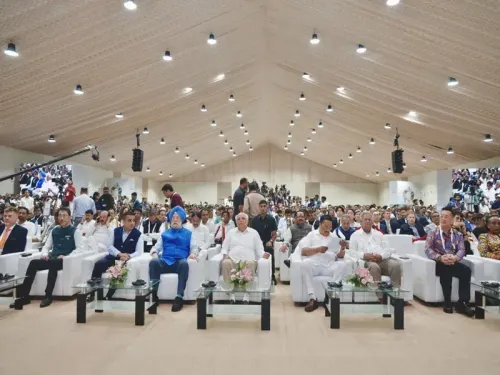
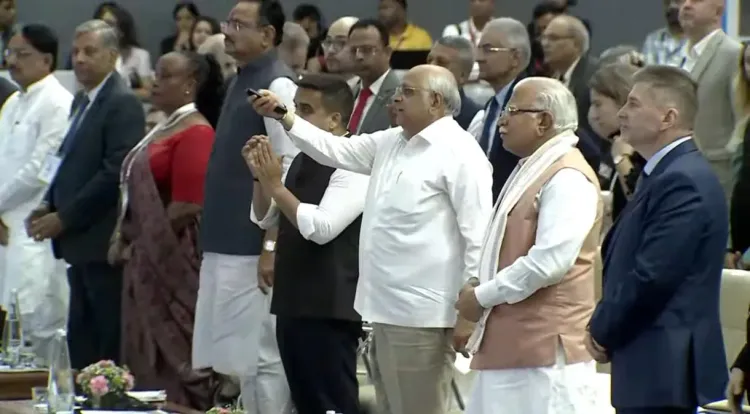
Gujarat Chief Minister Bhupendra Patel on Monday, 29 June launched eight new Smart GIDC Estates spanning five districts and covering a combined 3,611 acres, marking the state's most significant single-day industrial infrastructure expansion in recent years. The announcement was made during the inaugural session of the Vibrant Gujarat Regional Conference (VGRC) for Central Gujarat, held in Vadodara.
Where the New Estates Will Come Up
The eight estates, to be developed by the Gujarat Industrial Development Corporation (GIDC), will be spread across Kheda, Ahmedabad, Panchmahal, Chhota Udepur, and Bhavnagar districts. The geographic spread is deliberate — officials described the initiative as an effort to build industrial ecosystems in districts that sit outside Gujarat's established manufacturing corridors, pushing for balanced regional development.
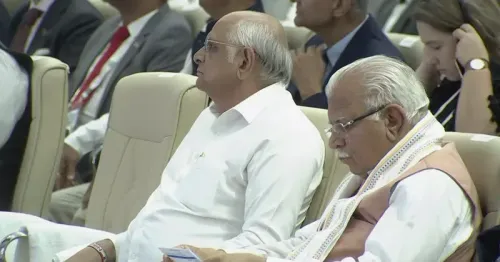
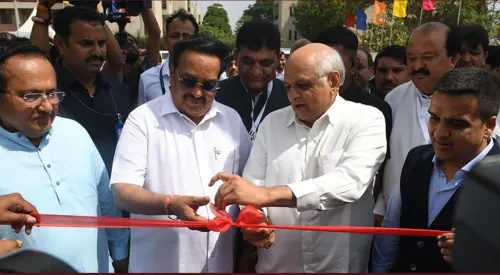
Chief Minister Patel formally inaugurated the estates by pressing a remote button at the conference venue, with Union Housing and Urban Affairs Minister Manohar Lal Khattar, Deputy Chief Minister Harsh Sanghavi, diplomats, investors, and industry representatives in attendance.
What the Government Said
'Keeping pace with time is progress, but thinking ahead of time is Gujarat. There was a time when industrial estates meant only concrete structures, but today we are about to turn a new page in industrial history,' officials said from the conference stage.
The framing signals a shift from conventional estate development toward smarter, planned infrastructure — though specific 'smart' features of the estates were not detailed at the launch.
The Broader Industrial Agenda
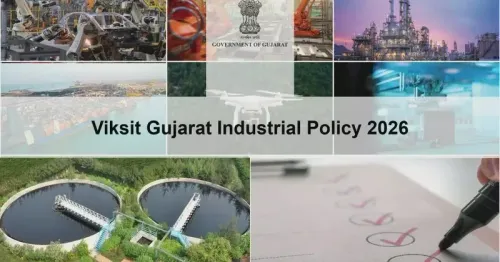
The launch was embedded within a wider policy push showcased at the two-day VGRC. Deputy Chief Minister Harsh Sanghavi revealed that Gujarat has prepared a 20-year economic master plan for Central Gujarat and is targeting ₹10 lakh crore in fresh investments over the next five years under the newly launched 'Viksit Gujarat Industrial Policy 2026'.
Sanghavi also highlighted the state's focus on faster regulatory approvals, improved governance, and sector-specific industrial growth as key enablers of the investment target. Notably, the VGRC itself is structured to attract regional investment and strengthen Gujarat's positioning as a national manufacturing and investment destination.
Context and Significance
This expansion adds to an already extensive GIDC network that has underpinned Gujarat's reputation as one of India's most industrially active states. The choice of districts — including Chhota Udepur and Panchmahal, which are comparatively less industrialised — suggests the state is consciously attempting to decentralise economic activity beyond the Ahmedabad-Surat-Vadodara triangle.
This is also the latest in a series of industrial announcements tied to the Vibrant Gujarat platform, which has historically served as a showcase for both state policy and investor commitments. With the Viksit Gujarat Industrial Policy 2026 now formally in play, the Centre-state alignment — signalled by Khattar's presence — adds political weight to the initiative.
What Comes Next
The Smart GIDC Estates are now in the development pipeline, with planned infrastructure expected to support manufacturing units across the five districts. Industry bodies and investors present at the VGRC are expected to signal early interest in the new estates over the course of the conference. The ₹10 lakh crore investment target under the new industrial policy will be the benchmark against which the state's execution is measured in the years ahead.
Point of View
Not just an optics play. The ₹10 lakh crore investment target under Viksit Gujarat Industrial Policy 2026 is ambitious, but targets of this scale have a history of being revised quietly when execution lags. The real test will be whether the 'smart' label on these estates translates into measurable infrastructure differentiation — or whether it remains a branding exercise on conventional industrial plots.
NationPress
29 Jun 2026
Frequently Asked Questions
What are the Smart GIDC Estates launched by Gujarat CM Bhupendra Patel?
These are eight new planned industrial estates being developed by the Gujarat Industrial Development Corporation (GIDC) across five districts — Kheda, Ahmedabad, Panchmahal, Chhota Udepur, and Bhavnagar — covering a combined 3,611 acres. They were launched on 29 June at the Vibrant Gujarat Regional Conference in Vadodara.
What is the Viksit Gujarat Industrial Policy 2026?
It is a newly launched state industrial policy under which Gujarat is targeting ₹10 lakh crore in fresh investments over the next five years. Deputy CM Harsh Sanghavi announced it alongside a 20-year economic master plan for Central Gujarat at the same conference.
Why are these estates significant for regional development?
The estates are spread across districts including Chhota Udepur and Panchmahal, which lie outside Gujarat's established manufacturing hubs. This signals a deliberate push to decentralise industrial growth and build new economic ecosystems in less-industrialised parts of the state.
Who attended the Vibrant Gujarat Regional Conference launch event?
Union Housing and Urban Affairs Minister Manohar Lal Khattar, Deputy CM Harsh Sanghavi, diplomats, investors, and industry representatives attended the two-day conference in Vadodara where the estates were inaugurated.
What is the Vibrant Gujarat Regional Conference?
The VGRC is a state-level platform designed to promote regional investment, expand industrial infrastructure, and strengthen Gujarat's position as a manufacturing and investment destination. The Central Gujarat edition was held in Vadodara on 29 June.