Gujarat CM Office backs anti-paper-leak bill in Parliament
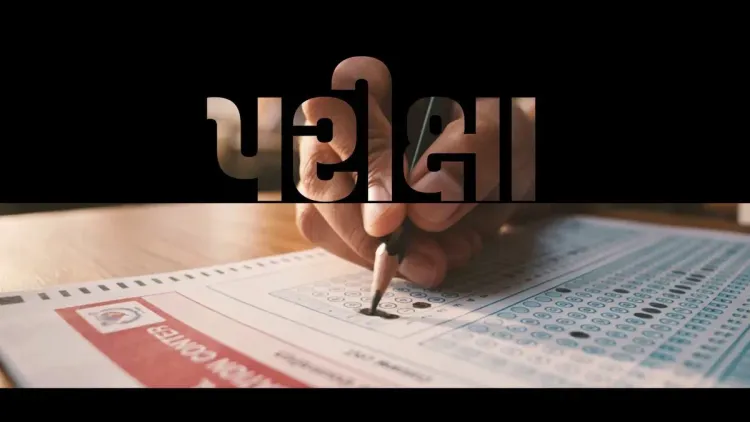
Synopsis
The Chief Minister's Office of Gujarat has endorsed The Public Examinations (Prevention of Unfair Means) Amendment Bill, 2026, passed in Parliament under PM Modi, describing it as a zero-tolerance guarantee for transparent, fraud-free exams and a secure future for lakhs of Indian youth.
Key Takeaways
The Chief Minister's Office of Gujarat publicly backed the Public Examinations (Prevention of Unfair Means) Amendment Bill, 2026 on 1 August 2026 .
The bill was passed in Parliament of India under the leadership of Prime Minister Narendra Modi .
The CMO described the legislation as a 'zero tolerance' approach toward exam malpractice, promising transparent and just examinations.
The 2026 Amendment builds on the original Public Examinations (Prevention of Unfair Means) Act, 2024 , which first introduced structured penalties for paper leaks and cheating.
The next critical step is state-level adoption and enforcement by bodies such as the National Testing Agency and state recruitment boards.
Millions of young Indians who have watched their futures derailed by paper leaks and exam fraud just got a legislative shield. The Chief Minister's Office of Gujarat on Saturday, 1 August 2026, threw its weight behind The Public Examinations (Prevention of Unfair Means) Amendment Bill, 2026, passed in Parliament under the leadership of Prime Minister Narendra Modi, calling it a guarantee of a 'bright and secure future' for lakhs of youth across Gujarat and the nation.
The CMO's post, shared in Gujarati, framed the legislation as a 'zero tolerance' commitment — ઝીરો ટોલરન્સ [zero tolerance] — toward malpractice, promising a 'transparent and just examination system' that honours the hard work of young aspirants. The hashtag #FairExamsSecureYouth anchored the message squarely in the language of youth welfare rather than administrative process.
From the 2024 Act to the 2026 Amendment
The legislative journey here has a clear origin point. The original Public Examinations (Prevention of Unfair Means) Act, 2024 was Parliament's first dedicated response to a string of high-profile question-paper leaks that had shaken public confidence in competitive recruitment and admission exams nationwide. That law introduced structured penalties for malpractices — a baseline the 2026 Amendment Bill now builds upon, tightening the framework further.
The pattern is hard to ignore: recurring leaks in national and state-level exams had cost hundreds of thousands of aspirants months, sometimes years, of preparation. Each scandal renewed calls for a uniform, enforceable anti-cheating architecture rather than patchwork state-level fixes.
Gujarat's signal and what follows at state level
Gujarat's endorsement is more than ceremonial. As one of India's larger states with a significant pool of competitive-exam aspirants, its alignment with the central framework signals that state machinery will move to adopt and implement the amended provisions. The critical next step — one that will determine whether the law delivers on its promise — is how bodies such as the National Testing Agency and state recruitment boards operationalise the new rules on the ground.
A law on the books matters less than enforcement in the examination hall. The youth of Gujarat, and every other state, will be watching for exactly that.
Point of View
A distinction that matters in electoral optics. The real test of this legislative arc, however, will be institutional: whether the National Testing Agency and state boards can translate tougher law into credibly leak-proof examinations. Until that operational proof arrives, the political capital invested in this bill remains contingent.
NationPress
1 Aug 2026
Frequently Asked Questions
What is the Public Examinations (Prevention of Unfair Means) Amendment Bill, 2026?
It is a bill passed in the Indian Parliament in 2026 that amends the original 2024 Act to strengthen the legal framework against malpractices such as paper leaks and cheating in public competitive examinations across India.
What was the original Public Examinations (Prevention of Unfair Means) Act, 2024?
The 2024 Act was Parliament's first dedicated law introducing structured penalties for exam malpractices including question-paper leaks, aimed at restoring credibility in national recruitment and admission processes.
Why did Gujarat's CMO endorse the 2026 exam bill?
The Chief Minister's Office of Gujarat endorsed the bill to signal the state's alignment with the central government's zero-tolerance approach to exam fraud, framing it as a guarantee of a secure future for lakhs of youth in Gujarat and across India.
How does the 2026 Amendment affect students in Gujarat?
Once state-level adoption and enforcement follow, students in Gujarat appearing for competitive exams should benefit from stronger legal deterrents against paper leaks and cheating, making the examination process more transparent and fair.
What role does the National Testing Agency play in the new exam law?
The National Testing Agency, which conducts major national entrance and recruitment exams, is among the key bodies expected to operationalise the amended provisions and ensure the law's zero-tolerance mandate is enforced on the ground.