China pushes 'more proactive' fiscal policy as economy slows to 4.3%

Synopsis
China's Politburo has broken from its usual restraint to push for 'more proactive' tax and spending policies — a clear alarm signal as Q2 2026 GDP growth slumped to a three-year low of 4.3%. With industrial profit momentum fading and domestic demand stubbornly weak, Beijing faces a familiar dilemma: act big and risk capacity excess, or nudge cautiously and risk a deeper slowdown.
Key Takeaways
China's Politburo called for 'more proactive' fiscal and tax policies on 1 August 2026 amid slowing economic momentum.
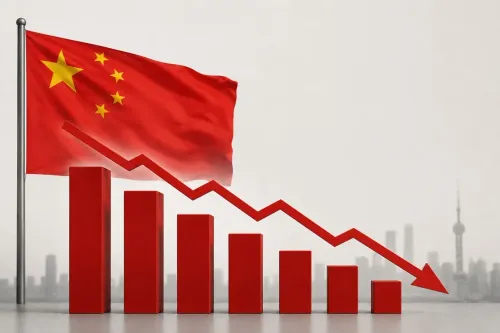
Q2 2026 GDP growth slowed to 4.3 per cent — the weakest pace in more than three years.
First-half 2026 GDP grew 4.7 per cent year-on-year to 69.6 trillion yuan (approx.
10.25 trillion US dollars ).
Industrial profits rose 15.1 per cent in June , down sharply from 21.1 per cent in May — the first deceleration since November .
Economists expect targeted incremental measures rather than a large stimulus package, given resilient exports and Beijing's focus on curbing excess capacity.
Structural headwinds — high youth unemployment , weak consumer spending, and a softening stock market — continue to weigh on the recovery.
China's top leadership has called for more aggressive tax and spending measures to shore up an economy struggling with weak consumer demand, high youth unemployment, and a softening stock market, according to reports citing a new policy signal from the Communist Party of China's Politburo. The directive, issued on 1 August 2026, marks a notable shift in tone as Beijing grapples with slowing momentum in the world's second-largest economy.
What the Politburo Said
The Politburo urged the government to 'fully leverage the effectiveness of existing policies, promptly plan and introduce practical and effective incremental policies,' according to reports. Analysts noted that such statements rarely specify concrete measures — they instead establish the broad policy direction that ministries are expected to translate into action.
Notably, the leadership's call for a 'more proactive' fiscal stance signals growing concern within the party about the durability of China's recovery, particularly as domestic demand continues to lag behind export performance.
Key Economic Indicators
China's GDP growth in the second quarter of 2026 slowed to 4.3 per cent — the weakest pace in more than three years — according to data from the National Bureau of Statistics (NBS). For the first half of 2026, the economy expanded 4.7 per cent year-on-year, reaching 69.6 trillion yuan (approximately 10.25 trillion US dollars), the NBS reported.
Industrial profits rose 15.1 per cent in June compared to the same month a year earlier, but that marked a sharp deceleration from the 21.1 per cent gain recorded in May — the first slowdown since November. Experts attributed the earlier rebound largely to surging global energy costs, a tailwind that is now fading as energy prices ease.
Why the Recovery Is Losing Steam
The reflationary boost that buoyed China's industrial sector earlier in 2026 is showing signs of exhaustion, according to economists. Price recovery was primarily driven by external energy cost dynamics rather than a genuine resurgence in domestic consumption — leaving the underlying demand story fragile.
This comes amid persistent structural headwinds: youth unemployment remains elevated, consumer confidence is subdued, and equity markets have weakened. Critics argue that without a meaningful demand-side stimulus, fiscal and monetary easing alone may not be sufficient to reignite broad-based growth.
Beijing's Likely Response
Economists forecast that Beijing is unlikely to deploy a large-scale stimulus package in the near term, citing the resilience of China's exports and the government's stated priority of curbing excess industrial capacity. Instead, analysts expect stronger easing language accompanied by targeted, incremental policy measures rather than a sweeping fiscal intervention.
Officials, meanwhile, have pointed to first-half growth figures as evidence of the economy's underlying resilience and the expanding role of 'new growth drivers' as China enters a fresh five-year development cycle.
What Comes Next
Markets and policymakers globally will be watching whether the Politburo's directive translates into concrete fiscal action in the coming weeks. With Q2 GDP at a three-year low and industrial profit momentum fading, the pressure on Beijing to deliver credible demand-side support is mounting. Any substantive policy announcement could have significant implications for global commodity markets, Asian supply chains, and emerging-market capital flows.
Point of View
But because the drivers of the earlier rebound (global energy prices, export strength) are fading without domestic consumption stepping in. If that substitution does not happen, incremental fiscal nudges will be insufficient, and the Politburo may be forced into a more decisive intervention sooner than markets currently expect.
NationPress
1 Aug 2026
Frequently Asked Questions
Why is China pushing for more proactive fiscal policy in 2026?
China's Politburo has called for more aggressive tax and spending measures because the economy is losing momentum, with Q2 2026 GDP growth slowing to a three-year low of 4.3 per cent. Weak consumer demand, high youth unemployment, and a softening stock market have all contributed to the policy shift.
What did China's Politburo say about economic policy?
The Politburo urged the government to 'fully leverage the effectiveness of existing policies, promptly plan and introduce practical and effective incremental policies.' Such statements set the broad direction for government ministries rather than specifying concrete measures.
How fast is China's economy growing in 2026?
China's economy grew 4.7 per cent year-on-year in the first half of 2026, reaching 69.6 trillion yuan. However, Q2 growth slowed to 4.3 per cent — the weakest quarterly pace in more than three years, according to the National Bureau of Statistics.
Will China announce a large stimulus package?
Economists say a large-scale stimulus is unlikely in the near term. Beijing is expected to rely on targeted, incremental policy measures, given that exports remain resilient and the government is focused on curbing excess industrial capacity rather than broad-based demand stimulus.
What is happening to China's industrial profits?
China's industrial profits rose 15.1 per cent in June year-on-year, but that marked a sharp slowdown from the 21.1 per cent gain recorded in May — the first deceleration since November. Experts say the earlier rebound was driven largely by global energy price surges, a boost that is now fading as energy costs ease.