CM Bhajanlal opens Commonwealth mediation meet in Jaipur
Synopsis
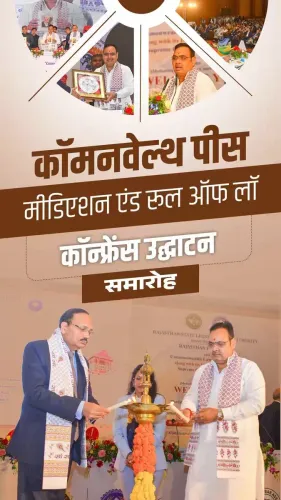
Chief Minister Bhajanlal Sharma and India's Chief Justice inaugurated a three-day Commonwealth Peace Mediation and Rule of Law international conference in Jaipur on 1 August 2026. Sharma argued mediation transcends the win-lose binary of adversarial justice, framing the event as a new global direction for dispute resolution.
Key Takeaways
The three-day Commonwealth Peace Mediation and Rule of Law international conference was inaugurated in Jaipur on 1 August 2026 .
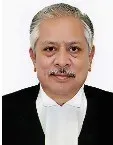
The inauguration was performed by the Chief Justice of the Supreme Court of India .
CM Bhajanlal Sharma said mediation moves beyond the win-lose outcome of conventional justice toward collaborative resolution.
India's Mediation Act of 2023 provides the domestic policy backbone for the country's push toward alternative dispute resolution.
The Commonwealth , a 56-nation body, has historically served as a platform for common-law countries to share best practices on access to justice.
Formal outcome documents or capacity-building commitments from the conference's close will determine its lasting impact.
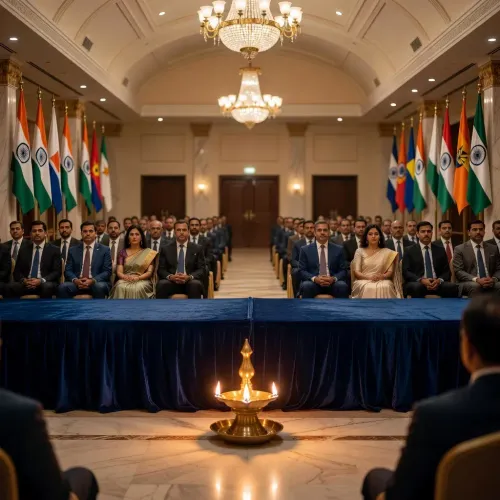
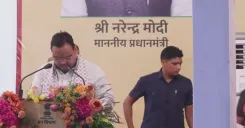
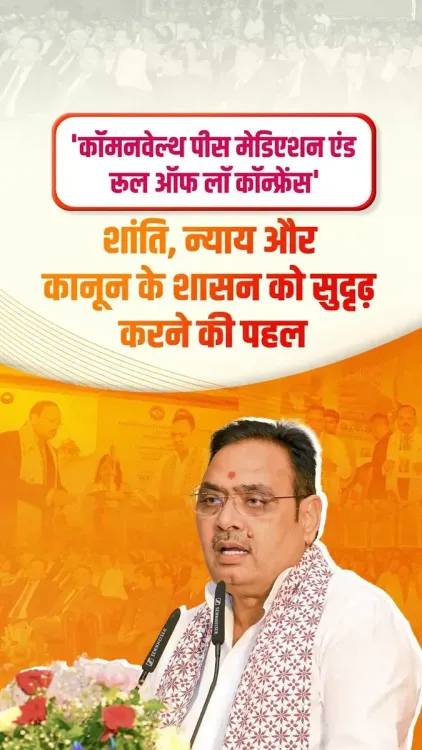
In a city that has long been a crossroads of governance and law, Jaipur this week became the stage for a pointed global conversation: can mediation replace the adversarial courtroom as the world's preferred path to justice? The Chief Minister's Office of Rajasthan confirmed that Chief Minister Bhajanlal Sharma attended the inauguration of a three-day international conference on Commonwealth Peace Mediation and Rule of Law, opened by the Chief Justice of the Supreme Court of India on Saturday, 1 August 2026.
What Bhajanlal Sharma said — and why it cuts to the core
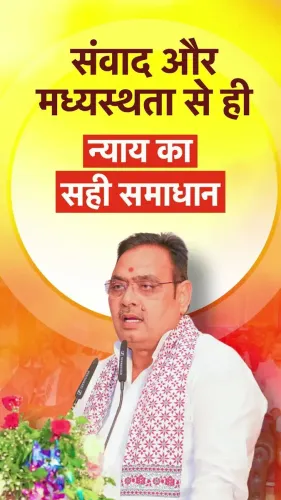
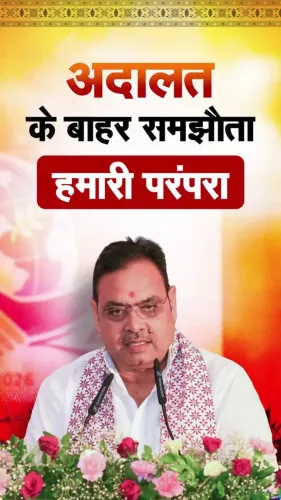
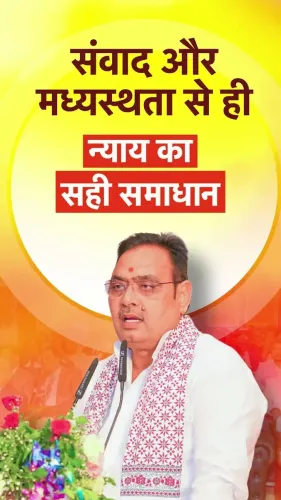
Speaking at the inauguration, CM Sharma framed the conference as more than a legal symposium. 'In justice, one side wins and the other loses,' he said, 'whereas dialogue and mediation go beyond winning and losing — they speak of resolution.' His argument was direct: the adversarial model produces a verdict; mediation produces an outcome both sides can live with. He called the Commonwealth Peace Mediation International Conference 'a new thought, a new direction, and the beginning of a new global perspective in the justice system.'
The distinction he drew is not rhetorical. Courts across India carry a backlog of tens of millions of pending cases — a structural crisis that no volume of new judges alone can solve. Mediation, by contrast, keeps disputes out of the docket entirely.
India's Mediation Act and the Commonwealth connection
India's Mediation Act of 2023 gave this push institutional backbone, creating a statutory framework to formalise alternative dispute resolution and reduce the pressure on an overloaded judiciary. Hosting a Commonwealth-level conference on the same theme in Rajasthan's capital signals that India is not just reforming domestically — it is positioning itself as a thought leader within the 56-nation Commonwealth on how common-law countries should modernise access to justice.
The Commonwealth has historically served as a forum for exchanging best practices among jurisdictions that share legal heritage. A three-day conference in Jaipur, inaugurated by the country's top judge, sends a clear signal about where India sees the future of dispute resolution heading.
What comes next from the Jaipur conference
The real test will arrive at the conference's close: whether delegates produce a formal outcome document, a set of shared mediation standards, or a capacity-building roadmap that Commonwealth member states can actually implement. For Rajasthan, the immediate question is whether the state will translate the conference's momentum into concrete protocols — training programmes for mediators, pilot schemes in district courts, or formal partnerships with Commonwealth legal bodies. The three days of deliberation that follow the inauguration will determine whether this is a landmark or a landmark speech.
Point of View
Rajasthan and the BJP-led state government are visibly aligning with India's post-2023 Mediation Act reform agenda — projecting judicial modernisation as both a domestic priority and a multilateral credential. For CM Bhajanlal Sharma, the event offers a governance optic that transcends party politics: rule-of-law reform commands broad legitimacy. The deeper arc here is India's deliberate use of Commonwealth platforms to export its alternative dispute resolution model, positioning itself as a standard-setter for common-law jurisdictions rather than merely a recipient of global legal norms. Whether the conference produces binding commitments or remains symbolic will signal how serious this multilateral push actually is.
NationPress
1 Aug 2026
Frequently Asked Questions
What is the Commonwealth Peace Mediation and Rule of Law conference in Jaipur?
It is a three-day international conference inaugurated on 1 August 2026 in Jaipur, Rajasthan , focused on promoting mediation and rule-of-law standards among Commonwealth member states.
Who inaugurated the Commonwealth mediation conference in Jaipur?
The conference was inaugurated by the Chief Justice of the Supreme Court of India , with Chief Minister Bhajanlal Sharma also present and addressing the gathering.
What did CM Bhajanlal Sharma say about mediation at the conference?
CM Sharma said that unlike conventional justice where one party wins and the other loses, mediation and dialogue go beyond that binary to focus on resolution — calling the conference a new global direction for the justice system.
What is India's Mediation Act 2023?
India's Mediation Act of 2023 institutionalised alternative dispute resolution in India, creating a statutory framework to encourage mediation and reduce the burden of adversarial litigation on an overloaded court system.
Why is India hosting Commonwealth conferences on mediation?
India is positioning itself as a leader in alternative dispute resolution within the 56-nation Commonwealth , using shared common-law heritage as a foundation to promote mediation standards and best practices across member states.