CM Bhupendra Patel Backs Exam Reforms Bill in Parliament
Synopsis
Gujarat CM Bhupendra Patel has hailed the passage of the Public Examinations Reforms Bill 2026 in Parliament, saying it delivers tough penalties, fast-track courts, and technology-based safeguards to end paper leaks and protect merit-based opportunities for India's youth.
Key Takeaways
Gujarat CM Bhupendra Patel publicly welcomed the Public Examinations Reforms Bill 2026 passed in Parliament on 31 July 2026 .
The Bill introduces stringent punishments and heavy fines targeting paper-leak networks and exam mafias.
Fast-track courts and technology-based security protocols are central planks of the new legislation.
The reforms build on the earlier Public Examinations (Prevention of Unfair Means) Act, 2024 , deepening the anti-malpractice framework.
CM Patel linked the legislation to the national Viksit Bharat @ 2047 vision, committing Gujarat to a 'Merit First' principle for youth opportunities.
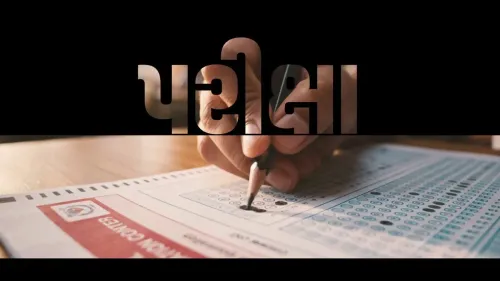
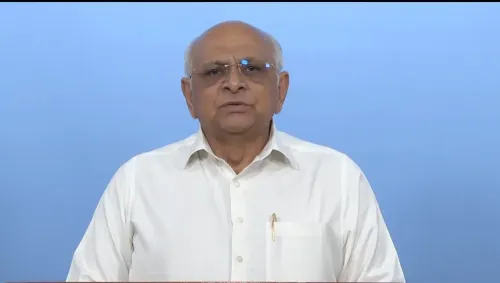
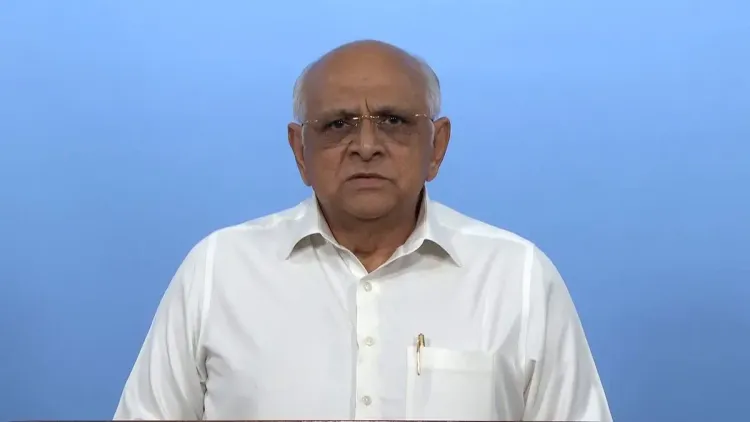
Millions of Indian students who have watched their futures derailed by paper leaks now have a law squarely in their corner. Gujarat Chief Minister Bhupendra Patel on Friday, 31 July 2026, welcomed the passage of the Public Examinations Reforms Bill 2026 in Parliament, calling it a historic step to protect the futures of crores of young Indians.
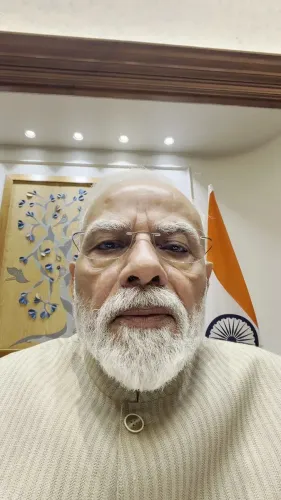
Posting in Gujarati on X, CM Patel wrote that the legislation is a 'living reflection' of Prime Minister Narendra Modi's declared resolve that there will be 'no compromise of any kind with the futures of the youth.' He added that 'all of Gujarat welcomes these reforms' — framing the central legislation as a shared mission between New Delhi and Gandhinagar.
Hard Punishments, Fast Courts, Tech Shields
The Bill, as described by CM Patel, introduces a multi-pronged crackdown: stringent penalties and heavy fines against paper-leak networks, fast-track courts for swift prosecution, and technology-based security protocols to harden the examination pipeline at every stage. The intent is to make the exam system, in his words, 'more transparent and credible.'
This builds on the legislative groundwork laid by the Public Examinations (Prevention of Unfair Means) Act, 2024, which first introduced institutional and penal mechanisms against malpractice in national-level exams. The 2026 reforms signal a deepening of that framework — with sharper teeth and faster judicial recourse.
Gujarat's 'Merit First' Pledge
CM Patel explicitly committed the Gujarat government to the principle of 'Merit First' (merit first), pledging equal opportunity for young people on the basis of merit during what he called the Amrit Kaal — the period leading up to India's centenary of independence. He tied the Bill directly to the national vision of 'Viksit Bharat @ 2047' (Developed India by 2047), positioning exam integrity as foundational infrastructure for that goal.
The message from Gandhinagar is unambiguous: organised mafias that have treated competitive examinations as a market are now on notice. For the lakhs of aspirants who prepare for years only to have question papers sold the night before, that is not a small thing.
Point of View
The BJP is attempting to convert a governance failure into a reform narrative ahead of a key electoral cycle. CM Patel's endorsement signals coordinated Centre-State messaging, with Gujarat positioned as a model implementer. The real test will be whether fast-track courts are operationalised quickly and whether technology safeguards survive the pressures of implementation at scale.
NationPress
15 Sept 2026
Frequently Asked Questions
What is the Public Examinations Reforms Bill 2026?
The Public Examinations Reforms Bill 2026 is a parliamentary legislation that introduces stringent penalties, heavy fines, fast-track courts, and technology-based security measures to prevent paper leaks and malpractice in public examinations across India.
What did Gujarat CM Bhupendra Patel say about the exam reforms bill?
CM Bhupendra Patel called the bill's passage a 'historic initiative' to protect the futures of crores of young Indians, saying all of Gujarat welcomes the reforms and pledging that the state government will uphold a 'Merit First' principle.
How does the 2026 bill differ from the 2024 exam law?
The Public Examinations (Prevention of Unfair Means) Act, 2024 established the foundational penal and institutional framework against exam malpractice. The 2026 reforms are understood to deepen that framework with sharper penalties and faster judicial mechanisms, though specific provisions of the 2026 amendment are yet to be fully detailed in public records.
What is Viksit Bharat 2047 and how does it relate to exam reform?
Viksit Bharat 2047 is the Indian government's vision of a fully developed India by the country's centenary of independence. CM Patel linked exam integrity directly to this goal, arguing that merit-based equal opportunity for youth is foundational to achieving it.
What are fast-track courts in the context of the exam reforms bill?
Fast-track courts under the bill are dedicated judicial mechanisms designed to prosecute paper-leak offenders and exam mafias swiftly, reducing the delays that have historically allowed such networks to operate with impunity.