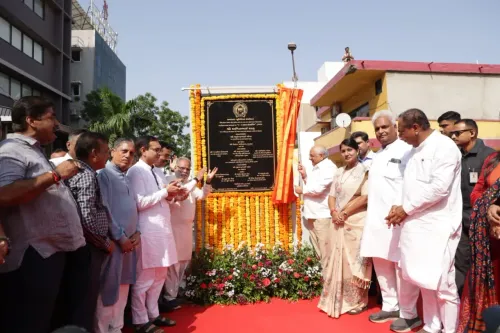
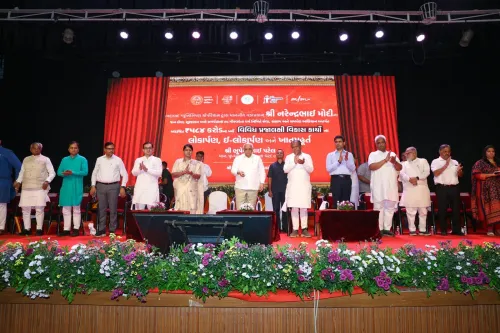
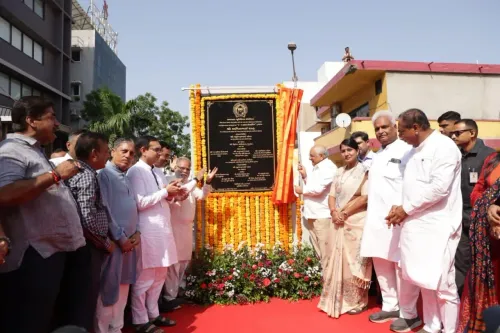
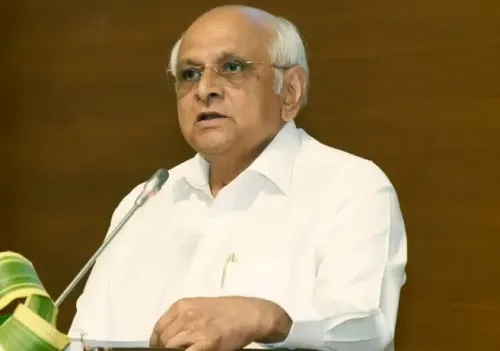
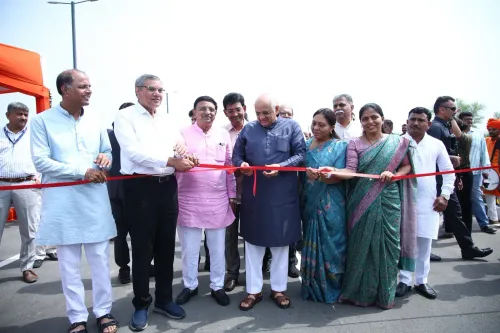
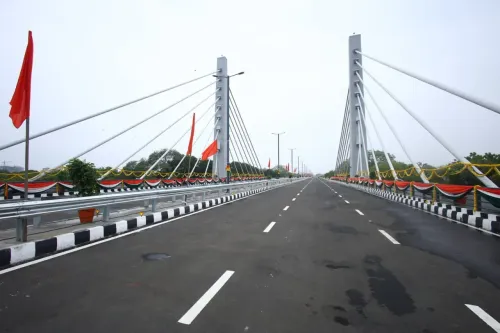
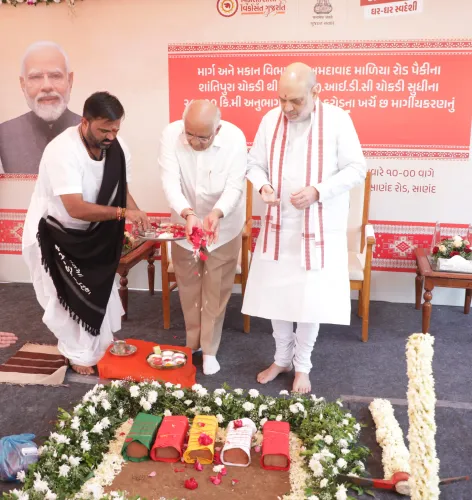
Gujarat CMO unveils ₹127.92 cr flyover at Vadaj Junction, Ahmedabad
Synopsis
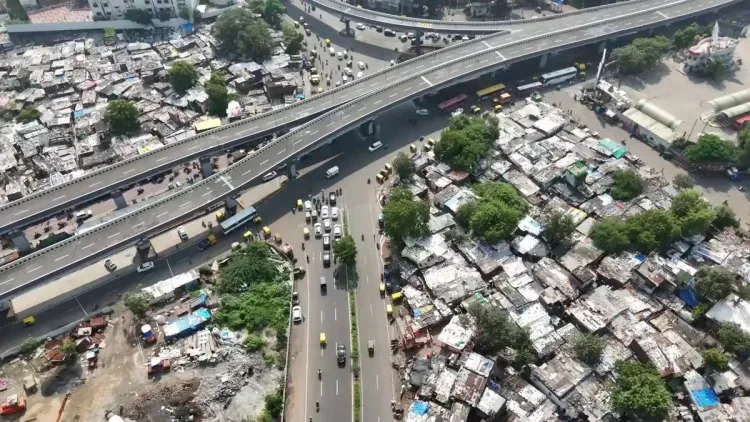
The Chief Minister's Office of Gujarat announced a ₹127.92 crore four-lane flyover at Vadaj Junction, built by the Ahmedabad Municipal Corporation, promising reduced congestion, faster travel, and fuel savings for city commuters under the Seva Sankalp Abhiyan.
Key Takeaways
The Ahmedabad Municipal Corporation constructed a four-lane flyover at Vadaj Junction at an estimated cost of ₹127.92 crore .
The project is aimed at reducing traffic congestion at one of western Ahmedabad's key intersections.
Commuters will benefit from savings in travel time and fuel, along with smoother vehicle movement.
The announcement was made on September 24, 2026 by the Chief Minister's Office of Gujarat under the #SevaSankalpAbhiyan initiative.
The flyover is part of Gujarat's broader urban infrastructure drive to keep pace with growing traffic volumes in Ahmedabad .
A four-lane flyover built at an estimated cost of ₹127.92 crore is set to transform one of Ahmedabad's most congested intersections — and the Chief Minister's Office of Gujarat made the announcement on Thursday, September 24, 2026, under the banner of the Seva Sankalp Abhiyan.
The flyover, constructed by the Ahmedabad Municipal Corporation (AMC), targets Vadaj Junction in the city — a node that has long been a pressure point for daily commuters navigating western Ahmedabad's arterial road network. According to the CMO's post, the project will ease the traffic load at the junction while delivering savings in both time and fuel for motorists, and ensuring smoother, faster movement for vehicles.
What ₹127.92 crore buys at Vadaj Junction
The four-lane design is the critical detail here. A four-lane flyover at a busy urban junction does not merely move more cars — it restructures the entire intersection's rhythm, eliminating the bottleneck that forces traffic from multiple directions into a single signalised choke-point. For Ahmedabad, a city whose population and vehicle registrations have grown sharply over the past decade, that kind of structural relief matters at scale.
The AMC — the civic body responsible for urban infrastructure across Ahmedabad — has been the executing agency, channelling an estimated ₹127.92 crore into the project. Fuel savings and reduced idling time at junctions translate directly into lower per-trip costs for ordinary commuters and freight operators alike, giving the project an economic dimension beyond its engineering footprint.
Seva Sankalp Abhiyan: the showcase behind the announcement
The disclosure came under the #SevaSankalpAbhiyan hashtag — a Gujarat government initiative framing public-service and development deliverables as a collective pledge. Flyover inaugurations and urban mobility upgrades have been a recurring thread in the campaign, reflecting the state's deliberate push to showcase infrastructure completions as governance outcomes rather than routine civic works.
Gujarat's broader pattern of commissioning urban flyovers and road-widening projects in Ahmedabad and other cities is rooted in the state's strategy to keep pace with economic expansion and population density — particularly in western and north-western corridors where residential and commercial development has accelerated.
What commuters and the city should watch next
The immediate test is real-world traffic behaviour at Vadaj Junction once the flyover enters full operation. Congestion-relief projects of this scale typically take several weeks of observation before their net impact on travel times can be quantified. Follow-up traffic studies at the site, and the rollout of additional phases under the Seva Sankalp Abhiyan, will indicate whether this investment hits its stated goals — and whether similar interventions at other high-pressure junctions in the city are in the pipeline.
For a city that logs millions of vehicle trips daily, a well-placed flyover at the right junction is not just a ribbon-cutting moment. It is a daily dividend.
Point of View
Attributable deliverables rather than background municipal works. Channelling the reveal through the Seva Sankalp Abhiyan amplifies the political dividend, linking a ₹127.92 crore AMC project to a state-wide service pledge. The deeper question is whether this project, and others like it, will be followed by rigorous traffic-impact assessments — because in fast-growing cities like Ahmedabad, a single flyover can shift congestion without eliminating it, making the choice of which junction to prioritise a consequential urban-planning decision, not just a political one.
NationPress
24 Sept 2026
Frequently Asked Questions
What is the cost of the Vadaj Junction flyover in Ahmedabad?
The Vadaj Junction flyover has been built by the Ahmedabad Municipal Corporation at an estimated cost of ₹127.92 crore.
How many lanes does the new Vadaj Junction flyover have?
The new flyover at Vadaj Junction is a four-lane structure designed to ease traffic flow at the busy intersection.
Who built the Vadaj flyover in Ahmedabad?
The flyover was constructed by the Ahmedabad Municipal Corporation (AMC), the civic body responsible for urban infrastructure in Ahmedabad.
What is Seva Sankalp Abhiyan in Gujarat?
Seva Sankalp Abhiyan is a Gujarat government initiative that highlights public-service deliverables and development projects, under which the Vadaj flyover announcement was made.
How will the Vadaj Junction flyover benefit Ahmedabad commuters?
The flyover is expected to reduce traffic congestion at Vadaj Junction, saving commuters travel time and fuel costs while enabling faster and smoother movement for vehicles.