Why is the Gujarat Congress Chief Criticizing the Government Over Tribal Land and Farmers' Issues?
Synopsis
Gujarat Congress President Amit Chavda raises alarms over unresolved tribal land claims and farmer issues amid the Jan Aakrosh Yatra in southern Gujarat. He highlights educational and healthcare challenges while accusing the government of exploiting tribal communities.
Key Takeaways
Amit Chavda demands fair compensation for farmers.
Unresolved tribal land claims continue to affect thousands.
Educational and healthcare gaps are significant in tribal regions.
Allegations of exploitation in major projects need investigation.
Government policies require urgent implementation to aid tribal communities.
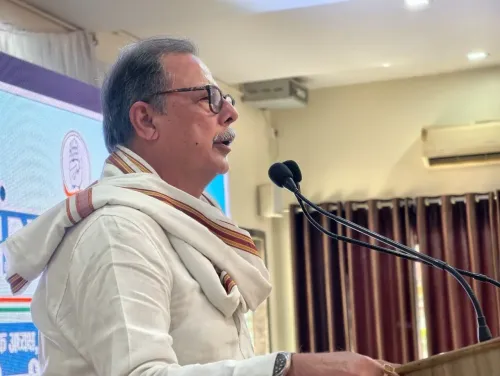
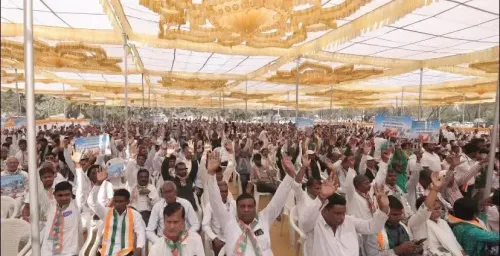
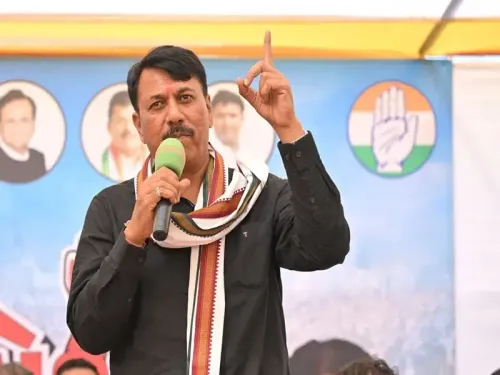
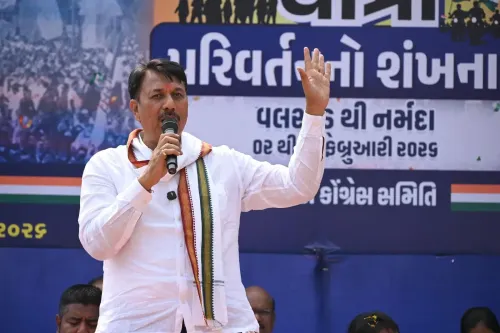
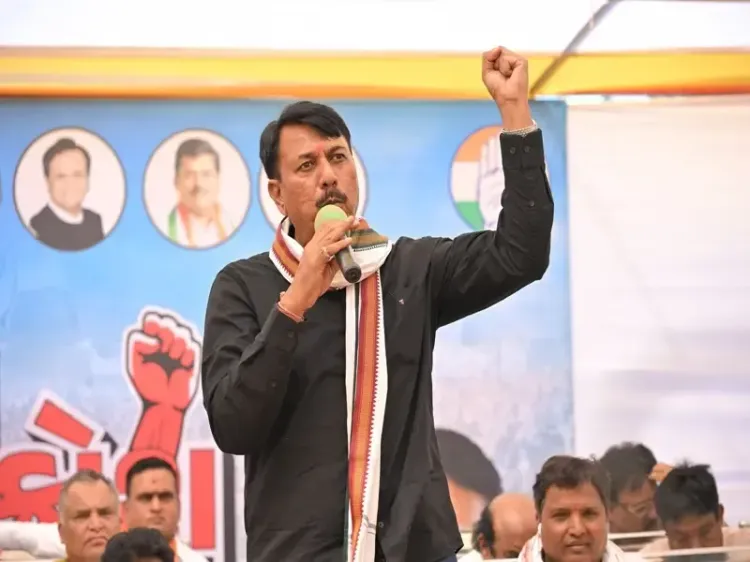
Ahmedabad, Feb 11 (NationPress) The President of Gujarat Congress, Amit Chavda, raised critical issues concerning unresolved tribal land claims, farmer grievances, educational deficiencies, and healthcare inadequacies during the 10th day of the 'Jan Aakrosh Yatra' in southern Gujarat.
While addressing the challenges faced by farmers at the Narmada Sugar Factory, Chavda stated: “With escalating costs of cultivation, soaring prices for fertilizers and seeds, along with surging labor expenses, farmers need to receive Rs 5,000 per tonne for sugarcane. Without this support, farming will become unfeasible.”
Chavda strongly criticized the state government for its inaction on tribal land claims. “Even after nearly 20 years of the Forest Rights Act, thousands of tribal families are still waiting for their claims to be resolved. Despite obtaining approvals from gram sabhas and having cultivation records, bureaucratic delays and technical issues persist,” he explained.
He pointed out that according to Section 73AA of the Gujarat Land Revenue Act, tribal lands should be safeguarded against transfer and misuse.
“Nevertheless, a significant scam is underway where these lands are being illegitimately converted to non-agricultural (NA) status and seized, often involving fraudulent documentation,” he alleged.
Chavda also expressed his concerns regarding job opportunities in prominent projects such as the Statue of Unity (SOU). “The local tribal community was excluded from employment on this project. Instead, contracts were reportedly awarded to associates of the BJP, depriving the community of their legitimate employment rights,” he said.
He further condemned the government for neglecting the provisions of the Panchayats (Extension to Scheduled Areas) Act (PESA) and Schedule V protections, claiming that tribal water, land, and forests are being acquired under the guise of development without necessary gram sabha approvals.
Addressing educational challenges, Chavda remarked: “Long distances to schools, inadequate infrastructure, and a lack of basic facilities are obstructing access to quality education for students in tribal regions. Consequently, dropout rates have escalated dramatically.”
Congress Legislative Assembly leader, Dr. Tushar Chaudhary, raised healthcare issues, stating: “The absence of hospitals and primary health centers forces patients to travel to distant districts for treatment. This adds financial strain on poor families, and minor ailments can escalate into life-threatening conditions due to the lack of local facilities.”
Chavda stressed that ongoing delays and what he termed as poor implementation of policies in tribal areas are stripping communities of their rightful access to land, resources, education, and livelihoods.
Point of View
The issues raised by Amit Chavda highlight significant challenges facing marginalized communities in Gujarat. The unresolved tribal land claims and the plight of farmers call for urgent governmental intervention. It's crucial for authorities to address these longstanding grievances to ensure the rights and livelihoods of these communities are protected.
NationPress
21 Sept 2026
Frequently Asked Questions
What are the main issues raised by Amit Chavda?
Amit Chavda raised concerns about unresolved tribal land claims, farmer grievances regarding sugarcane pricing, gaps in education and healthcare, and alleged exploitation of tribal communities.
Why are farmers demanding Rs 5,000 per tonne for sugarcane?
Farmers are facing rising costs for cultivation, fertilizers, seeds, and labor, making it necessary for them to receive Rs 5,000 per tonne for sugarcane to ensure economic viability.
What is the Gujarat Land Revenue Act?
The Gujarat Land Revenue Act includes provisions to protect tribal lands from transfer and misuse, aiming to safeguard the rights of tribal communities.
How does the government respond to these allegations?
The content does not specify the government's response, but it highlights ongoing issues that require attention and action from state authorities.
What are the implications of the lack of healthcare facilities?
The absence of healthcare facilities compels patients to travel long distances for treatment, posing financial burdens and increasing risks for serious health conditions.