Amit Shah: Gujarat deported 2,412 illegal nationals, 92% chargesheets in 60 days
Synopsis
Home Minister Amit Shah, after chairing a high-level security review in Ahmedabad, revealed Gujarat has deported 2,412 illegal foreign nationals and achieved 92% chargesheet-within-60-days compliance under the new criminal laws — numbers he called 'excellent', while pushing hard on coastal security and a drug-free India target by 2029.
Key Takeaways
Home Minister Amit Shah chaired a high-level law and order review in Ahmedabad on 7 November .
Gujarat has deported 2,412 illegal foreign nationals since the new criminal laws came into force.
The state filed chargesheets within 60 days in 92 per cent of cases — described by Shah as 'excellent'.
Shah directed expansion of the '1933' control room and intensified action against drug networks, targeting a drug-free India by 2029 .
The meeting reviewed illegal Bangladeshi nationals, NDPS Act enforcement, POCSO cases, cybercrime, coastal security, and Operation Mule Hunt .
Malik briefed Shah on border management, the quadrilateral security grid, and Mission Prabodh against cyber fraud.
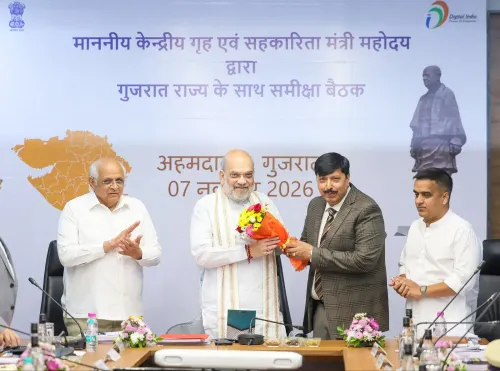
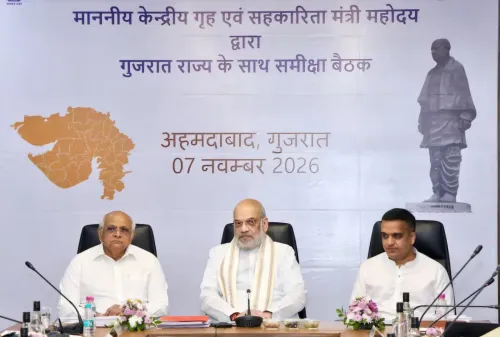
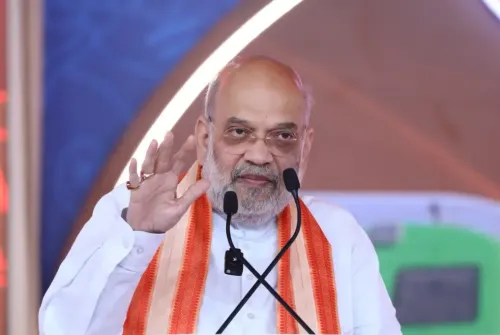
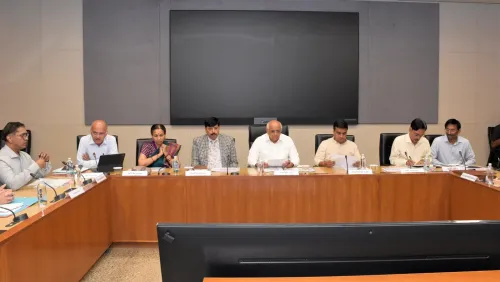
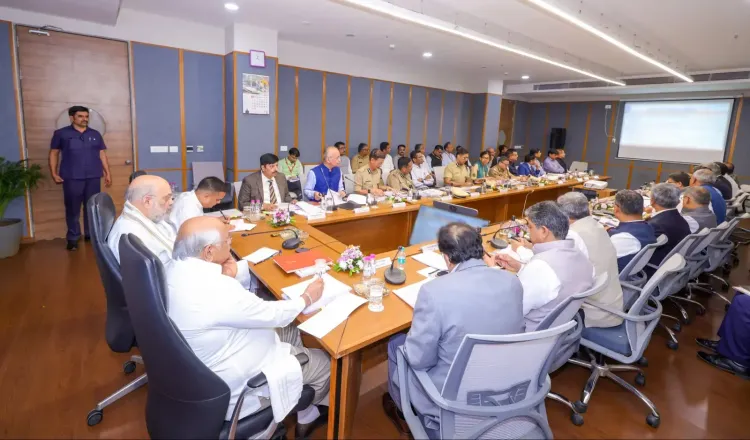
Union Home Minister Amit Shah on Saturday, 7 November revealed that Gujarat has deported 2,412 illegal foreign nationals and filed chargesheets within 60 days in 92 per cent of cases since the rollout of the new criminal laws. Shah made the disclosure after chairing a high-level review meeting on law and order and internal security in Ahmedabad.
Shah's Assessment of Gujarat's Performance
In a post on social media platform X, Shah described the state's record as "excellent." He stated: "After the implementation of the new laws in the state, Gujarat has performed excellently by filing charge sheets within 60 days in 92 per cent of cases and deporting 2,412 illegal foreign nationals."
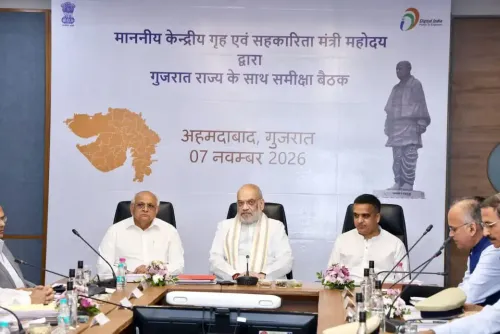
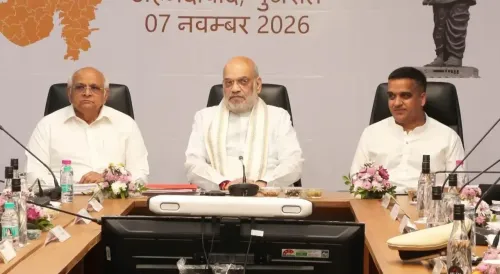
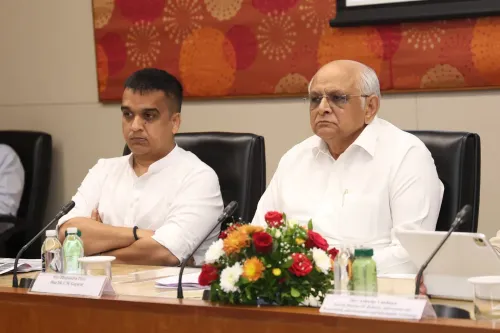
The review meeting was chaired in the presence of Chief Minister Bhupendra Patel, Deputy Chief Minister Harsh Sanghavi, and senior state and central officials. It covered law and order, internal security, border and coastal security, narcotics control, cybercrime, and counter-terrorism preparedness.
Coastal Security and Drug Networks in Focus
Shah called on central and state agencies to strengthen coordination for coastal surveillance and to intensify action against drug networks, reiterating the goal of a 'drug-free Gujarat'. He directed officials to expand the '1933' control room and scale up enforcement drives as part of a broader national target of a drug-free India by 2029.
The meeting also took stock of the Narcotic Drugs and Psychotropic Substances (NDPS) Act enforcement, cases under the Protection of Children from Sexual Offences (POCSO) Act, and measures to prevent infiltration across the state's borders.
Agenda: Illegal Bangladeshi Nationals and Cybercrime
Among the specific issues reviewed were the presence of alleged illegal Bangladeshi nationals in Gujarat, so-called 'love jihad' cases, economic offences, police modernisation, cyber fraud, prison administration, and the overall functioning of the criminal justice system.
Director General of Police (DGP) G.S. Malik briefed Shah on border management, the quadrilateral security grid, anti-radicalisation measures, Operation Mule Hunt, the 112 Janrakshak emergency service, and Mission Prabodh — the state's initiative targeting cyber fraud.
Other Issues on the Agenda
Chief Secretary Manoj Kumar Das and Chief Minister's Principal Secretary and Home Department Principal Secretary Sanjeev Kumar presented updates on the implementation of steps agreed at previous Union Home Ministry meetings. Coastal security arrangements, suspicious activities along state borders, and the Vibrant Villages Programme were also reviewed.
Additional agenda items included disaster management, urban flood prevention in Ahmedabad, mangrove conservation, and forensic infrastructure development — signalling the breadth of the Centre's engagement with Gujarat's security and administrative apparatus.
With the new criminal laws now embedded in Gujarat's enforcement framework, the state's next challenge will be sustaining these metrics at scale while addressing the broader concerns around coastal infiltration and narcotics that Saturday's meeting placed firmly on the agenda.
Point of View
412 deportations — are headline-worthy, but independent verification of both metrics is absent from the public domain; the numbers come from the state machinery briefing the Centre, not an external audit. The meeting's agenda, spanning illegal Bangladeshi nationals, 'love jihad', and coastal infiltration, reflects a deliberate political framing ahead of what is increasingly a security-centric electoral narrative in Gujarat. Notably, the push for a 'drug-free India by 2029' mirrors language used in multiple states, raising the question of whether the target is a policy commitment with measurable benchmarks or a recurring rhetorical device. The breadth of Saturday's agenda — from mangrove conservation to counter-terrorism — also suggests the Centre is using such reviews as much for optics as for operational oversight.
NationPress
7 Nov 2026
Frequently Asked Questions
How many illegal foreign nationals has Gujarat deported under the new criminal laws?
Gujarat has deported 2,412 illegal foreign nationals since the implementation of the new criminal laws, according to Home Minister Amit Shah. He made the disclosure after chairing a security review meeting in Ahmedabad on 7 November.
What is the 92 per cent chargesheet figure Shah mentioned?
It refers to Gujarat filing chargesheets within 60 days in 92 per cent of cases — a compliance metric under the new criminal laws that replaced the older Code of Criminal Procedure. Shah described this as 'excellent' performance by the state.
What is the 'drug-free India by 2029' target Shah referred to?
Home Minister Shah directed Gujarat officials to expand the '1933' anti-drug control room and intensify enforcement drives as part of a broader national goal of achieving a drug-free India by 2029 . The immediate state-level objective is a 'drug-free Gujarat'.
Who attended the Ahmedabad security review meeting chaired by Amit Shah?
The meeting was attended by Chief Minister Bhupendra Patel , Deputy Chief Minister Harsh Sanghavi , Chief Secretary Manoj Kumar Das , DGP G.S. Malik , and senior state and central officials including the Home Department Principal Secretary.
What is Operation Mule Hunt and Mission Prabodh mentioned in the review?
Operation Mule Hunt is a Gujarat Police initiative targeting cyber fraud networks, while Mission Prabodh focuses specifically on public awareness and enforcement against cyber fraud. Both were briefed to Home Minister Shah by DGP G.S. Malik at the Ahmedabad meeting.