Air India AI-171 crash: Gujarat DGP details rescue and ID operation
Synopsis
Less than 20 hours after India's deadliest aviation accident in decades, Gujarat police had already handed the first identified body to a grieving family. DGP G.S. Malik's account of the AI-171 response — green corridors, 200 documentation specialists, DNA labs on standby — reveals the scale of a disaster management operation that is now a national benchmark, even as the AAIB investigation into the fuel cut-off remains unresolved.
Key Takeaways
Air India Flight AI-171 crashed on 12 June shortly after take-off from Sardar Vallabhbhai Patel International Airport , Ahmedabad , killing 260 people — 241 on board and 19 on the ground .
Only one passenger survived the crash of the Boeing 787-8 Dreamliner operating to London Gatwick .
The first identified body was handed to relatives within 20 hours ; the first DNA-matched identification was completed within 50 hours .
Nearly 200 police personnel were deployed for documentation and DNA-related processes; green corridors were established for emergency vehicles across Ahmedabad.
The AAIB preliminary report found both engine fuel control switches moved to cut-off after take-off; a final cause has not been determined.
Compensation matters remain with Air India and insurers, according to DGP Malik.
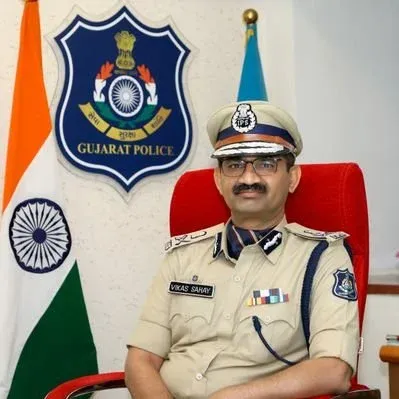
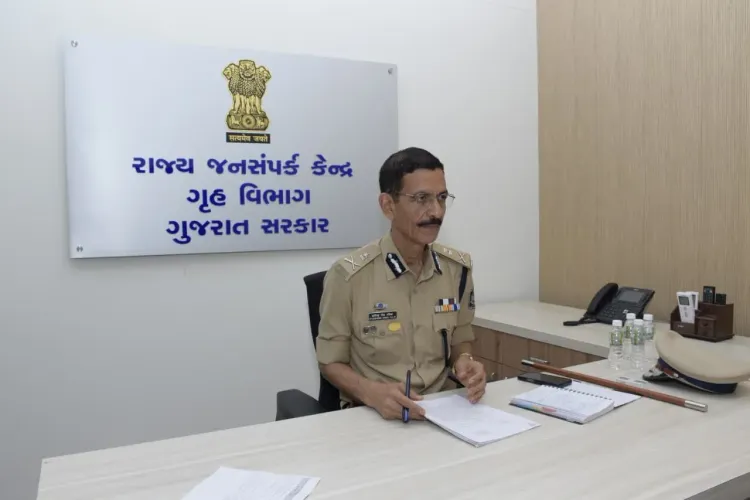
Nearly a year after the Air India Flight AI-171 disaster in Ahmedabad, Gujarat Director General of Police G.S. Malik has provided a detailed account of the rescue, traffic management, and victim identification operation that followed India's deadliest aviation accident in decades. Speaking ahead of the first anniversary of the crash, Malik described the scale and coordination of an effort that involved hundreds of police personnel, forensic experts, and civic agencies working around the clock.
The Crash and Its Immediate Aftermath
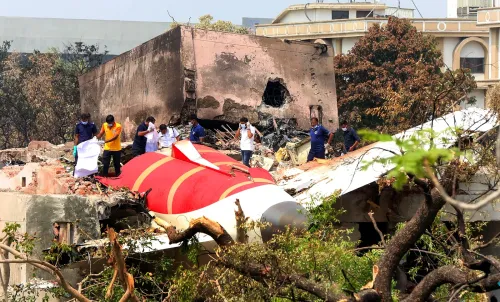
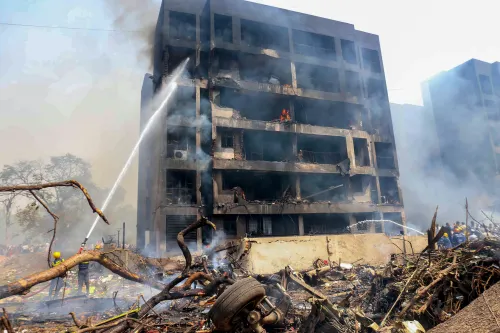
The Boeing 787-8 Dreamliner, operating as Flight AI-171 from Ahmedabad to London Gatwick, crashed shortly after take-off from Sardar Vallabhbhai Patel International Airport on 12 June. The aircraft was carrying 230 passengers and 12 crew members. A total of 260 people died — 241 on board and 19 on the ground — with only one passenger surviving.
Malik said he received the first alert while at home, as the crash site was located roughly 200 metres from his residence. 'People called and informed me that there had been explosions and smoke. Almost immediately, I was informed through the control room that an aircraft had crashed. I left immediately and reached the site before 2 p.m.,' he said. He described the scene as 'extremely painful', with rescue personnel recovering bodies amid the wreckage.
Green Corridors and Emergency Logistics
One of the first priorities, according to Malik, was ensuring unhindered movement of emergency vehicles. 'We created diversions and established green corridors for ambulances and fire tenders arriving from different parts of Ahmedabad. We knew Civil Hospital would come under pressure immediately after the crash, so arrangements were made there as well,' he said.
The crash also prompted visits by senior political leaders, including Home Minister Amit Shah, Gujarat Chief Minister Bhupendra Patel, and Prime Minister Narendra Modi.
Victim Identification: A Race Against Time
Anticipating the arrival of victims' relatives, authorities moved swiftly to accelerate identification procedures. 'Nearly 200 police personnel experienced in documentation work were deployed to assist with paperwork and DNA-related processes,' Malik said. Blood samples from relatives and biological samples from the deceased were collected and dispatched to forensic laboratories in Ahmedabad and Gandhinagar.
The first identified body was handed over to relatives by 8.30 a.m. on 13 June — less than 20 hours after the crash. 'Even in many road accident cases, the process can take 24 hours. Here, identified bodies were released in less than 20 hours,' Malik noted. The first victim identified through DNA matching was released at 3.19 p.m. on 14 June, approximately 50 hours after the crash.
Families received a full set of documentation, including accident death reports, station diary entries, inquest reports, post-mortem reports, DNA reports, and death certificates. Valuables recovered from victims were also returned, and additional vehicles were arranged to assist families transporting remains.
Investigation Status and Compensation
The crash remains under investigation by India's Aircraft Accident Investigation Bureau (AAIB). Preliminary findings released in July indicated that both engine fuel control switches moved to the cut-off position shortly after take-off, causing fuel starvation — though investigators have not yet issued a final conclusion on the cause. An interim report is expected as the inquiry continues.
On the question of compensation, Malik said the matter rested with Air India and insurers. 'We cannot comment on compensation payments. That concerns Air India and insurance-related processes,' he said.
As the first anniversary approaches, the coordinated response by police, the Ahmedabad Municipal Corporation, the Fire Brigade, Civil Hospital staff, forensic experts, and district administration officials stands as a benchmark for mass-casualty disaster management in India — even as families await closure on the investigation's final findings.
Point of View
And it deserves scrutiny beyond the procedural pride. The sub-20-hour identification turnaround is genuinely impressive, but the broader question — why the AAIB has not issued a final report nearly a year after a crash involving fuel control switches moving to cut-off — goes unaddressed. Families awaiting compensation are caught between an airline, insurers, and an investigation that has so far produced only a preliminary finding. The operational response was swift; the accountability architecture has been slower.
NationPress
26 Oct 2026
Frequently Asked Questions
What happened in the Air India Flight AI-171 crash?
Air India Flight AI-171, a Boeing 787-8 Dreamliner flying from Ahmedabad to London Gatwick, crashed shortly after take-off from Sardar Vallabhbhai Patel International Airport on 12 June. The crash killed 260 people — 241 on board and 19 on the ground — with only one passenger surviving, making it India's deadliest aviation accident in decades.
How quickly were victims identified after the AI-171 crash?
The first identified body was handed over to relatives by 8.30 a.m. on 13 June, less than 20 hours after the crash. The first victim identified through DNA matching was released at 3.19 p.m. on 14 June, approximately 50 hours after the accident.
What is the current status of the AI-171 crash investigation?
The crash is under investigation by India's Aircraft Accident Investigation Bureau (AAIB). Preliminary findings released in July indicated that both engine fuel control switches moved to the cut-off position shortly after take-off, causing fuel starvation. A final conclusion on the cause has not yet been issued, and an interim report is expected.
Who led the rescue and identification operation after the AI-171 crash?
Gujarat Director General of Police G.S. Malik coordinated the response, deploying nearly 200 police personnel for documentation and DNA processes. The operation involved the Ahmedabad Municipal Corporation, Fire Brigade, Civil Hospital staff, forensic experts, and district administration officials.
Will families of AI-171 victims receive compensation?
According to DGP Malik, compensation matters rest with Air India and its insurers. 'We cannot comment on compensation payments. That concerns Air India and insurance-related processes,' he said. The government has not announced a separate compensation framework.