Gujarat Shaktidoot 2.0: Athlete aid doubled to ₹50 lakh, age bar cut to 9
Synopsis
Gujarat is doubling its flagship athlete support grant to ₹50 lakh, cutting the entry age to above 9, and formally including para-athletes for the first time — just as the state sends its largest-ever contingent of nine athletes to the 2026 Asian Games in Aichi-Nagoya. The Shaktidoot 2.0 revamp signals a structural shift from fixed-period grants to open-ended, performance-linked support, backed by a reported haul of 1,604 medals since 2015.
Key Takeaways
Gujarat launches Shaktidoot 2.0 on 12 August 2025 at Mahatma Mandir, Gandhinagar .
Maximum athlete assistance doubled from ₹25 lakh to ₹50 lakh ; minimum eligibility age cut from 12 to above 9 years .
Fixed time limit on assistance removed; support will now be performance-linked and continuous.
Para, deaf, blind , and other differently abled athletes included for the first time under equal assistance terms.
Shaktidoot-supported athletes have won 1,604 medals since 2015 — 831 national, 773 international.
Nine Gujarat athletes selected for the 2026 Asian Games in Aichi-Nagoya — the state's largest-ever Games contingent.
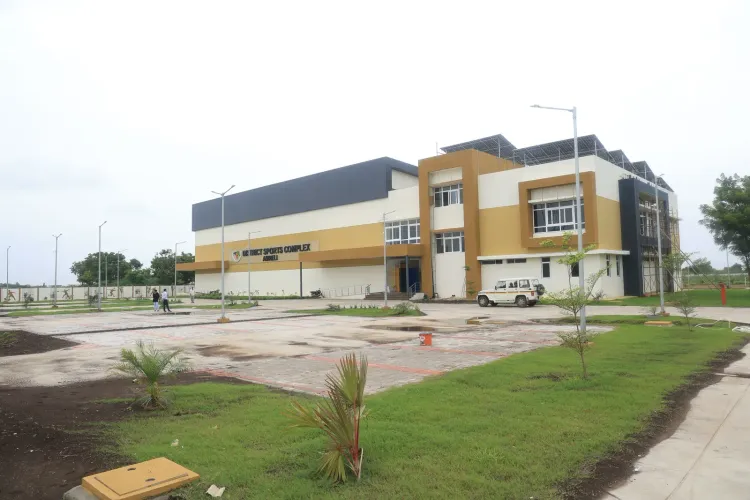
Sports infrastructure worth over ₹388 crore to be inaugurated across 18 districts .
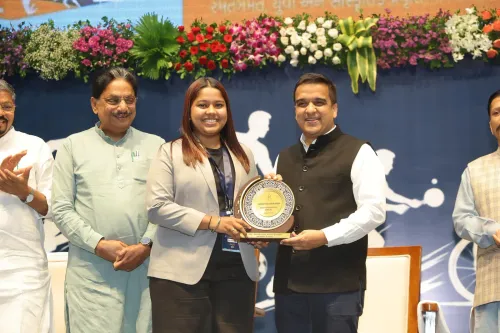
The Gujarat government is set to launch the revamped Shaktidoot 2.0 scheme on 12 August 2025 at Mahatma Mandir, Gandhinagar, doubling the maximum financial assistance for promising athletes from ₹25 lakh to ₹50 lakh and lowering the minimum eligibility age from 12 years to above 9 years. Deputy Chief Minister Harsh Sanghavi will formally unveil the scheme under the state's 'Ramshe Gujarat, Jitshe Gujarat' initiative, alongside the conferral of awards on 799 talented athletes and the e-inauguration of sports infrastructure worth more than ₹388 crore across the state.
Key Changes Under Shaktidoot 2.0
The most significant revision is the removal of a fixed time limit on assistance — athletes will now receive continued financial support tied to their performance rather than a predetermined period. The beneficiary cap, currently set at 64 athletes, will be expanded in phases based on talent and performance assessments.
A scientific, point-based marking system will replace the earlier selection process, with sports experts formally included in screening and selection committees. Competitions such as the Olympics, Asian Games, and Commonwealth Games will carry appropriate weightage in evaluations. The scheme will also introduce Shaktidoot B, a parallel initiative offering immediate financial assistance to athletes outside the main scheme who deliver outstanding performances during the year.
Inclusion of Para and Differently Abled Athletes
A notable structural addition is the extension of equal assistance and opportunities to para, deaf, blind, and other athletes with disabilities — a category not explicitly covered under the original scheme. Annual and half-yearly assessments will govern performance-based category upgrades for all beneficiaries.
Under the revised framework, athletes will receive need-based support covering sports facilities, nutritious food, modern equipment, training in India and abroad, expert coaches, and medical assistance, with the stated objective of preparing them for major international competitions including the Olympics and Asian Games.
Track Record: 1,604 Medals Since 2015
The Gujarat government reports that athletes supported under the Shaktidoot scheme have collectively won 1,604 medals since the programme's inception in 2015 — 831 at the national level and 773 at international competitions.
At the Tokyo Olympics 2021, three Shaktidoot-supported athletes represented India; another three did so at the Paris Olympics 2024. At the Asian Games, Gujarat's representation grew from three athletes at Incheon 2014 to seven at Jakarta 2018 and seven at Hangzhou 2023. For the 2026 Asian Games in Aichi-Nagoya, Japan — scheduled from 19 September to 4 October — nine Shaktidoot athletes and one reserve player have been selected, marking Gujarat's largest-ever representation at the event.
At the Commonwealth Games, two athletes represented India each at Glasgow 2014, Gold Coast 2018, and Birmingham 2022, with one Shaktidoot-supported athlete also competing at the 2026 Commonwealth Games in Glasgow.
Sports Infrastructure Push
The launch event will also include the e-inauguration and e-foundation stone laying of 11 taluka-level sports complexes, seven district-level sports complexes, seven libraries, two study halls, five district libraries, and two municipal libraries. Facilities include 400-metre synthetic athletic tracks, astroturf hockey grounds, sports hostels, and campus development works at Swarnim Gujarat Sports University in Vadodara.
The projects span 18 districts including Ahmedabad, Kutch, Jamnagar, Dahod, Navsari, Porbandar, and Valsad, among others. The programme will also see the presentation of the Eklavya Award, Sardar Patel Award, and Jaydeepsinhji Award to deserving athletes.
What Comes Next
With the 2026 Asian Games less than two months away, the timing of the Shaktidoot 2.0 launch is deliberate — Gujarat's nine-athlete squad is its biggest-ever Games contingent, and the state government appears to be building a longer-term pipeline through the lower age threshold and the inclusion of para-athletes. Whether the expanded beneficiary pool and performance-linked disbursements translate into a sustained medals surge will be the real measure of the revamp's success.
Point of View
Open-ended support is a meaningful departure from the fixed-period grant model that limits most state sports schemes. But the real test is implementation: expanding the beneficiary pool 'in phases' is a vague commitment, and past state sports programmes across India have struggled to scale selection processes without introducing political or administrative bias. The inclusion of para-athletes is overdue and welcome, yet the scheme's success will ultimately be measured not by medal counts at state-organised events but by how many Shaktidoot athletes reach Olympic podiums. Nine athletes at the 2026 Asian Games is a promising signal — but Gujarat's per-capita medal output at the Olympics remains thin relative to its economic weight.
NationPress
26 Sept 2026
Frequently Asked Questions
What is the Shaktidoot 2.0 scheme launched by Gujarat?
Shaktidoot 2.0 is a revamped state government programme that provides financial and logistical support to talented athletes in Gujarat. It doubles the maximum grant from ₹25 lakh to ₹50 lakh, lowers the eligibility age to above 9 years, and extends coverage to para and differently abled athletes for the first time.
When and where is Shaktidoot 2.0 being launched?
Deputy Chief Minister Harsh Sanghavi will formally launch the scheme on 12 August 2025 at Mahatma Mandir in Gandhinagar, under the state's 'Ramshe Gujarat, Jitshe Gujarat' initiative.
How many medals have Gujarat athletes won under the original Shaktidoot scheme?
According to the Gujarat government, Shaktidoot-supported athletes have won 1,604 medals since the scheme began in 2015 — 831 at the national level and 773 at international competitions.
What is the Shaktidoot B initiative announced alongside Shaktidoot 2.0?
Shaktidoot B is a new parallel initiative that will provide immediate financial assistance to athletes who are not enrolled in the main Shaktidoot scheme but deliver outstanding performances during the year. It is designed as a fast-response support mechanism outside the regular selection cycle.
How many Gujarat athletes are competing at the 2026 Asian Games?
Nine athletes supported under the Shaktidoot scheme, plus one reserve player, have been selected to represent India at the 2026 Asian Games in Aichi-Nagoya, Japan, scheduled from 19 September to 4 October. This is Gujarat's largest-ever contingent at the Asian Games.