Statue of Unity to host tribal dance showcases twice monthly under new MoU
Synopsis
Gujarat has formalised what began as a fortnightly experiment on Foundation Day 2024 into a permanent cultural fixture: tribal artists from across the state will now perform 14 distinct dance forms at the Statue of Unity every two Saturdays, backed by a signed MoU between the SoU Authority and GTRTS — turning the world's tallest statue into a living stage for the state's most marginalised communities.
Key Takeaways
The Statue of Unity Authority and Gujarat Tribal Research and Training Society (GTRTS) signed an MoU on 27 June to institutionalise tribal cultural performances at Ekta Nagar .
Tribal dance performances will be held twice every month on Saturdays , featuring artists from tribal communities across Gujarat.
The programme covers 14 traditional dance forms from districts including Chhota Udepur , Dang , Narmada , Tapi , Mahisagar , Navsari , and Valsad .
The initiative began on Gujarat Foundation Day, 1 May 2024 , and was formalised after receiving positive visitor response.
The programme operates under the supervision of Chief Minister Bhupendra Patel and is led by Tribal Development Minister Naresh Patel .
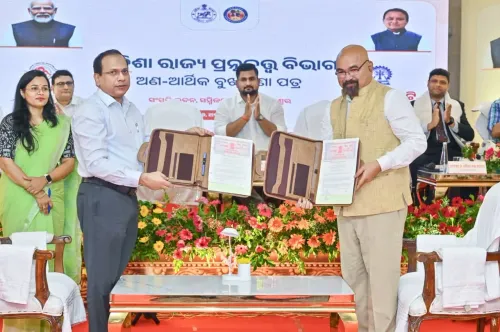
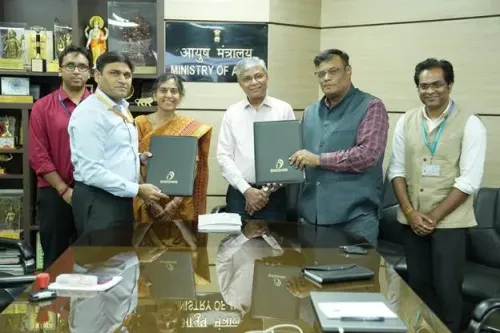
The Statue of Unity (SoU) Authority and the Gujarat Tribal Research and Training Society (GTRTS) have signed a Memorandum of Understanding (MoU) to institutionalise regular tribal cultural performances at Ekta Nagar, formalising an arrangement that will bring 14 traditional dance forms from across Gujarat's tribal districts to one of India's most-visited tourist landmarks. The agreement was signed on 27 June, ensuring performances are held twice every month on Saturdays.
What the MoU Covers
Under the agreement, tribal artists from communities across Gujarat will perform at the Statue of Unity every fortnight on Saturdays, as well as during special occasions. The programme features 14 distinct traditional dance forms drawn from tribal districts spanning the state. These include Rathwa, Gher, and Mewasi dances from Chhota Udepur; Kahadiya and Pawari dances from Dang; Folk Dance and Holi Dance from Narmada; Gamit Dhol Dance and Chaudhary Folk Dance from Tapi; Talwar Dance and Timli Dance from Mahisagar; Mandal Dance and Tur Dance from Navsari; and Kahli Dance from Valsad.
Background and How It Began
The initiative traces its origins to Gujarat Foundation Day on 1 May 2024, when tribal dance programmes were first organised on a fortnightly basis at the Statue of Unity. According to state government officials, the performances drew an encouraging response from both domestic and international visitors, prompting authorities to convert the informal arrangement into a structured, binding agreement. The MoU formalises what had already become a popular fixture at the destination.
Who Signed the Agreement
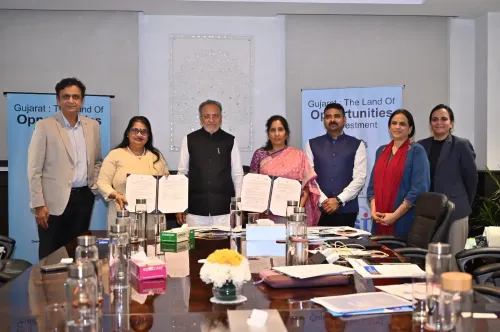
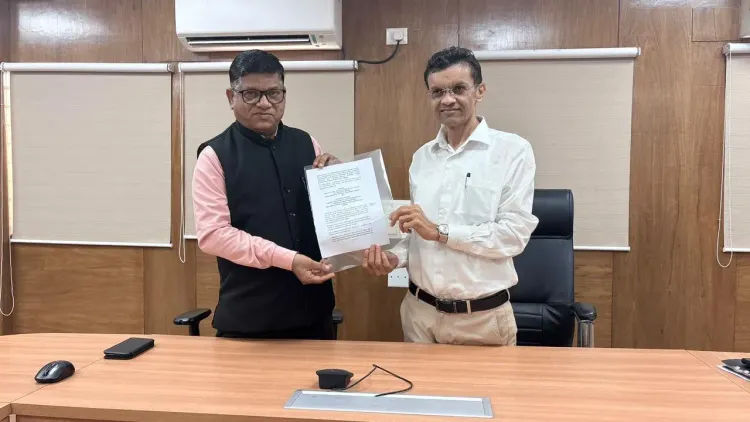
The MoU was signed by Gopal Bamaniya, Additional Collector of the Statue of Unity Authority, and Dr C.C. Chaudhary, Executive Director of the Gujarat Tribal Research and Training Society. Speaking at the signing, Bamaniya said: 'The initiative is aimed at introducing visitors from India and abroad to Gujarat's diverse tribal culture and traditions through live performances.' Dr Chaudhary added that the programme would 'provide wider recognition to the state's tribal culture while creating a stronger platform for local artists to showcase their talent.'
Government Oversight and Broader Goals
The programme is being implemented under the supervision of Chief Minister Bhupendra Patel, and is led by Tribal Development Minister Naresh Patel and Minister of State P.C. Baranda. It forms part of the Gujarat government's wider effort to preserve and promote the state's tribal cultural heritage through high-footfall public platforms. Notably, anchoring the initiative at the Statue of Unity — which draws millions of visitors annually — gives it significantly greater visibility than conventional cultural events. With the MoU now in place, the programme has a structured mandate and institutional backing to sustain itself beyond individual occasions.
Point of View
Or whether this remains primarily a tourism enhancement exercise. Formalising what began on Foundation Day 2024 is a meaningful step; the next question is whether the 14 dance forms are curated with community consent or selected for spectacle. Gujarat's tribal belt spans some of the state's most economically marginalised districts — visibility at Ekta Nagar is valuable, but it needs to translate into sustained livelihood support for the artists involved.
NationPress
27 Jun 2026
Frequently Asked Questions
What is the MoU signed between the Statue of Unity Authority and GTRTS?
It is a formal agreement to institutionalise regular tribal cultural performances at the Statue of Unity in Ekta Nagar, with tribal artists performing 14 traditional dance forms twice every month on Saturdays. The MoU was signed on 27 June by Gopal Bamaniya of the SoU Authority and Dr C.C. Chaudhary of GTRTS.
Which tribal dance forms will be performed at the Statue of Unity?
The programme features 14 traditional dance forms from Gujarat's tribal districts, including Rathwa, Gher, and Mewasi from Chhota Udepur; Kahadiya and Pawari from Dang; Folk Dance and Holi Dance from Narmada; Gamit Dhol Dance and Chaudhary Folk Dance from Tapi; Talwar Dance and Timli Dance from Mahisagar; Mandal Dance and Tur Dance from Navsari; and Kahli Dance from Valsad.
When did tribal performances at the Statue of Unity first begin?
The initiative began on Gujarat Foundation Day, 1 May 2024, when tribal dance programmes were first organised on a fortnightly basis at the Statue of Unity. The positive visitor response led authorities to formalise the arrangement through the MoU.
How often will the tribal cultural performances be held?
Performances will be held twice every month on Saturdays at Ekta Nagar, and also during special occasions, as per the terms of the MoU.
Who is overseeing the tribal cultural programme at Ekta Nagar?
The programme is being implemented under the supervision of Chief Minister Bhupendra Patel, with leadership from Tribal Development Minister Naresh Patel and Minister of State P.C. Baranda, as part of the state's tribal cultural heritage preservation efforts.