Gujarat Dy CM Harsh Sanghavi grants citizenship to 319 Hindu refugees from Pakistan in Rajkot
Synopsis
Gujarat Deputy CM Harsh Sanghavi handed Indian citizenship certificates to 319 displaced Hindu families from Pakistan in Rajkot on 15 October — recalling how many had changed their names to survive persecution. With over 1,500 granted citizenship in Gujarat under the CAA so far, the ceremony signals the law's on-ground implementation accelerating, one emotional moment at a time.
Key Takeaways
Gujarat Deputy CM Harsh Sanghavi distributed citizenship certificates to 319 displaced Hindu families from Pakistan in Rajkot on 15 October 2026 .
Of the beneficiaries, 259 were from Rajkot district , 53 from Morbi , six from Kutch , and one from Surendranagar .
Sanghavi recalled incidents in Rani Bagh, Hyderabad, Pakistan , where Hindus reportedly changed their names under threat of violence.
More than 1,500 people have been granted citizenship in Gujarat under the CAA , according to Census Operations Director Sujal Mayatra .
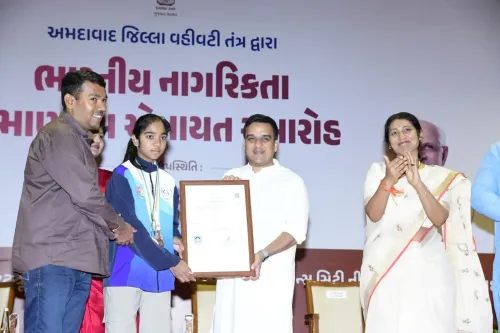
The ceremony was held at Pramukh Swami Auditorium and attended by Rajkot Mayor Dr Nehal Shukla , MP Kesaridevsinh Zala , and senior officials.
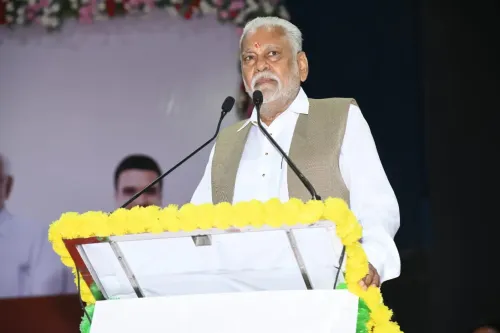
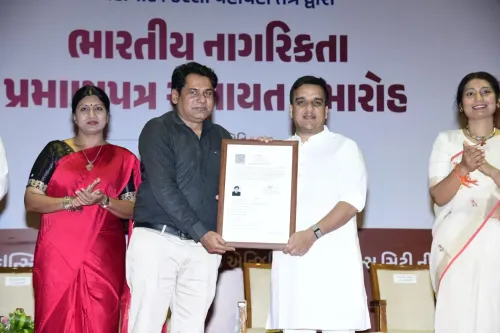
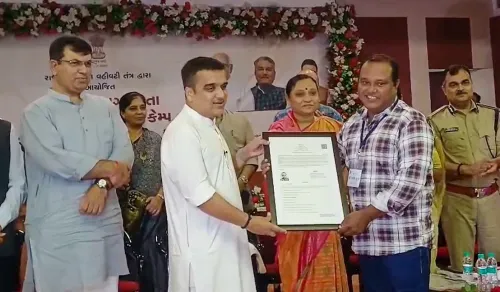
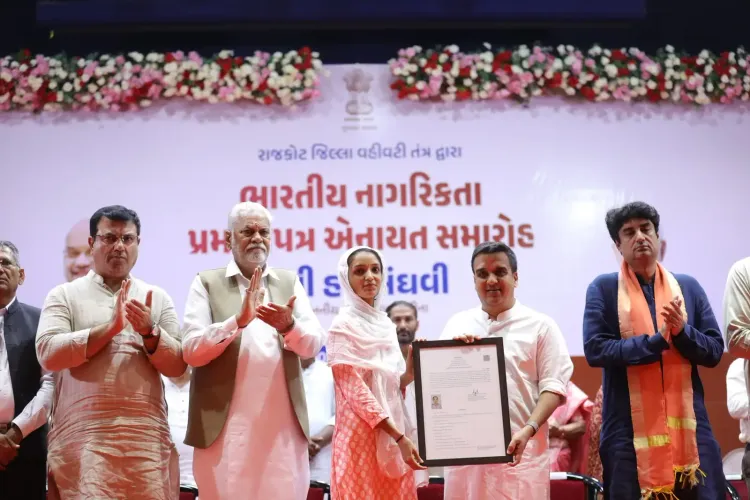
Gujarat Deputy Chief Minister Harsh Sanghavi on Thursday, 15 October 2026, handed over Indian citizenship certificates to 319 displaced Hindu families from Pakistan at a ceremony in Rajkot district, marking one of the largest single-day naturalisations under the Citizenship Amendment Act (CAA) in the state. Sanghavi said the new citizens would no longer need to conceal their identities or live under assumed names — a practice he said many had adopted to survive persecution in Pakistan.
Hardships That Preceded the Ceremony
Sanghavi recalled documented incidents in Rani Bagh, Hyderabad, Pakistan, where Hindu residents had reportedly changed their names under threat of violence — including incidents of firing — to protect their lives. He also cited restrictions faced by women in Pakistan's Tharparkar region, where, he said, women were unable to leave their homes freely. The Deputy Chief Minister described the event as a 'day of freedom' for women who had migrated to Gujarat from Pakistan, singling out Kavita ben from Morbi as one such beneficiary.
Who Received Citizenship and Where They Are From
Of the 319 beneficiaries, 259 were residents of Rajkot district, 53 from Morbi, six from Kutch, and one from Surendranagar. The certificates were distributed at the Pramukh Swami Auditorium, in a ceremony organised by the district administration. The announcement visibly moved many recipients to tears, according to officials present.
What the Government Said
Welcoming the beneficiaries, Sanghavi told them: 'Smile, from today, you are all citizens of India.' He described the occasion as a Diwali-like celebration for the families, and attributed the milestone to the implementation of the CAA alongside Prime Minister Narendra Modi's initiative. 'Now these Indian citizens will be able to live in this country throughout their lives with dignity and under their real names,' he said. In a lighter moment, Sanghavi remarked: 'A pass for Rajkot's garba celebrations is more valuable than a Pakistani passport.' During the ceremony, a teenage girl applied a kumkum tilak to Sanghavi's forehead and tied a rakhi around his wrist as a gesture of gratitude.
CAA Naturalisations in Gujarat So Far
Census Operations Director Sujal Mayatra said more than 1,500 people had been granted citizenship in Gujarat under the CAA to date. He added that the new citizens could contribute to building a developed India with a renewed identity. Notably, this ceremony comes roughly 18 months after the CAA rules were notified in March 2024, and reflects the gradual pace at which applications have been processed across states.
Officials Present at the Ceremony
The event was attended by Rajkot Mayor Dr Nehal Shukla, Member of Parliament Kesaridevsinh Zala, district panchayat president Sanjay Pipaliya, local legislators, and senior district and police officials. The gathering underscored the political significance that Gujarat's ruling Bharatiya Janata Party (BJP) has attached to CAA implementation ahead of upcoming civic engagements in the state. The citizenship certificates are expected to unlock access to government welfare schemes, formal employment, and legal identity documents for the newly recognised citizens.
Point of View
Notified in March 2024 after years of legal and political turbulence, is now yielding tangible outcomes. Gujarat's tally of over 1,500 naturalisations is notable, but it also invites scrutiny: with lakhs of eligible applicants estimated across the country, the pace of processing remains slow, and the administrative machinery in many states has barely moved. The BJP has clear political incentives to showcase CAA implementation in a state it governs firmly, but the harder measure of success will be whether citizenship translates into effective access to welfare, schooling, and economic opportunity for families who have spent years — sometimes decades — in limbo.
NationPress
16 Oct 2026
Frequently Asked Questions
What is the Citizenship Amendment Act (CAA) and who does it cover?
The CAA is a 2019 Indian law that provides a pathway to Indian citizenship for persecuted religious minorities — Hindus, Sikhs, Buddhists, Jains, Parsis, and Christians — who migrated from Pakistan, Bangladesh, or Afghanistan before 31 December 2014. Its implementing rules were notified in March 2024, enabling formal applications and naturalisations.
How many people received citizenship certificates in Rajkot on 15 October 2026?
A total of 319 displaced Hindu families received Indian citizenship certificates at a ceremony in Rajkot district on 15 October 2026. Of these, 259 were from Rajkot, 53 from Morbi, six from Kutch, and one from Surendranagar.
How many people have been granted citizenship under the CAA in Gujarat so far?
More than 1,500 people have been granted citizenship in Gujarat under the CAA, according to Census Operations Director Sujal Mayatra, who spoke at the Rajkot ceremony.
Why did Gujarat Deputy CM Harsh Sanghavi refer to name changes by Hindus in Pakistan?
Sanghavi cited reported incidents in Rani Bagh, Hyderabad, Pakistan, where Hindu residents allegedly changed their names to avoid violence, including instances of firing. He used the reference to highlight the persecution the new citizens had endured before seeking refuge in India.
What benefits does Indian citizenship provide to the CAA beneficiaries?
Indian citizenship entitles the beneficiaries to live under their real names with full legal identity, access government welfare schemes, seek formal employment, and obtain official documents. Deputy CM Sanghavi emphasised that the certificates would provide the families with a renewed sense of security and dignity.