Gujarat's Educational Complex Achieves Cooking Gas Independence with Biogas
Synopsis
Discover how the Shrimati Manekba Vinay Vihar Educational Complex in Gandhinagar has transformed into a self-sufficient institution, utilizing biogas to prepare over 500 meals daily, demonstrating a commitment to sustainability and eco-friendly practices.
Key Takeaways
Self-reliance in cooking gas achieved by using biogas.
Over 500 meals served daily through sustainable practices.
Utilizes cow dung and organic waste for biogas production.
Subsidies available under GEDA scheme for biogas plant installation.
Supports organic farming through the use of biogas slurry as fertilizer.
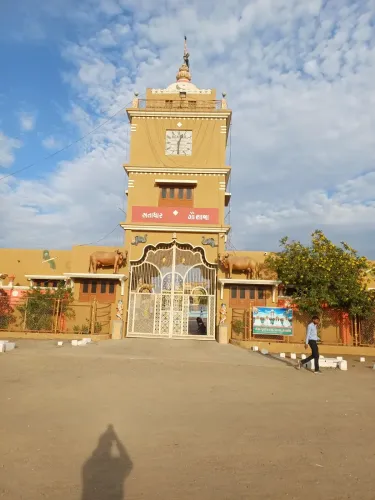
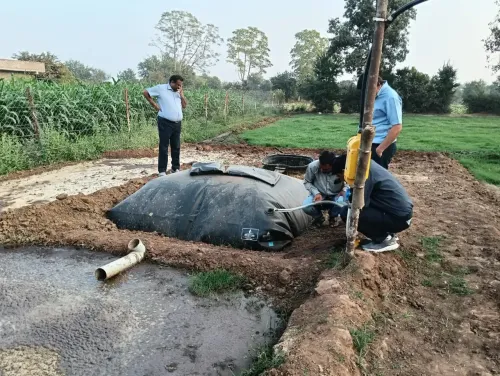
Gandhinagar, March 28 (NationPress) The Shrimati Manekba Vinay Vihar Educational Complex, located near Adalaj in Gandhinagar, has successfully achieved self-sufficiency in cooking gas, enabling the preparation of more than 500 meals each day through biogas generated on-site.
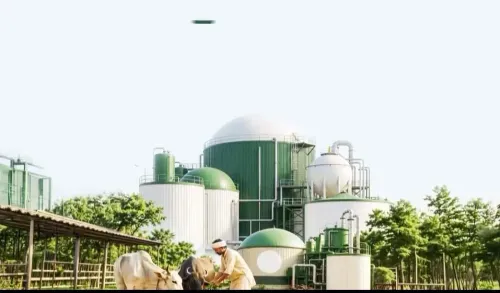
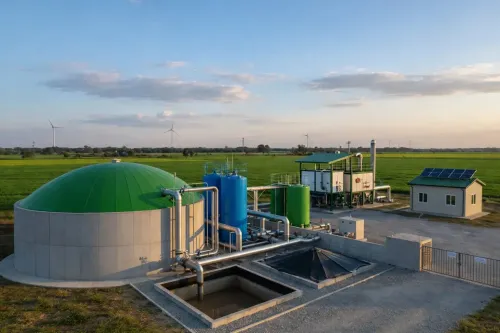
This institution, overseen by the Vasumati Charitable Trust, operates two biogas facilities with a total capacity of 90 cubic metres per day.
The biogas plants utilize cow dung sourced from the trust’s cowshed, which accommodates 222 cows, along with organic waste from the kitchen and local fields.
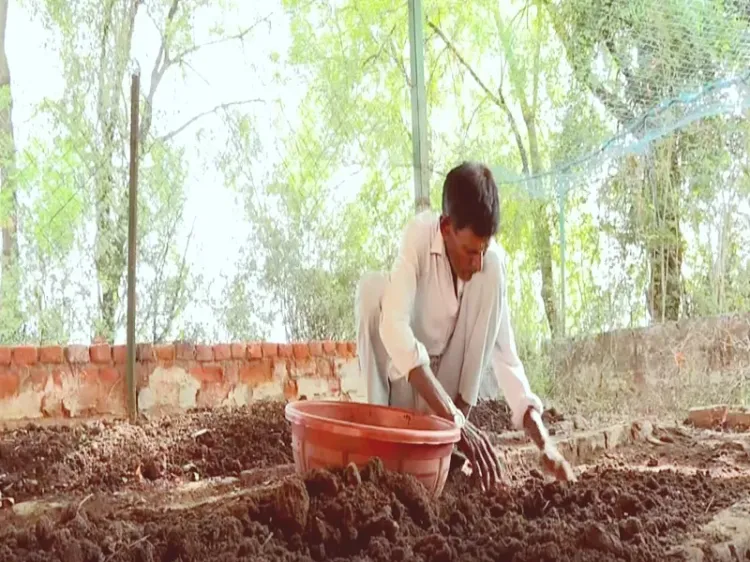
Rahul Patel, the institution's manager, mentioned, “Thanks to the Gujarat government’s ‘Institutional Biogas Plant Scheme’, we have transitioned to self-reliance in cooking gas. The cows produce ample dung, and the slurry generated after biogas production is utilized as organic fertilizer in our fields, promoting entirely organic farming.”
He further elaborated, “Without the biogas plant, we would need around 30 LPG cylinders each month, but we currently do not require any. The slurry also removes our dependence on chemical fertilizers.”
The hostel hosts about 250 students, providing meals twice daily, and caters to around 15 staff families residing on campus.
Under the Gujarat Energy Development Agency (GEDA) scheme, institutions can access subsidies for biogas plants with capacities ranging from 25 to 85 cubic metres per day.
Non-profit organizations can receive up to 75 percent of the installation costs, while profit-generating entities are eligible for 50 percent.
In the last five years, 193 institutional biogas plants have been set up throughout Gujarat, boasting a combined capacity of 13,955 cubic metres per day.
For the financial year 2026-27, plans are in place to establish about 60 additional plants under the scheme, with a total funding provision of Rs 12 crore.
Biogas is generated through the anaerobic decomposition of organic waste, offering a cost-effective and eco-friendly cooking fuel.
The resultant slurry is rich in nitrogen, proving to be an efficient organic fertilizer that fosters sustainable agriculture.
Officials from GEDA have emphasized that the scheme promotes energy independence, minimizes environmental pollution, and encourages the scientific use of biological waste produced in gaushalas, animal shelters, educational institutions, and charitable trusts across Gujarat.
This initiative is a testament to Gujarat’s commitment to alternative energy solutions under the leadership of Chief Minister Bhupendra Patel, reflecting the state’s dedication to sustainable development and clean energy alternatives.
Point of View
It is essential to recognize the significance of initiatives such as the one at the Shrimati Manekba Vinay Vihar Educational Complex. This project exemplifies the potential for educational institutions to lead by example in adopting sustainable practices, reinforcing the importance of renewable energy solutions in combating environmental challenges.
NationPress
19 Sept 2026
Frequently Asked Questions
What is the main source of biogas for the institution?
The institution primarily uses cow dung from its cowshed along with organic waste from the kitchen and surrounding fields to produce biogas.
How many meals does the institution prepare daily?
The institution prepares over 500 meals daily using biogas produced on-site.
What financial support does the Gujarat government provide for biogas plants?
Non-profit institutions can receive up to 75% of the installation costs, while profit-making institutions are eligible for 50% funding under the GEDA scheme.
What benefits does the biogas plant provide to the institution?
The biogas plant allows the institution to become self-reliant in cooking gas and provides organic fertilizer from the slurry produced after gas generation, enhancing their organic farming efforts.
How many new biogas plants are planned for the financial year 2026-27?
Around 60 new biogas plants are planned under the scheme for the financial year 2026-27.