Satadhar Dham's Biogas-Powered Kitchen Serves 10,000 Daily in Gujarat
Synopsis
Discover how Satadhar Dham in Gujarat is revolutionizing sustainable practices with its biogas-driven mega kitchen, serving 10,000 pilgrims each day. This initiative not only champions renewable energy but also exemplifies a commitment to community and environmental stewardship.
Key Takeaways
Satadhar Dham operates a biogas-driven kitchen serving 10,000 pilgrims daily.
The initiative promotes renewable energy and environmental sustainability.
Cow dung from nearly 1,000 cows serves as the primary feedstock.
Biogas production has reduced reliance on traditional fuels like firewood and LPG.
The byproduct slurry is utilized as organic fertilizer in agriculture.
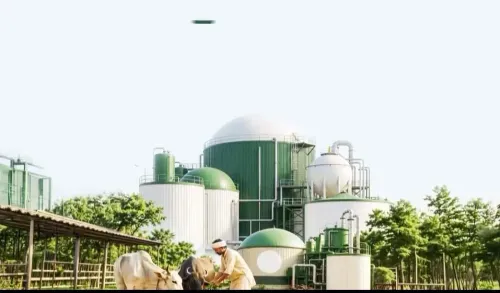
Gandhinagar, March 29 (NationPress) In an extraordinary showcase of eco-friendly living and independence, Satadhar Dham has become a leading example of renewable energy utilization, featuring a vast community kitchen that serves approximately 10,000 pilgrims daily, all powered by biogas.
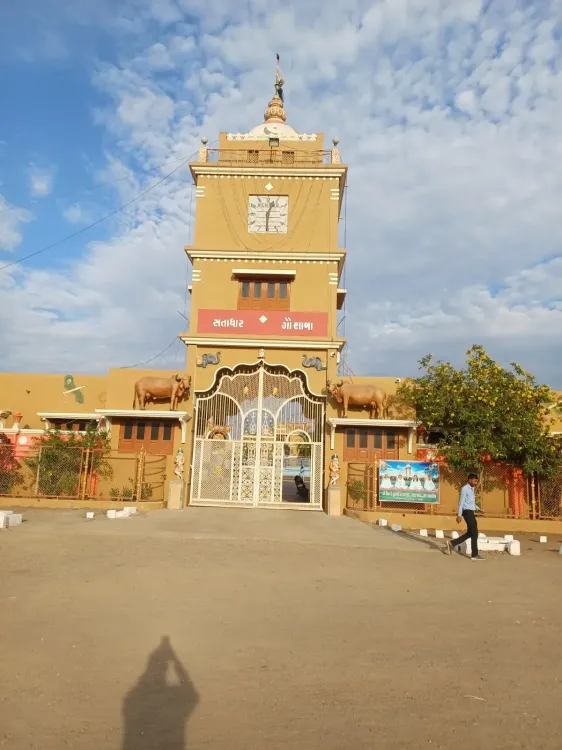
Situated in Gujarat's Junagadh district and linked to the esteemed Saint Appa Giga, this pilgrimage site—famous for its evening aarti—has recently garnered acclaim for hosting the state’s largest biogas facility.
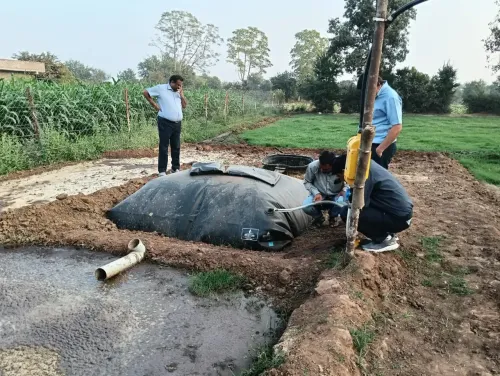
Currently, four biogas plants, each capable of producing 85 cubic metres per day, are active on the site, with two additional plants of similar capacity in the pipeline.
This initiative has drastically cut down on reliance on traditional fuels, establishing the shrine as a beacon of sustainable practices.
The temple complex is home to nearly 1,000 cows, with their dung serving as the primary feedstock for the biogas plants.
Daily, around 8,000 kg of cow dung is processed to generate fuel for the 'annakshetra' (community kitchen), ensuring that cooking for thousands of devotees remains uninterrupted.
Previously, the kitchen was heavily dependent on firewood, using between 800–900 kg per day.
Switching to LPG had also been costly, necessitating 10 to 15 cylinders daily.
The shift to biogas has not only lowered expenses but also reduced environmental degradation.
Mahant Vijay Bapu of Satadhar Dham emphasized the importance of this project, stating that the institution has attained full self-reliance in its cooking operations.
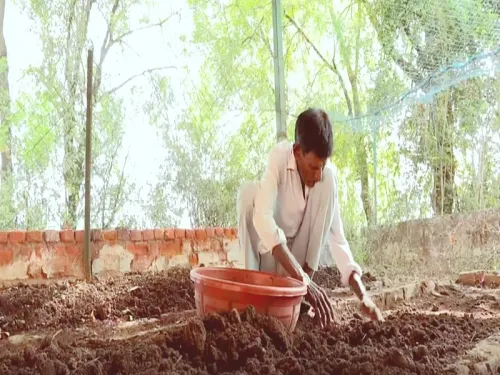
Additionally, the slurry produced as a byproduct of the biogas process is effectively repurposed as organic fertilizer for agricultural use, fostering a sustainable resource cycle.
This initiative aligns with Prime Minister Narendra Modi and Gujarat Chief Minister Bhupendra Patel's vision to promote renewable energy and environmental preservation.
Support from the Gujarat Energy Development Agency (GEDA) has been crucial in advancing these efforts.
Through its Institutional Biogas Plant Scheme, subsidies are available to motivate organizations to adopt clean energy methods.
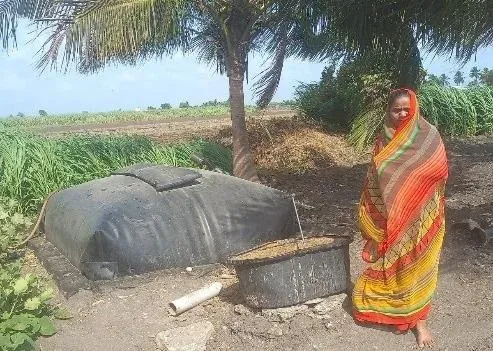
Throughout Gujarat, gaushalas, educational institutions, and charitable organizations are increasingly transforming organic waste—like cattle dung, agricultural remnants, and kitchen scraps—into biogas via anaerobic processes.
This resulting fuel serves as a cost-effective alternative for cooking, while the residual slurry enhances soil fertility.
Officials reported that over the last five years, 193 institutional biogas plants with a cumulative capacity of 13,955 cubic metres per day have been established statewide.
For the financial year 2025–26, the Union government has allocated Rs 12 crore under this scheme, with about 60 new biogas plants already being installed.
Similar objectives have been outlined for 2026–27.
The effort at Satadhar Dham exemplifies how traditional institutions can adopt modern sustainable practices while effectively serving society at a larger scale.
Point of View
The initiative at Satadhar Dham showcases a significant leap towards ecological sustainability and self-reliance. It represents a harmonious blend of tradition and modern technology, setting a benchmark for renewable energy utilization across the nation.
NationPress
30 Sept 2026
Frequently Asked Questions
What is the capacity of the biogas plants at Satadhar Dham?
The biogas plants have a capacity of 85 cubic metres per day each.
How many pilgrims does the kitchen serve daily?
The kitchen serves approximately 10,000 pilgrims each day.
What is the main raw material for the biogas plants?
The primary raw material is cow dung, sourced from nearly 1,000 cows at the temple complex.
What environmental benefits does this initiative offer?
It reduces dependence on conventional fuels and minimizes environmental impact.
How does the biogas initiative contribute to agriculture?
The slurry produced as a byproduct is used as organic fertilizer, enhancing soil fertility.