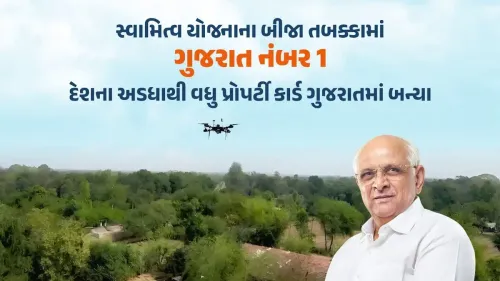
Gujarat leads SVAMITVA Phase 2 with 18.5 lakh property cards, over 50% of national total
Synopsis
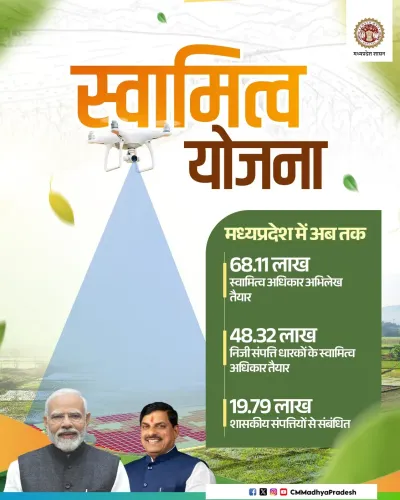
Gujarat didn't just participate in SVAMITVA Phase 2 — it dominated it, issuing more than half of all property cards distributed across India. With 14,900 drone flights, 11,511 villages mapped, and bank loans of up to ₹50 lakh now flowing on the strength of these cards, the state has turned a land-records exercise into a tangible rural credit story.
Key Takeaways
Gujarat issued 18,50,614 property cards under SVAMITVA Phase 2 — over 50% of India's national total of 32,35,260 .
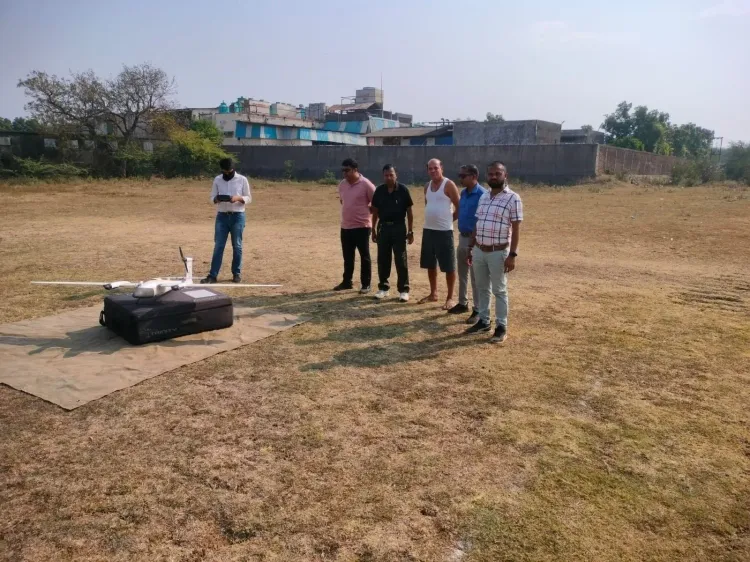
14,900 drone flights were conducted, mapping 11,511 villages across the state.
Mehsana led at the district level with 1,66,504 cards; Ahmedabad followed with 1,53,125 .
Bank loans of up to ₹50 lakh have been sanctioned in Gujarat using SVAMITVA property cards as collateral.
More than 14,000 Gram Sabhas were held to drive awareness and participation across the state.
Nationally, drone surveys covered 58,197 villages during Phase 2, which began in 2021-22 .
Gujarat has emerged as the top-performing state in the second phase of the Pradhan Mantri SVAMITVA Scheme, issuing 18,50,614 property cards — more than half of the 32,35,260 cards prepared nationally — and completing drone-based mapping across 11,511 villages. The milestone was highlighted as the Centre marked 12 years of Prime Minister Narendra Modi's tenure, with SVAMITVA positioned as a flagship rural empowerment initiative.
Scale of Gujarat's Achievement
Of the 32,35,260 property cards issued across India during Phase 2, which commenced in 2021-22, Gujarat alone accounted for 18,50,614 — the highest among all states and more than 50 per cent of the national tally. To complete this, the state conducted 14,900 drone flights, covering survey, verification, and promulgation processes across 11,511 villages. Nationally, drone surveys were carried out in 58,197 villages during the same period.
District-Level Breakdown
Within Gujarat, Mehsana district recorded the highest number of property cards at 1,66,504, followed by Ahmedabad with 1,53,125. Districts including Kheda, Banaskantha, and Anand each crossed the one-lakh mark in property card issuance. The implementation was coordinated among the Survey of India, the Gujarat Revenue Department, and the Gujarat Panchayati Raj Department.
Economic and Financial Impact
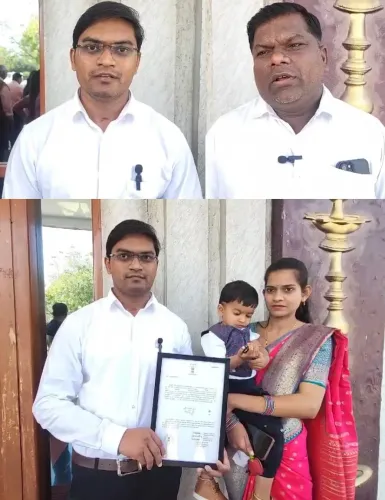
Officials stated that the scheme has transformed rural residential properties into recognised economic assets. With formal legal ownership records now in hand, rural residents can access institutional banking services and apply for loans. According to official data, bank loans of up to ₹50 lakh have been sanctioned in Gujarat on the basis of SVAMITVA property cards. Officials said this has opened avenues for entrepreneurship, education, and livelihood generation in villages. The scheme is also credited with reducing long-standing property disputes and court cases over ownership claims in rural areas.
Inclusion and Awareness
More than 14,000 Gram Sabhas have been organised across Gujarat to ensure wider public participation and awareness. Officials noted that the scheme has particularly benefited women and socially disadvantaged groups by enabling greater access to property ownership records and financial resources. GIS-based mapping and drone surveys, officials added, have also improved transparency in rural planning and administration.
What Comes Next
With Phase 2 milestones now documented, attention shifts to expanding coverage and deepening financial inclusion in villages already mapped. The broader objective, according to officials, is building a digitally enabled rural economy — one where a property card is not merely a document but a gateway to formal credit and economic participation.
Point of View
But the more consequential metric is financial uptake — specifically, how many of the 18.5 lakh cardholders have actually accessed formal credit. The ₹50 lakh loan ceiling is headline-worthy, but aggregate disbursement data has not been made public, making it difficult to assess whether the scheme has moved the needle on rural credit penetration or merely created documents. The scheme's real test is not in cards issued but in whether those cards are converting into loans, reduced litigation, and measurable income gains — outcomes that require independent verification beyond official statements.
NationPress
25 Sept 2026
Frequently Asked Questions
What is the SVAMITVA Scheme and what does it do?
The Pradhan Mantri SVAMITVA Scheme provides legal property ownership records to residents of rural areas through drone-based surveys and GIS mapping. Launched to address the absence of formal documentation for residential properties in villages, it enables rural households to establish ownership rights and access formal banking and credit services.
How many property cards did Gujarat issue under SVAMITVA Phase 2?
Gujarat issued 18,50,614 property cards during Phase 2 of the SVAMITVA Scheme, which began in 2021-22. This figure represents more than 50 per cent of the national total of 32,35,260 cards prepared across India during the same period.
Which districts in Gujarat issued the most SVAMITVA property cards?
Mehsana led with 1,66,504 property cards, followed by Ahmedabad with 1,53,125. Kheda, Banaskantha, and Anand districts each crossed the one-lakh mark in property card issuance.
Can SVAMITVA property cards be used to get bank loans?
Yes. According to official data, bank loans of up to ₹50 lakh have been sanctioned in Gujarat on the basis of SVAMITVA property cards. The cards serve as legal ownership documents that enable rural residents to access formal credit from banks.
How were the surveys conducted under SVAMITVA Phase 2 in Gujarat?
The surveys were carried out using drone technology, with 14,900 drone flights conducted across the state. The exercise was coordinated by the Survey of India, the Gujarat Revenue Department, and the Gujarat Panchayati Raj Department, covering 11,511 villages through survey, verification, and promulgation processes.