ISRO's GSLV-F17 successfully launches EOS-05 into geosynchronous orbit
Synopsis
ISRO's GSLV-F17 has done what its predecessor could not — place an imaging Earth observation satellite into geosynchronous orbit, a first for India. The mission is not just a technical milestone; it is a redemption arc after the high-profile GSLV-F10 failure in 2021, and a significant upgrade to India's persistent Earth-monitoring capabilities.
Key Takeaways
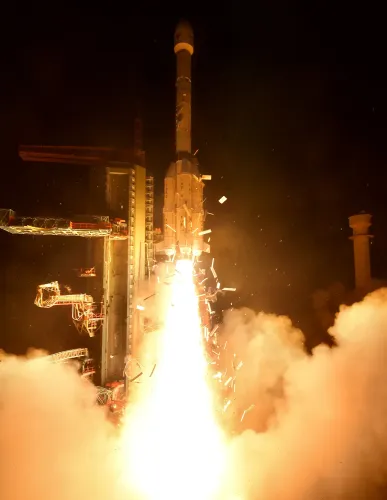
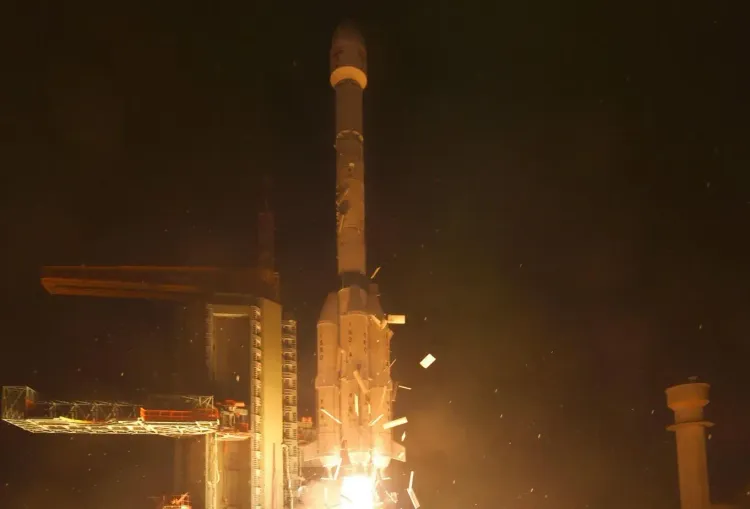
ISRO launched GSLV-F17 carrying EOS-05 from Sriharikota at 2:55 am IST on 4 September .
This is the first time India has placed an imaging Earth observation satellite in a geosynchronous orbit .
GSLV-F17 is the 19th flight of the GSLV, with a lift-off mass of 420.5 tonnes ; EOS-05 weighs 2,367 kg .
The mission marks a successful return to flight after the GSLV-F10 failure in August 2021 .
EOS-05 will support environmental monitoring, weather observation, and disaster management from geosynchronous orbit.
Gujarat CM Bhupendra Patel and Deputy CM Harsh Sanghavi congratulated ISRO, calling it a 'historic success' and 'another giant leap for India in space.'
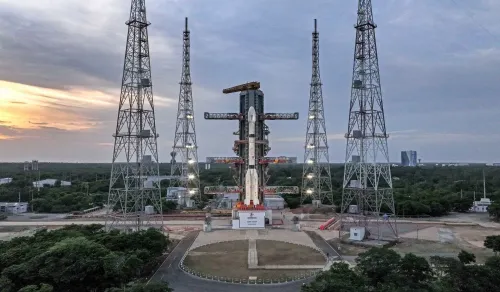
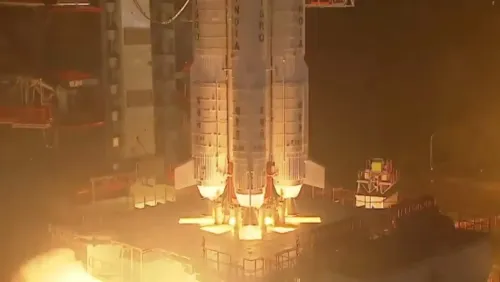
The Indian Space Research Organisation (ISRO) on Friday, 4 September successfully launched the GSLV-F17 rocket carrying the EOS-05 Earth observation satellite from the Satish Dhawan Space Centre in Sriharikota, marking the first time India has placed an imaging Earth observation satellite in a geosynchronous orbit. The rocket lifted off from the Second Launch Pad at 2:55 am IST and placed EOS-05 into a sub-geosynchronous transfer orbit approximately 18 minutes after lift-off.
Key Mission Details
The 51.7-metre-tall GSLV-F17, with a lift-off mass of approximately 420.5 tonnes, is the 19th flight of India's Geosynchronous Satellite Launch Vehicle. The satellite, EOS-05, weighs approximately 2,367 kg and is designed to deliver Earth observation capabilities from geosynchronous orbit. Following separation from the launch vehicle, the satellite will undergo a series of orbit-raising manoeuvres to reach its final operational orbit.
Why This Mission Matters
Unlike satellites in low Earth orbit that pass over a region periodically, a geosynchronous platform enables persistent, wide-area coverage of the same broad region. This makes EOS-05 particularly valuable for applications such as environmental monitoring, weather observation, and disaster management. Notably, this mission also marks a significant return to flight for the GSLV platform following the failure of the GSLV-F10 mission in August 2021, when the cryogenic upper stage malfunctioned and the earlier EOS-03 satellite was not placed into orbit. The success of GSLV-F17 validates the redesigned spacecraft and restores confidence in the vehicle's reliability.
Gujarat Leaders Congratulate ISRO
Gujarat Chief Minister Bhupendra Patel hailed the achievement on social media platform X, calling it 'another stellar feat by our brilliant scientists' and extending 'heartiest congratulations to Team ISRO on the historic success.' He further noted that the 'successful launch of GSLVF17 placing EOS05 into orbit highlights India's rapidly growing technological prowess, under the dynamic leadership of Prime Minister Narendra Modi.'
Deputy Chief Minister Harsh Sanghavi described the mission as 'another giant leap for India in space,' adding that the launch was 'yet another testament to the remarkable capabilities, precision and innovation of ISRO.' Sanghavi also pointed to India building a 'world-class space ecosystem' through ambitious missions and stronger industry partnerships. 'The sky is not the limit anymore. India is reaching beyond it,' he said.
What Comes Next
EOS-05 will now undergo orbit-raising manoeuvres from its current sub-GTO position towards its designated operational orbit. Once fully operational, the satellite is expected to significantly strengthen India's Earth-observation infrastructure, providing more persistent and wide-area data coverage than was previously possible from lower-orbit platforms. This mission reinforces ISRO's growing capability in the geosynchronous segment and signals continued momentum in India's space programme.
Point of View
But the underlying achievement is substantive. The real measure will be how quickly EOS-05 reaches operational orbit and whether its data pipelines are integrated with end-user agencies at the speed that geosynchronous advantage demands.
NationPress
4 Sept 2026
Frequently Asked Questions
What is the GSLV-F17 EOS-05 mission?
GSLV-F17 is the 19th flight of ISRO's Geosynchronous Satellite Launch Vehicle, which successfully carried the EOS-05 Earth observation satellite into a sub-geosynchronous transfer orbit on 4 September. It is the first ISRO mission to place an imaging Earth observation satellite in geosynchronous orbit.
Why is the EOS-05 geosynchronous orbit significant?
A geosynchronous orbit allows EOS-05 to maintain prolonged observation of the same broad region, unlike low Earth orbit satellites that only pass over a location periodically. This enables more persistent data coverage for applications such as disaster management, environmental monitoring, and weather observation.
How does GSLV-F17 relate to the 2021 GSLV-F10 failure?
The GSLV-F10 mission in August 2021 failed when its cryogenic upper stage did not perform as intended, leaving the EOS-03 satellite undeployed. GSLV-F17's success marks a return to flight and validates the redesigned Earth-observation spacecraft on the GSLV platform.
What will EOS-05 be used for?
EOS-05 is designed to strengthen India's Earth-observation capabilities from geosynchronous orbit. Its primary applications include environmental monitoring, weather-related observation, and disaster management, providing more persistent coverage than lower-orbit alternatives.
What happens next after the GSLV-F17 launch?
Following its separation from the launch vehicle approximately 18 minutes after lift-off, EOS-05 entered its intended sub-geosynchronous transfer orbit. It will now undergo a series of orbit-raising manoeuvres to reach its final operational geosynchronous orbit.