Gujarat raises Pre-PTC admission age limit to 30, adds EWS and disability quotas
Synopsis
Gujarat has quietly redrawn the entry map for pre-primary teacher training: the age ceiling jumps from 24 to 30, class size grows by 25 per cent, and for the first time EWS and disability quotas are built in. The move could unlock the profession for thousands of older aspirants — especially women re-entering education — and may push other states to revisit their own D.Ed. admission rules.
Key Takeaways
The Gujarat government has raised the Pre-PTC (D.E.C.Ed.) admission age limit from 24 to 30 years , effective 1 July of the relevant academic year.
Class strength has been increased from 50 to 62 seats — a 25 per cent jump — with detailed reservation breakdowns for SEBC (17 seats) , ST (9 seats) , SC (4 seats) , Open Category (26 seats) , and EWS (6 seats) .
A 5 per cent disability reservation has been introduced under Section 32 of the Rights of Persons with Disabilities Act, 2016 .
SC, ST, SEBC, EWS candidates and persons with disabilities receive an additional five-year age relaxation and a 5 per cent marks relaxation in Class 12 eligibility.
Medium-of-instruction rules have been relaxed, allowing candidates to apply based on their language of study in either Class 10 or Class 12 .
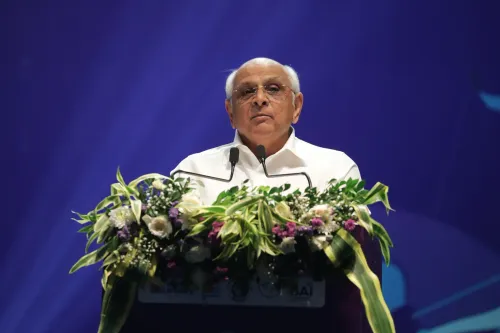
The reforms were announced under Chief Minister Bhupendra Patel , with Education Minister Pradyuman Vaja and MoS Rivaba Jadeja overseeing implementation.
The Gujarat government has overhauled admission rules for Pre-PTC (D.E.C.Ed.) colleges — also known as Bal Adhyapan Mandirs — raising the maximum age limit from 24 to 30 years, expanding class strength from 50 to 62 seats, and introducing fresh reservations for Economically Weaker Sections (EWS) and persons with disabilities. The reforms, announced on 8 October 2026 from Gandhinagar, are designed to broaden access to pre-primary teacher training across the state.
Key Reforms at a Glance
The revised framework marks a 25 per cent increase in sanctioned class strength, moving from 50 to 62 seats per batch. Of those 62 seats, 17 are reserved for Socially and Educationally Backward Classes (SEBC) under the 27 per cent quota, 9 for Scheduled Tribes (ST) under the 15 per cent quota, and 4 for Scheduled Castes (SC) under the 7 per cent quota.
The Open Category will hold 26 seats, while 6 seats are earmarked for EWS candidates under the 10 per cent quota. Additionally, a 5 per cent reservation for persons with disabilities has been introduced in accordance with Section 32 of the Rights of Persons with Disabilities Act, 2016. Candidates with disabilities will be selected on the basis of merit and stated preference, subject to their ability to fulfil teaching duties.
Expanded Age Limit and Eligibility Criteria
Under the revised rules, the upper age limit has been extended from 24 to 30 years, calculated as of 1 July of the relevant academic year. Candidates belonging to SC, ST, SEBC, EWS categories and persons with disabilities will receive an additional five-year relaxation, effectively allowing them to apply up to age 35.
Applicants must have secured a minimum of 50 per cent marks in Class 12 from the Gujarat Secondary and Higher Secondary Education Board or any other recognised board, including CBSE and ICSE. A 5 per cent relaxation in the minimum marks requirement applies to SC, ST, SEBC and EWS candidates, as well as persons with disabilities.
Medium of Instruction Flexibility
The government has also relaxed norms around medium of instruction. Candidates may now seek admission in a medium that matches their language of study in either Class 10 or Class 12 — not just Class 12 as before. If seats remain vacant in a given medium, candidates who studied another language may also apply in an alternate medium based on preference. This provision is expected to benefit students from multi-lingual educational backgrounds across Gujarat.
What the Government Said
Officials stated that the changes were announced under the leadership of Chief Minister Bhupendra Patel, with Education Minister Pradyuman Vaja and Minister of State for Education Rivaba Jadeja overseeing the education portfolio. The government said the overhaul would expand the pool of professionally trained pre-primary educators — a segment that has faced persistent shortages in rural and semi-urban Gujarat.
Why It Matters
Pre-primary education has long been identified as a critical but under-resourced tier in India's schooling system. By raising the age ceiling and widening the reservation net, the Gujarat government is also implicitly acknowledging that many aspirants — particularly women who return to education after a gap — were being excluded by the old 24-year cap. This comes amid a broader national push under the National Education Policy (NEP) 2020 to professionalise early childhood care and education. The reforms could set a precedent for other states reviewing similar training programmes.
Point of View
Even if implicitly, that the old ceiling was structurally biased against women who take career breaks or complete secondary education late, a reality skewed by socioeconomic factors that reservations alone cannot fix. The EWS and disability inclusions bring the programme in line with the broader constitutional and legislative framework India has committed to, but they arrive years after both were mandated at the national level. The real test will be implementation: whether additional seats come with additional infrastructure, trained faculty, and placement pathways, or whether they remain paper allocations in under-resourced institutions. Gujarat's move could pressure lagging states, but only if the Centre tracks outcomes rather than just seat counts.
NationPress
8 Oct 2026
Frequently Asked Questions
What is the new age limit for Pre-PTC (D.E.C.Ed.) admission in Gujarat?
The Gujarat government has raised the maximum age limit for Pre-PTC college admission from 24 to 30 years, applicable as of 1 July of the relevant academic year. Candidates belonging to SC, ST, SEBC, and EWS categories, as well as persons with disabilities, receive an additional five-year relaxation, raising their effective limit to 35 years.
How many seats are now available in each Pre-PTC class in Gujarat?
Each Pre-PTC class will now have 62 seats, up from the earlier sanctioned strength of 50 — a 25 per cent increase. The seats are distributed across SEBC (17), Open Category (26), ST (9), EWS (6), and SC (4) categories, with an additional 5 per cent disability reservation applied across categories.
What are the eligibility criteria for Pre-PTC admission in Gujarat?
Applicants must have passed Class 12 with a minimum of 50 per cent marks from the Gujarat Secondary and Higher Secondary Education Board or any recognised board including CBSE and ICSE. SC, ST, SEBC, EWS candidates, and persons with disabilities are eligible for a 5 per cent relaxation in the minimum marks requirement.
What disability reservation has been introduced for Pre-PTC colleges in Gujarat?
A 5 per cent reservation for persons with disabilities has been introduced in line with Section 32 of the Rights of Persons with Disabilities Act, 2016. Candidates with disabilities will be selected on the basis of merit and preference, provided their condition does not prevent them from performing teaching duties.
How have medium-of-instruction rules changed for Pre-PTC admissions?
Candidates may now seek admission in a medium that matches their language of study in either Class 10 or Class 12, expanding flexibility from the earlier requirement. If seats in a particular medium remain vacant, candidates who studied in another medium may also apply based on preference.