Gujarat on high alert: IMD forecasts heavy rain, NDRF teams deployed
Synopsis
Gujarat isn't waiting for the rain to arrive — it has pre-positioned NDRF and SDRF teams, activated 24-hour dam monitoring, and put energy and roads departments on standby, all before the IMD's heavy-to-very-heavy rainfall system makes landfall. South Gujarat is in the crosshairs through 24 July, with over a dozen districts under active warnings.
Key Takeaways
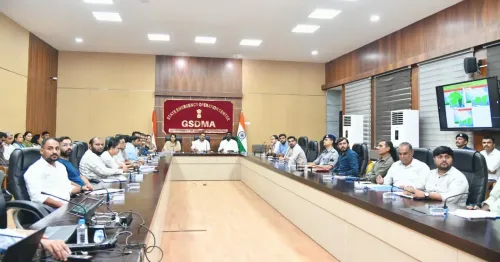
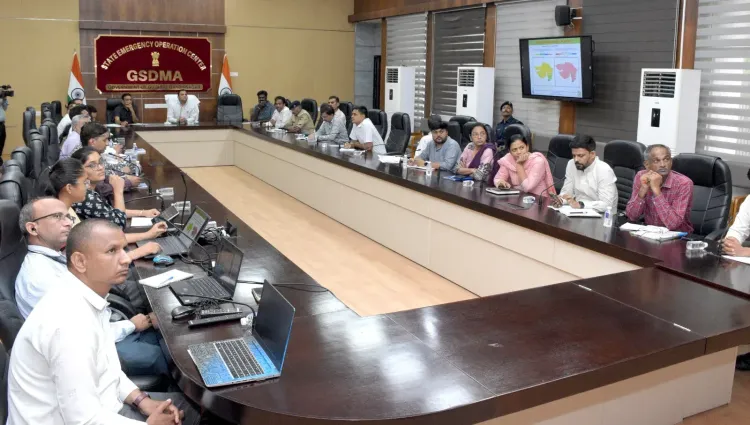
Gujarat's Weather Watch Group met at the SEOC in Gandhinagar on 21 July to review monsoon preparedness.
IMD has forecast heavy to very heavy rainfall across South Gujarat and multiple districts through 24 July , driven by a cyclonic circulation over the Arabian Sea .
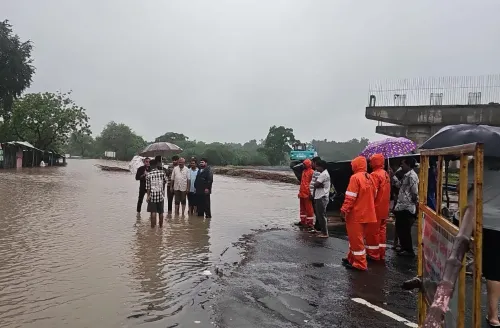
NDRF and SDRF teams have been pre-deployed to vulnerable areas with rescue and relief equipment.
Districts under warning include Navsari , Valsad , Surat , Aravalli , Panchmahal , Dahod , Tapi , Dang , and others.
The Energy Department has emergency teams on standby; the Roads and Buildings Department is arranging alternative routes.
Water Resources and Irrigation Department is continuously monitoring dam water levels across the state.
The Gujarat government has stepped up its monsoon preparedness with round-the-clock surveillance, pre-positioned disaster response teams, and inter-departmental coordination, after the India Meteorological Department (IMD) forecast heavy to very heavy rainfall across several parts of the state in the coming days. The alert was reviewed at a Weather Watch Group meeting held at the State Emergency Operation Centre (SEOC) in Gandhinagar on Tuesday, 21 July, chaired by Relief Commissioner Gaurang Makwana.
High-Level Review at SEOC
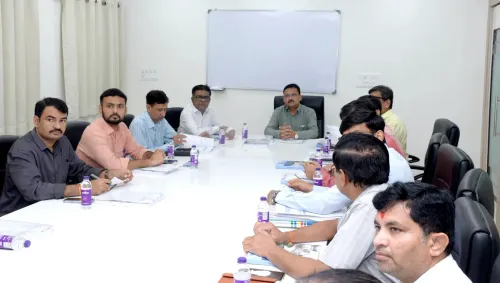
The meeting brought together officials from the National Disaster Response Force (NDRF), State Disaster Response Force (SDRF), Coast Guard, Navy, and the Health, Forest, Agriculture, and Revenue departments, among others. Makwana urged all departments to maintain close inter-departmental coordination and directed officials to notify the State Control Room immediately in the event of any emergency.
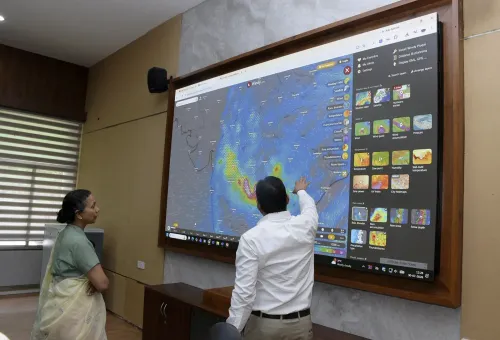
'Based on the satellite imagery and advanced forecasts presented by the India Meteorological Department, the State Control Room is maintaining round-the-clock monitoring of all areas where heavy rainfall is likely, including South Gujarat,' Makwana said.
IMD Forecast: Districts Under Warning
According to the IMD, a cyclonic circulation and a weather system over the Arabian Sea are expected to bring light to moderate rainfall across Gujarat over the next seven days, with heavy to very heavy rainfall forecast for several areas. South Gujarat faces the most acute risk in the near term.
On Wednesday, 22 July, heavy to very heavy rainfall is likely at isolated places in Navsari, Valsad, Daman, and Dadra and Nagar Haveli. Very heavy rainfall warnings have been issued for isolated parts of Aravalli, Panchmahal, Dahod, Mahisagar, Narmada, Surat, Dang, and Tapi districts on 22 and 23 July.
For 24 July, the IMD has warned of heavy rainfall at isolated places in Sabarkantha, Aravalli, Banaskantha, Mehsana, Gandhinagar, Anand, Kheda, Panchmahal, Dahod, and Mahisagar districts, as well as across all districts of South Gujarat.
Infrastructure Protection Measures
Makwana confirmed that advance planning had been undertaken to protect critical infrastructure and reservoirs. The Water Resources and Irrigation Department is continuously monitoring water levels in the state's major dams. The Roads and Buildings Department has been instructed to arrange alternative routes to maintain traffic movement in the event of road closures.
'The Energy Department has kept emergency teams on standby to restore power supply in the shortest possible time if disruptions occur due to rainfall,' Makwana said.
NDRF and SDRF Teams Pre-Positioned
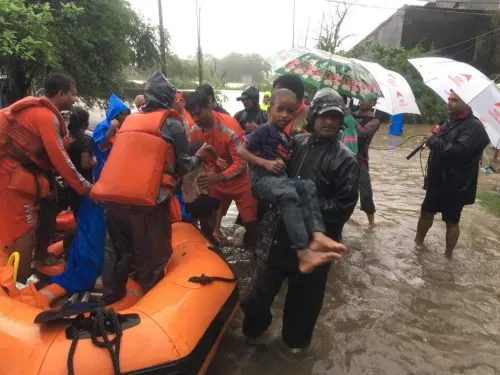
NDRF and SDRF teams have already been deployed to vulnerable areas with the necessary equipment to ensure swift rescue and relief operations. This pre-positioning reflects a broader shift in Gujarat's disaster management approach — moving from reactive deployment to anticipatory staging, particularly in flood-prone coastal and low-lying districts. This comes amid a pattern of increasingly intense monsoon events in the region in recent years, which have strained infrastructure and stretched emergency response capacity.
What to Watch
With heavy rainfall warnings active through at least 24 July and a live weather system over the Arabian Sea, authorities are expected to remain on elevated alert for the next several days. The effectiveness of the pre-positioned response will be tested if rainfall intensity matches or exceeds IMD projections, particularly in South Gujarat's more vulnerable districts.
Point of View
Which is a departure from earlier years when inland flooding dominated the response calculus. The harder question is dam management: with major reservoirs being monitored but no public data on current storage levels, citizens in downstream areas have limited information to act on. Transparency in dam-release decisions has historically been a weak link in Gujarat's disaster response, and that gap remains unaddressed.
NationPress
20 Oct 2026
Frequently Asked Questions
Which districts in Gujarat are under heavy rain warning in July 2025?
The IMD has issued heavy to very heavy rainfall warnings for districts including Navsari, Valsad, Surat, Aravalli, Panchmahal, Dahod, Mahisagar, Narmada, Dang, Tapi, Sabarkantha, Banaskantha, Mehsana, Gandhinagar, Anand, and Kheda, as well as all districts of South Gujarat, between 22 and 24 July.
What steps has the Gujarat government taken for monsoon preparedness?
The Gujarat government has activated round-the-clock monitoring at the State Emergency Operation Centre, pre-deployed NDRF and SDRF teams to vulnerable areas, placed Energy Department emergency crews on standby, and instructed the Roads and Buildings Department to arrange alternative routes in case of road closures.
What is causing heavy rainfall in Gujarat right now?
According to the IMD, a cyclonic circulation and a weather system over the Arabian Sea are expected to bring light to moderate rainfall across Gujarat over the next seven days, with heavy to very heavy rainfall forecast for several districts, particularly in South Gujarat.
Who chaired the Weather Watch Group meeting in Gandhinagar?
Relief Commissioner Gaurang Makwana chaired the Weather Watch Group meeting held at the State Emergency Operation Centre in Gandhinagar on 21 July. The meeting reviewed preparedness across multiple departments including NDRF, SDRF, Coast Guard, Navy, Health, and Revenue.
Are dams in Gujarat being monitored during the monsoon?
Yes, the Water Resources and Irrigation Department is continuously monitoring water levels in the state's major dams as part of the government's advance planning to protect infrastructure and reservoirs during the heavy rainfall period.