Gujarat plans unified CCTV dashboard; student tech to aid policing, says Dy CM Sanghavi
Synopsis
Gujarat is not just holding hackathons for show — Deputy CM Harsh Sanghavi signalled at the E-Rakshak grand finale in Surat that student-built cybersecurity prototypes could find their way into actual police workflows, from FIR registration to cybercrime resolution, while a unified CCTV dashboard could give the state unprecedented surveillance reach.
Key Takeaways
Deputy CM Harsh Sanghavi announced plans to link all Gujarat CCTV cameras to a single unified dashboard on 10 October 2026 .
Student-developed technology from the E-Rakshak Hackathon is being considered for integration into FIR registration and cybercrime resolution processes.
458 students registered nationally; 150 students in 31 teams from 13+ universities across 6 states competed in the grand finale at SVNIT, Surat .
AI-integrated CCTV for traffic management was highlighted; a 15-second signal wait reduction cited as a significant public benefit.
The government offered startups support covering rent, salaries, marketing, and cloud costs under existing Gujarat and Startup India Seed Fund schemes.
The Surat Cyber Crime Team was commended for busting national and international cybercrime rackets.
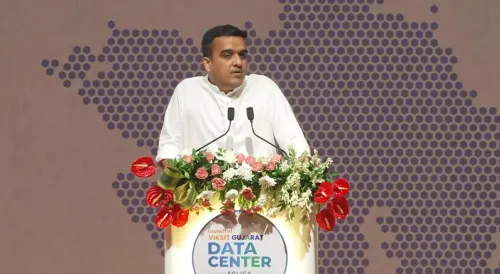
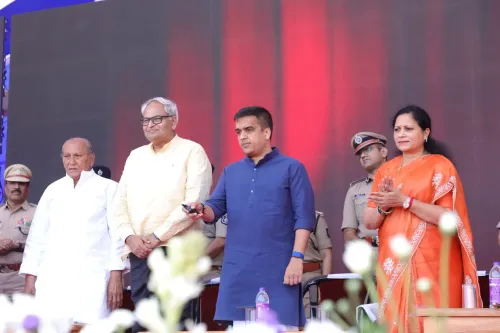
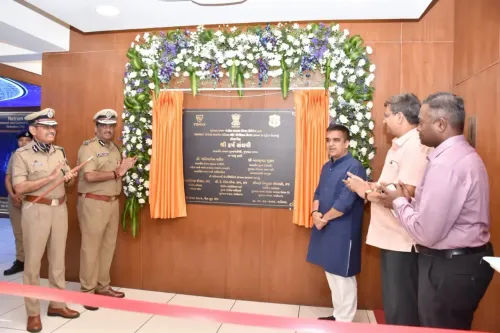
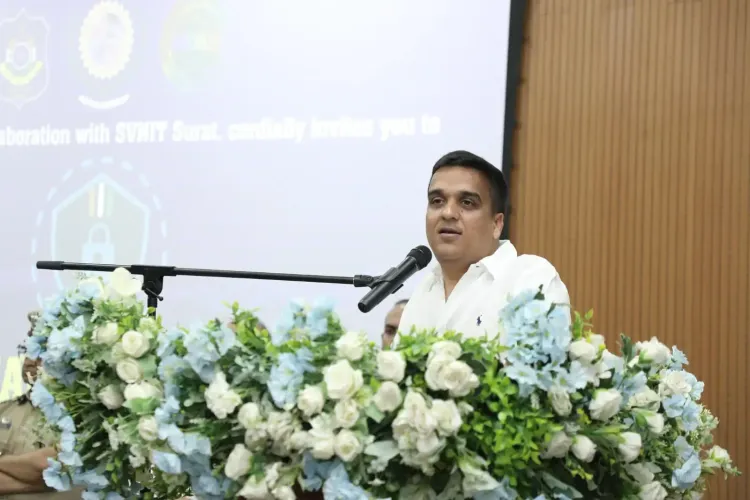
Gujarat Deputy Chief Minister Harsh Sanghavi on Saturday, 10 October 2026, announced the state government's plan to connect all CCTV cameras across Gujarat to a single unified dashboard, and to integrate technology developed by young student innovators into core police functions — including FIR registration and cybercrime resolution. Sanghavi made the announcement while addressing the grand finale of the E-Rakshak Hackathon at the Sardar Vallabhbhai National Institute of Technology (SVNIT) in Surat.
What the Unified Dashboard Aims to Achieve
The proposed CCTV integration initiative is designed to give law enforcement a centralised, real-time view of surveillance feeds across the state. Sanghavi emphasised that the government wants to prioritise software-based solutions to reduce dependence on frequently changing hardware — a deliberate pivot to platform resilience over equipment cycles.
'Changes in hardware and camera models introduced by major companies could increase government expenditure, making sustainable software solutions an important priority,' Sanghavi said. He also underlined the potential of artificial intelligence (AI) integrated with CCTV systems to improve traffic management, noting that 'even a 15-second reduction in waiting time at traffic signals could save millions of people valuable time and fuel.'
E-Rakshak Hackathon: Scale and Scope
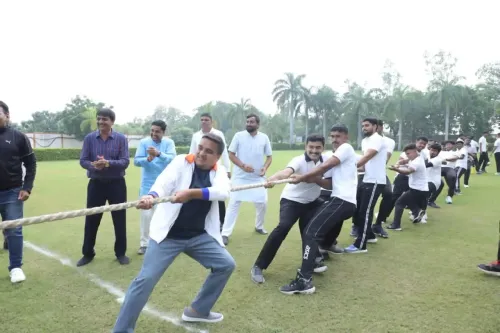
The E-Rakshak Hackathon was jointly organised by Surat City Police and SVNIT's NEXUS unit. A total of 458 students from colleges across the country registered for the competition, with 150 students representing 31 teams advancing to the grand finale. The participating teams came from colleges affiliated with more than 13 universities across six states, with a focus on developing cybersecurity, digital safety, and cybercrime prevention solutions.
Surat Police Commissioner Wabang Jamir confirmed that the hackathon was structured to channel student innovation toward real-world policing challenges. Deputy Commissioner of Police (Cyber Crime) Bishakha Jain noted that organisers had identified nine to ten problem statements through surveys conducted at police stations. 'These focused on everyday difficulties faced by citizens and operational challenges encountered by police personnel,' she said.
Government's Startup and Entrepreneurship Push
Beyond policing technology, Sanghavi used the occasion to direct student entrepreneurs toward existing government support frameworks. He referenced Gujarat's industrial and startup policies, MSME initiatives, and science and technology sector schemes. He noted that eligible entrepreneurs could receive assistance covering office rent, marketing costs, operational expenses, salaries, and cloud subscriptions, in addition to support available through the Startup India Seed Fund Scheme.
Provisions for women entrepreneurs were also highlighted. Sanghavi assured participants that the state government is prepared to function as a risk partner for startups, sharing the risks involved in converting innovative ideas into deployable solutions.
Cybercrime Record and Government Intent
Sanghavi commended the Surat Cyber Crime Team for dismantling cybercrime rackets operating at both national and international levels. He reiterated that the government intends to co-develop technology with young innovators to help prevent crime and improve the operational efficiency of police forces. This comes amid a broader national push to modernise law enforcement through digital tools, with multiple state governments exploring AI-assisted surveillance and cyber-intelligence systems.
Notably, integrating student-built technology into formal police workflows — rather than treating hackathons as purely academic exercises — marks a shift in how Gujarat is approaching public-safety innovation. Whether these prototypes will see structured procurement and pilot rollout remains the critical next step to watch.
Point of View
But deploying student-built prototypes into live police systems — FIR registration, cybercrime resolution — demands a procurement, audit, and security-vetting process that was not detailed. The unified CCTV dashboard ambition is equally significant; centralising surveillance across an entire state raises legitimate questions about data governance and oversight that neither Sanghavi nor the event addressed. Gujarat's push is directionally sound — software sustainability over hardware churn is the right instinct — but the gap between a hackathon finale and a production-grade policing tool is wide, and the government's assurance to 'act as a risk partner' needs to be matched by an equally transparent accountability framework.
NationPress
10 Oct 2026
Frequently Asked Questions
What is Gujarat's unified CCTV dashboard plan?
The Gujarat government plans to connect all CCTV cameras across the state to a single centralised dashboard, giving law enforcement a unified, real-time surveillance view. Deputy CM Harsh Sanghavi announced the plan on 10 October 2026 at the E-Rakshak Hackathon in Surat, emphasising software-based solutions to avoid costly hardware dependency.
What is the E-Rakshak Hackathon?
E-Rakshak is a hackathon jointly organised by Surat City Police and SVNIT's NEXUS unit to encourage college students to develop technology solutions for cybersecurity, digital safety, and cybercrime prevention. The 2026 grand finale drew 150 students in 31 teams, selected from 458 registrations across the country.
How will student-built technology be used in Gujarat policing?
According to Deputy CM Sanghavi, the state government intends to integrate technology developed by young innovators into police procedures including FIR registration and cybercrime resolution. The specific procurement or pilot process has not yet been detailed publicly.
What government support is available for student entrepreneurs in Gujarat?
Sanghavi referenced Gujarat's startup and industrial policies, MSME schemes, and the Startup India Seed Fund Scheme, under which eligible entrepreneurs can receive assistance for office rent, marketing, operational expenses, salaries, and cloud subscriptions. Special provisions for women entrepreneurs were also highlighted.
What role did Surat police play in the hackathon?
Surat City Police co-organised the event and provided real-world problem statements drawn from police station surveys — nine to ten issues covering everyday citizen difficulties and operational police challenges. The Surat Cyber Crime Team was also commended for dismantling cybercrime rackets at national and international levels.