Gujarat's Deputy CM Unveils ₹538 Crore Development Projects in Vadodara
Synopsis
On March 21, Deputy Chief Minister Harsh Sanghavi announced a transformative initiative in Vadodara, unveiling projects worth ₹538 crore that harness technology for enhanced public safety and urban development.
Key Takeaways
Gujarat's Deputy CM launched ₹538 crore worth of projects.
Focus on technology-driven policing through the 'Vishwas Project.' Advanced surveillance network established with thousands of cameras.
New infrastructure includes police housing and road upgrades.
Integration of AI tools for enhanced crime detection.
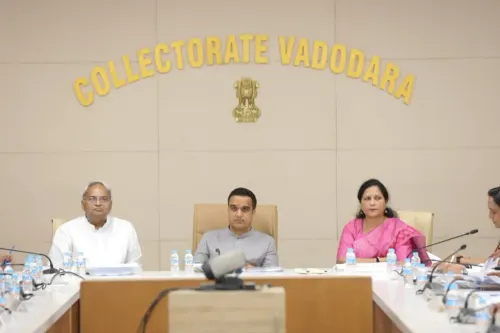
Vadodara, March 21 (NationPress) The Deputy Chief Minister, Harsh Sanghavi, announced on Saturday that Gujarat is making significant strides in utilizing technology to enhance both development and public safety, unveiling projects valued at Rs 538 crore across the Vadodara region.
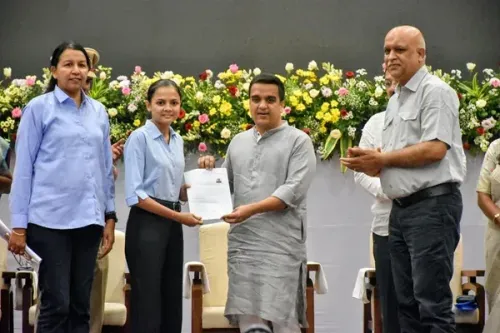
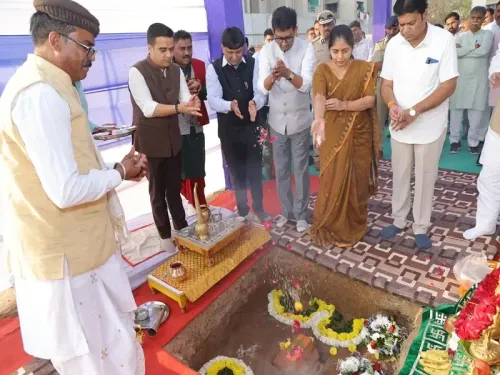
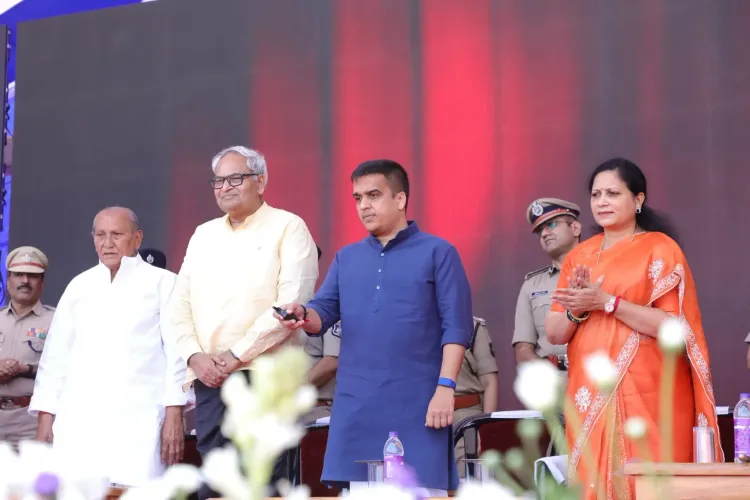
At an event where approximately 55 projects were either inaugurated or had their foundation stones laid, Sanghavi emphasized that the scale of these initiatives showcases the state government’s dedication to comprehensive development.
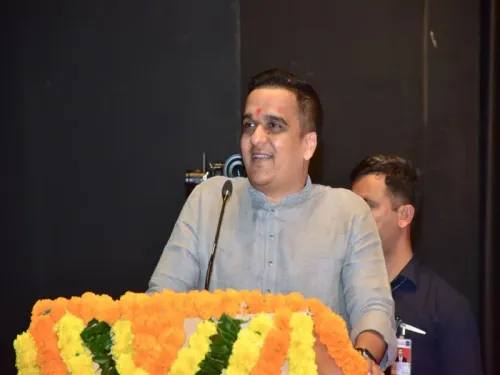
“The collaborative efforts of the double-engine government are enabling Vadodara to set new standards in development. The simultaneous inauguration and foundation laying of projects from a unified platform symbolizes the state government’s unwavering commitment,” he stated.
One of the key areas of focus for these initiatives is technology-based policing under the Gujarat Police’s ‘Vishwas Project’. Sanghavi noted that an advanced surveillance network has been established in the city, integrating government and private CCTV systems with thousands of cameras linked to a centralized platform.
“This has facilitated quicker crime detection and reinforced the sense of security among residents,” he added. “The network will soon incorporate artificial intelligence tools, including facial recognition and automatic number plate recognition, which are expected to act as ‘force multipliers’ for police in swiftly identifying offenders.”
Investments have also been made in police housing, jail facilities, and police stations, aimed at enhancing the operational efficiency and welfare of personnel.
Sanghavi further detailed that the development initiatives in the district encompass projects related to roads, infrastructure, education, and a vital bridge over the Narmada River, along with upgrades to rural roads.
State Minister Manisha Vakil remarked that the inauguration of Cluster-4 under ‘Vishwas 2.0’ signifies a move towards technology-driven policing. “The police's role is evolving beyond traditional frameworks and increasingly integrating with modern tools and technologies,” she stated, highlighting the impact of systems like CCTV surveillance, drones, and the ‘Trinetra’ platform in bolstering security and public trust.
Police Chief K. L. N. Rao indicated that the ‘Vishwas Project’ has enhanced crime detection and reduced crime rates through the integration of CCTV networks, body-worn cameras, and private surveillance systems. He noted that further integration of camera networks across various departments is planned, along with broader deployment of technologies like Automatic Number Plate Recognition (ANPR) and facial recognition to improve accuracy and response times.
Vadodara Police Commissioner Narsimha Komar stated that the project has been rolled out across 46 cities in the state, covering districts, major urban centers, and key locations. He mentioned the establishment of district-level ‘NETRAM’ command and control centers and the state-level ‘Trinetra’ integrated command center in Gandhinagar, which are being equipped with advanced data and video analytics to support crime prevention, detection, and traffic management.
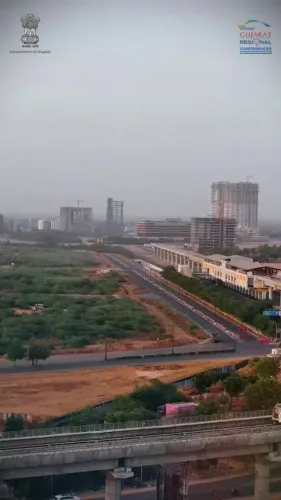
In Vadodara, a total of 1,316 cameras—including CCTV, body-worn, and drone cameras—are operational under ‘Netram’ and have been integrated with the Smart City network. Private camera installations are also being mapped and utilized for continuous monitoring.
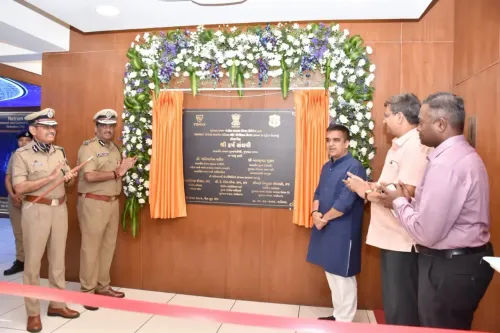
Additionally, Sanghavi inaugurated a new building for the Public Trust Registration Office and the Joint Charity Commissioner in the city, constructed at a cost of Rs 4.12 crore under the state’s Law Department. This G+2 structure spans 1,211.21 square meters and includes parking and reception facilities on the ground floor, the Assistant Charity Commissioner's office on the first floor, and the Joint Charity Commissioner’s office on the second floor.
The building features courtrooms, staff rooms, a waiting area, a conference room, and amenities such as facilities for men, women, and persons with disabilities, lifts, a water-cooler room, fire safety systems, and rainwater harvesting capabilities.
Campus development incorporates landscaping, internal roads, a pump and sump room, a security cabin, an entrance gate, and a compound wall, alongside tree plantation efforts that were initiated following the inauguration.
Point of View
The recent announcements by Gujarat's Deputy Chief Minister reflect a strategic push towards integrating technology in governance. The focus on public safety and infrastructure development illustrates a proactive approach to urban challenges, positioning Gujarat as a model for other states.
NationPress
23 Sept 2026
Frequently Asked Questions
What is the total investment made in Vadodara's new projects?
The total investment in the newly announced projects in Vadodara amounts to ₹538 crore.
What is the 'Vishwas Project'?
'Vishwas Project' is an initiative under the Gujarat Police aimed at enhancing public safety through technology-driven policing.
How many projects were inaugurated in Vadodara?
Approximately 55 projects were inaugurated or had their foundation stones laid during the event.
What technological advancements are included in the new initiatives?
The initiatives include an advanced surveillance network with AI tools like facial recognition and Automatic Number Plate Recognition.
What additional facilities are being developed along with the new projects?
Along with development projects, new facilities for the Public Trust Registration Office and Joint Charity Commissioner have been constructed.