Gujarat Data Centre Policy 2026-29: Sanghavi cites India's semiconductor failures in 7.5 GW push
Synopsis
Gujarat just became the first Indian state to formally launch a dedicated data centre policy — and its deputy chief minister opened by recounting how India's semiconductor dreams collapsed in 1976, 1990, and 2009. With a 7.5 GW capacity target already reportedly oversubscribed, the 2026-29 policy is a high-stakes bet that this time, implementation will match the announcement.
Key Takeaways
Gujarat launched the Viksit Gujarat Data Centre Policy 2026-29 in Gandhinagar , becoming the first Indian state with a dedicated data centre policy.
The policy targets an initial capacity of 7.5 GW ; investor demand has reportedly already exceeded that figure.
Deputy Chief Minister Harsh Sanghavi cited India's semiconductor failures in 1976 , 1990 , and 2009 as lessons the state aims to avoid repeating.
More than three semiconductor OSAT facilities have been inaugurated in Gujarat within four months since 2025 , according to Sanghavi.
The policy offers capital subsidies, power tariff support, tax reimbursements, and incentives for renewable energy and sustainable water use.
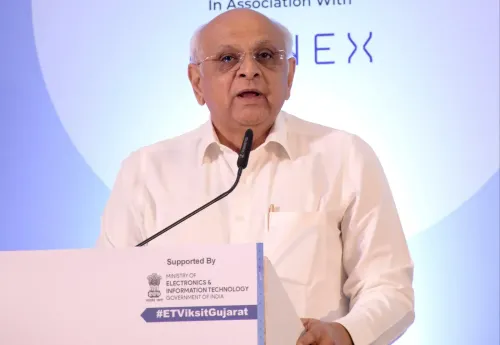
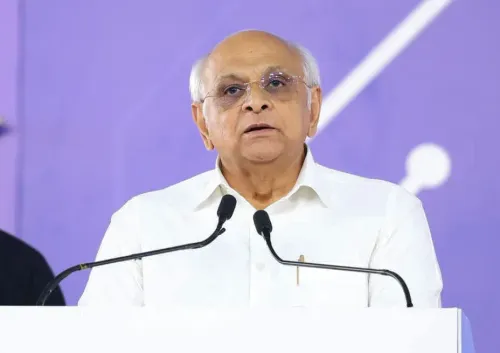
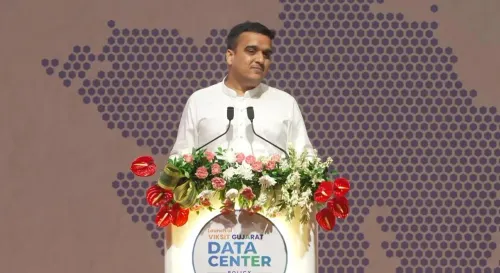
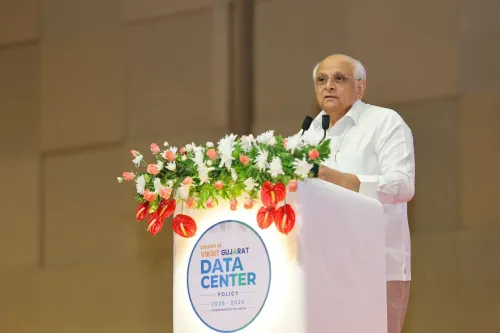
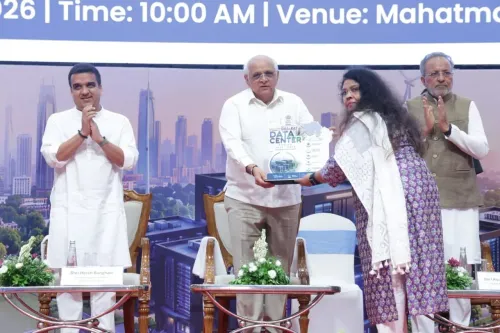
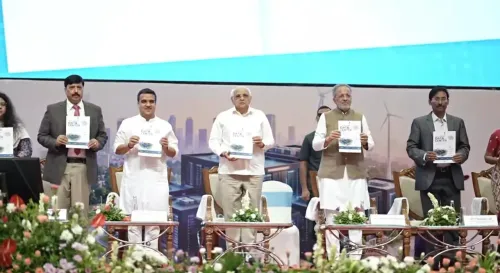
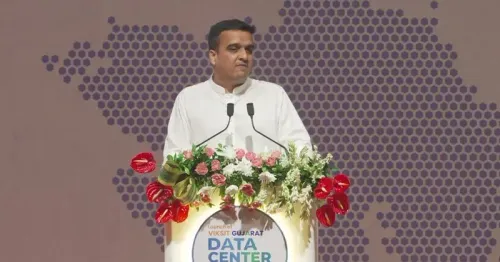
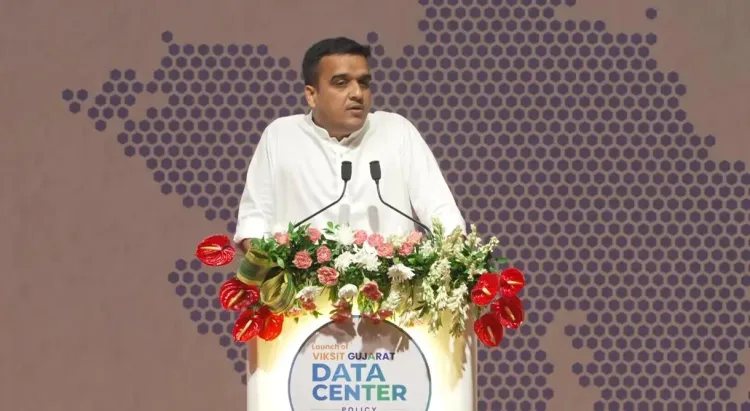
Deputy Chief Minister Harsh Sanghavi on Thursday invoked India's decades-long struggle to build a semiconductor industry as a cautionary lesson, unveiling the 'Viksit Gujarat – Data Centre Policy 2026-29' in Gandhinagar with a stated capacity target of 7.5 GW. The policy, launched by Chief Minister Bhupendra Patel, makes Gujarat the first state in India to formally adopt a dedicated data centre framework, according to the state government.
A History of Missed Semiconductor Targets
Sanghavi traced India's semiconductor failures across three distinct episodes. He noted that a Cabinet decision on a semiconductor mission was taken as far back as 1976, but the initiative had collapsed by 1990. A second attempt between 2006 and 2009 saw plans drawn up for a semiconductor park in Hyderabad, only for those ambitions to dissolve as well.
'Yet again, the dreams of the semiconductor mission faded away. In 2009, the land meant for that semiconductor park was converted into real estate,' Sanghavi said. He framed these historical failures as the precise context against which Gujarat's current policy push should be judged.
Gujarat's Recent Semiconductor Gains
Sanghavi argued that the semiconductor landscape had shifted materially since the mission was revived in 2021. He said Gujarat had emerged as a primary beneficiary of that revival, pointing to a rapid pace of facility inaugurations.
'Since 2025, whether it is several semiconductor fabs in the country or the inauguration of OSAT facilities, within just four months, more than three semiconductor OSAT facilities have been inaugurated on the soil of Gujarat,' he said. The deputy chief minister credited the state's execution capacity — under what he described as the leadership of Prime Minister Narendra Modi and the guidance of Chief Minister Patel — for this acceleration.
What the Data Centre Policy Offers
The Viksit Gujarat Data Centre Policy 2026-29 provides a package of fiscal and non-fiscal incentives targeting hyperscale data centres and AI infrastructure. These include capital subsidies, power tariff support, tax reimbursements, and provisions encouraging renewable energy adoption and sustainable water use.
Notably, Sanghavi claimed that investor demand had already outpaced the policy's initial capacity target. 'Across the whole of Gujarat, the policy being launched today has already generated demand for nearly double that capacity,' he said, adding that leading companies from India and abroad had submitted request letters seeking to establish data centres at various locations across the state.
Why This Matters for India's Digital Infrastructure
The timing of the policy aligns with a surge in demand for AI computing and cloud services, both of which require significant data centre capacity. Gujarat's move positions it ahead of other states that have spoken about data centre ambitions without formalising policy frameworks, according to Sanghavi.
This is also the broader context: India is navigating a critical window in which global technology companies are actively scouting locations for large-scale data infrastructure investment. A state-level policy with defined incentives — arriving before competitors formalise theirs — could give Gujarat a structural first-mover advantage in attracting those commitments.
Whether investor interest translates into ground-level deployment at the scale claimed will be the defining test of the policy's credibility in the months ahead.
Point of View
And invoking it at a data centre launch is an implicit admission that ambition alone is insufficient. The claim that investor demand has already doubled the 7.5 GW target is striking, but request letters are not signed agreements, and the gap between expressions of interest and actual commissioning is where Indian infrastructure policy has historically lost momentum. Gujarat's first-mover advantage on a formal data centre policy is real, but the incentive architecture — capital subsidies, tariff support, tax reimbursements — will need to be stress-tested against power availability and land acquisition timelines, the two variables that have derailed comparable projects elsewhere. The next benchmark is not the policy launch; it is the first hyperscale facility that breaks ground.
NationPress
8 Oct 2026
Frequently Asked Questions
What is the Viksit Gujarat Data Centre Policy 2026-29?
It is a state government policy launched in Gandhinagar offering fiscal and non-fiscal incentives — including capital subsidies, power tariff support, and tax reimbursements — to attract hyperscale data centres and AI infrastructure to Gujarat. The policy sets an initial capacity target of 7.5 GW and runs through 2029.
Why does Gujarat claim to be the first state with a data centre policy?
Deputy Chief Minister Harsh Sanghavi stated that while many states have spoken about data centres, Gujarat is the first to officially launch a formal, dedicated Data Centre Policy. No other Indian state has yet published an equivalent standalone framework, according to the state government.
What did Harsh Sanghavi say about India's semiconductor history?
Sanghavi recalled that a semiconductor mission decision was taken in a Cabinet meeting in 1976 but had failed by 1990, and a second attempt involving a planned semiconductor park in Hyderabad between 2006 and 2009 also collapsed — with the reserved land converted to real estate by 2009. He cited these failures as context for why implementation capability matters alongside policy announcements.
How much investor demand has the data centre policy already attracted?
According to Sanghavi, demand from Indian and international companies has already reached nearly double the policy's 7.5 GW capacity target, with firms submitting request letters to the state government seeking to establish data centres at various locations across Gujarat.
What incentives does the Gujarat data centre policy offer?
The policy provides capital subsidies, power tariff support, tax reimbursements, and provisions that encourage renewable energy use and sustainable water consumption, targeting hyperscale data centres and AI computing infrastructure.