Gujarat Police deploys AI and CCTV integration to cut officers' workload
Synopsis
Gujarat Police isn't just upgrading its cameras — it's rethinking how officers spend their time. The Sentinel Hackathon 2026 produced over 1,000 AI and CCTV solutions, launched India's first UIDAI-recognised digital identity verification system, and handed out ₹18 lakh in prizes, with ₹51 lakh total on the table as the state bets on tech-first policing.
Key Takeaways
Gujarat Police is integrating AI and CCTV systems to reduce routine workload for constables and officers, announced at the Sentinel Hackathon 2026 on 13 October 2026 .
The Gujarat Police Innovation Challenge 2026 received more than 3,100 registrations and over 1,000 solutions from innovators and start-ups nationwide.
Phase 1 prize money of ₹18 lakh was awarded; total prize pool across both phases is ₹51 lakh . 'Prati Raksha' was launched as India's first UIDAI-recognised consent-based digital identity verification system . 'Pathik 2.0' , developed by Ahmedabad City Crime Branch , uses real-time QR codes and facial verification for paperless employee identity checks. i-Hub has supported more than 700 start-ups with guidance, legal assistance, and financial backing.
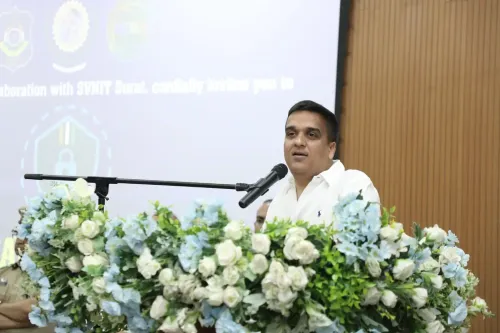
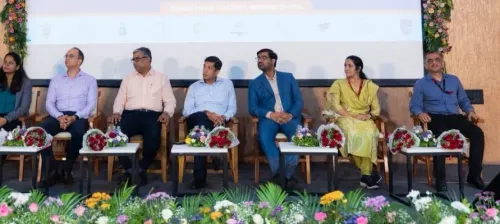
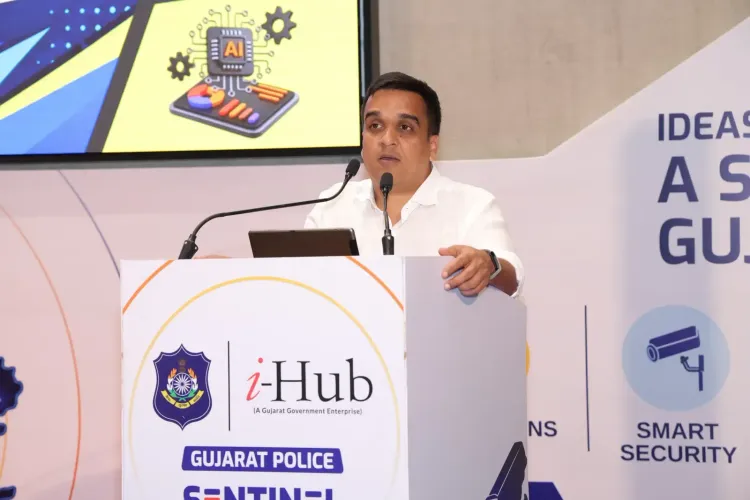
Gujarat Police is set to harness artificial intelligence (AI) and software integration to streamline routine tasks and sharpen crime detection, Deputy Chief Minister Harsh Sanghavi announced on 13 October 2026 at the closing ceremony of the Gujarat Police Innovation Challenge 2026 in Ahmedabad. Speaking at the two-day Sentinel Hackathon 2026 at i-Hub, Sanghavi emphasised that the initiative goes beyond technology infrastructure — it is designed to reclaim productive hours for thousands of constables and officers on the ground.
What the Innovation Challenge Achieved
The hackathon drew more than 3,100 registrations and generated over 1,000 innovative solutions, drawing participation from innovators, start-ups, technology companies, and researchers across the country. Participants demonstrated live solutions including real-time automatic number plate recognition, vehicle tracking, and watchlist matching using active CCTV feeds — a preview of what Gujarat Police hopes to operationalise statewide.
Phase 1 of the competition concluded with winners across three categories, with a combined prize pool of ₹18 lakh awarded. The total prize money across both phases stands at ₹51 lakh.
What the Government Said
Addressing the closing ceremony, Sanghavi said the focus on saving 'human hours' reflects a people-first philosophy behind the technological push. 'This innovation challenge is not merely about creating IT or technology infrastructure or detecting crime. It is also a deeply human approach aimed at saving the working hours of thousands of Gujarat Police constables and officers through AI and modern software integration,' he said.
He added that officers freed from repetitive administrative tasks would be better positioned to improve their social lives and spend more time with their families — an acknowledgment that police welfare is as central to the initiative as public safety.
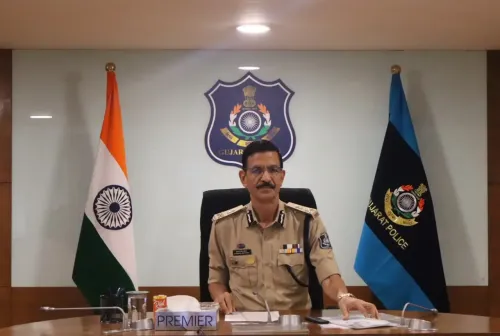
Director General of Police (DGP) G.S. Malik said integrating the state's CCTV network with AI and video analytics could help prevent crimes, identify suspicious individuals promptly, and generate real-time alerts. 'The solutions developed through the hackathon could strengthen proactive policing,' he added.
Platform Integration and Data Unification
Sanjiv Kumar, Principal Secretary to the Chief Minister and Principal Secretary of the Home Department, said a key objective is consolidating CCTV cameras installed by different state departments onto a single unified platform. He described the hackathon as an 'important step' towards technology-driven policing and a smart, future-ready security system.
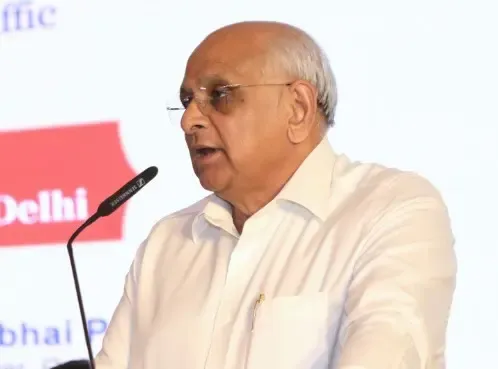
Mukesh Kumar, Additional Chief Secretary of the Higher and Technical Education Department, noted that AI, data analytics, and digital technology are reshaping police operations across public safety, crime prevention, and traffic management. He said i-Hub has so far provided guidance, legal assistance, and financial support to more than 700 start-ups.
New Systems Launched: Prati Raksha and Pathik 2.0
The event also saw the launch of two new systems. 'Prati Raksha' was described by organisers as the country's first UIDAI-recognised consent-based digital identity verification system. 'Pathik 2.0', developed by the Ahmedabad City Crime Branch, complements it with real-time QR codes and facial verification.
Together, the systems enable verification of employees at hotels, paying guest accommodations, factories, and industrial establishments through a paperless process designed to protect individual privacy. This comes amid growing national focus on surveillance infrastructure that balances security imperatives with civil liberties safeguards.
Business Opportunity and What Comes Next
Sanghavi also flagged a commercial dimension, noting that young innovators and start-ups developing CCTV integration and AI-based solutions could find business opportunities not just in Gujarat but in other states. The police department, he said, is committed to supporting innovators 'from concept development to execution' and facilitating access to real-time data.
With Phase 2 of the challenge still ahead and a larger prize pool in play, Gujarat's experiment with AI-powered policing could serve as a template for other state forces watching closely.
Point of View
But the gap between prototype and deployment is where most such initiatives stall. The launch of Prati Raksha as a UIDAI-recognised consent-based system is notable — it signals an attempt to bake privacy into the architecture rather than retrofit it, which has been the failure mode of several state surveillance projects. The real question is whether the 1,000-plus solutions submitted will be evaluated by outcome metrics or simply filed away after the prize ceremony. With Phase 2 still ahead and a ₹51 lakh prize pool, the pressure to convert hackathon wins into operational tools is real — but Gujarat Police will need a transparent procurement and pilot framework to ensure this does not become an expensive showcase.
NationPress
14 Oct 2026
Frequently Asked Questions
What is the Gujarat Police Innovation Challenge 2026?
It is a state-government-led hackathon that invited innovators, start-ups, tech companies, and researchers to develop AI and CCTV-based solutions for public safety and policing. The two-day Sentinel Hackathon 2026 was held at i-Hub in Ahmedabad and concluded on 13 October 2026, with over 3,100 registrations and more than 1,000 solutions submitted.
What prize money is on offer at the Sentinel Hackathon 2026?
Phase 1 concluded with winning teams receiving a combined ₹18 lakh across three categories. The total prize pool across both Phase 1 and Phase 2 of the competition stands at ₹51 lakh.
What is Prati Raksha and why is it significant?
Prati Raksha is described by organisers as India's first UIDAI-recognised consent-based digital identity verification system, launched at the Sentinel Hackathon 2026. It uses real-time QR codes and facial verification to check the identities of employees at hotels, paying guest accommodations, factories, and industrial establishments through a paperless, privacy-conscious process.
How does the AI integration benefit Gujarat Police officers?
According to Deputy Chief Minister Harsh Sanghavi, AI and software integration will reduce the time officers spend on routine administrative tasks, freeing up 'human hours' for thousands of constables and officers. The aim is to improve both policing effectiveness and the personal wellbeing of police personnel.