Gujarat Government Updates Bulk LPG Supply Regulations for Industries
Synopsis
The Gujarat government has revamped bulk LPG supply laws for industrial sectors, allowing significant gas access while ensuring priority for essential production needs. With a total of 98,883 cylinders distributed across the state, these changes aim to stabilize energy supplies amidst geopolitical uncertainties.
Key Takeaways
Amended LPG Supply Rules: Key changes to supply regulations for industrial units.
Consumption Cap: Up to 70% of pre-March 2026 levels allowed.
Daily Supply Limit: Fixed at 0.2 TMT for all units.
Registration Required: Units must register with OMCs.
Cylinder Distribution: 98,883 cylinders provided to workers.
Gandhinagar, April 9 (NationPress) The government of Gujarat has introduced significant changes to the regulations governing the supply of bulk non-domestic liquefied petroleum gas (LPG) for industrial establishments, as reported by officials on Thursday.
Per the Department of Food, Civil Supplies, and Consumer Affairs, industries in various sectors including pharmaceuticals, food processing, polymers, agriculture, packaging, paint, steel, ceramics, glass, and aerosols are now eligible to receive up to 70% of their consumption levels prior to March 2026 in bulk LPG.
The overall supply cap for all industrial units has been set at 0.2 TMT per day.
The revised allocation system will give priority to units where LPG is crucial for production, especially where Natural Gas (PNG) is not a viable substitute.
Industrial units that wish to benefit from this provision must register with public-sector Oil Marketing Companies (OMCs).
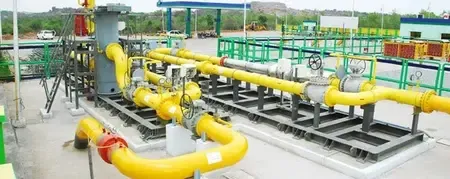
Additionally, they need to apply for PNG connections with City Gas Distribution (CGD) companies, except when LPG is an essential part of their production process.
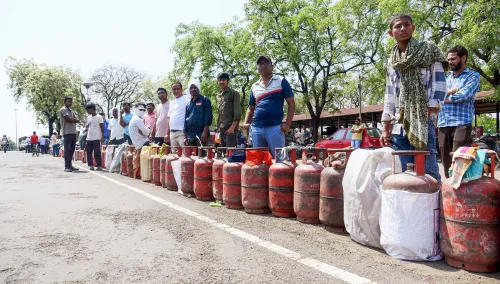
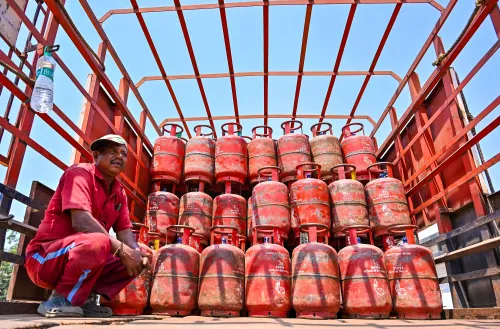
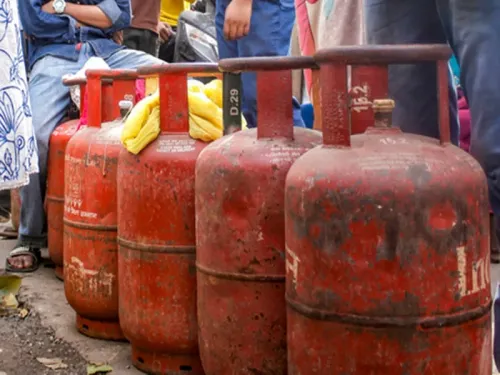
The state has also distributed a total of 98,883 five kg cylinders for industrial workers throughout Gujarat, marking the highest allocation by any state in India.
This includes a district-wise breakdown of Surat with 26,183 cylinders, Ahmedabad with 19,930, Kutch with 7,771, Bharuch with 6,723, and Rajkot with 6,525.
Despite concerns about potential LPG supply disruptions due to geopolitical conflicts in West Asia, the state government asserts that most industrial sectors remain operational.
A relatively small number of units are either temporarily non-operational or functioning at reduced capacity due to logistics and supply chain challenges, rather than fuel shortages.
Officials pointed out that of over 411,000 registered industrial units in the state, only around 1,200 are non-operational, and nearly 28,500 are running at reduced capacity as of early April, with most industries continuing to have access to gas and other energy sources.
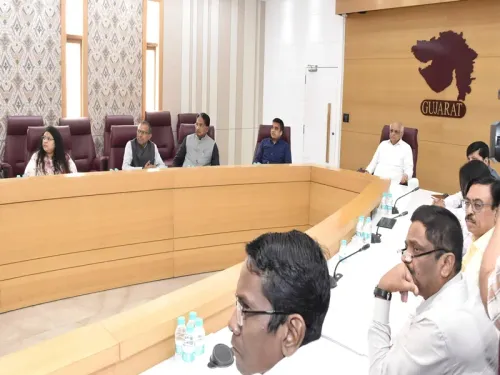
Government representatives have underscored their ongoing collaboration with Central authorities to facilitate logistics and regulatory requirements while ensuring that critical fuel supplies, including PNG for domestic and commercial use, remain uninterrupted.
Point of View
The revised LPG supply regulations in Gujarat reflect a proactive approach to ensure energy availability for critical industries. While challenges exist, the government's commitment to coordination with central authorities signals a focused effort to maintain operational stability.
NationPress
12 Oct 2026
Frequently Asked Questions
What sectors are eligible for bulk LPG supply?
Sectors such as pharmaceuticals, food processing, polymers, agriculture, packaging, paint, steel, ceramics, glass, and aerosols are eligible for bulk LPG supply.
How much LPG can industrial units receive?
Industrial units can receive up to 70% of their pre-March 2026 consumption levels in bulk LPG.
What is the total supply cap for industrial units?
The total supply limit for all industrial units has been set at 0.2 TMT per day.
Do industrial units need to register for LPG supply?
Yes, industrial units must register with public-sector Oil Marketing Companies to access bulk LPG supply.
How many cylinders have been distributed to industrial workers?
A total of 98,883 five kg cylinders have been distributed to industrial workers across Gujarat.