Gujarat's Raksha Shakti School trains Class 6-12 students for CAPF, police careers
Synopsis
Gujarat's Raksha Shakti School is doing something most Indian schools don't — training teenagers for CAPF and police careers from Class 6 itself. Situated on the Rashtriya Raksha University campus in Gandhinagar and run on a PPP model, it embeds daily drills, football, and competitive exam prep into a regular school curriculum, aiming to give aspiring security personnel a structured head start.
Key Takeaways
Raksha Shakti School is located on the Rashtriya Raksha University campus in Lavad, Gandhinagar and is run by the Gujarat government under a PPP model .
The residential school offers education from Class 6 to Class 12 , combining academics with physical training.
It is modelled on the lines of a Sainik School , with a focus on preparing students for the CAPF and state police forces.
Daily drills and sports including football and volleyball form part of the structured routine.
School Director B.R.
Rao has stated the institution's mission is specialised early preparation for careers in uniformed services and competitive examinations.
Raksha Shakti School in Gandhinagar, Gujarat, is preparing students from Class 6 to Class 12 for careers in the Central Armed Police Forces (CAPF) and state police through a curriculum that integrates rigorous physical training, discipline drills, and academic instruction. The residential school, located on the campus of Rashtriya Raksha University in the Lavad area of Gandhinagar, operates under a public-private partnership (PPP) model run by the Gujarat state government.
How the School Works
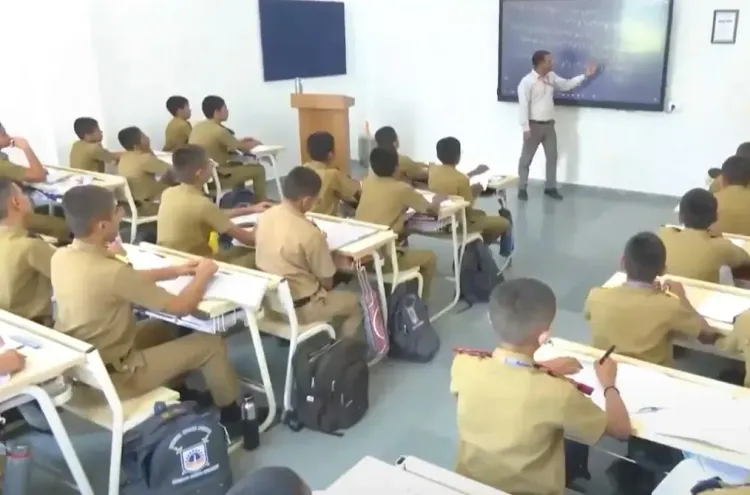
Modelled on the lines of a Sainik School, Raksha Shakti School combines formal classroom education with structured physical conditioning. Students follow a daily routine that includes drills, and sports such as football and volleyball are incorporated to support both physical and mental development. The programme places particular emphasis on discipline, fitness, teamwork, and a sense of responsibility — qualities directly aligned with the demands of uniformed service careers.
The institution also prepares students for competitive examinations tied to entry into the security and defence sectors, giving them what school administrators describe as an early foundation for future challenges.
What Students and Teachers Say
Students Ayush Parmar and Smit Kumar Patel have spoken about their experiences in the programme, highlighting how the blend of academics and physical training shapes their daily routine. Ritu, a teacher at the school, underlined the role drills and sports play in the holistic development of students — building not just physical strength but mental resilience as well.
B.R. Rao, Director of Raksha Shakti School, has spoken about the institution's core mission: equipping students with the specialised training required to pursue careers in the CAPF and state police forces, well before they reach the recruitment stage.
Why This Model Matters
India's uniformed services — from the CRPF and BSF to state police cadres — draw from a competitive recruitment pool where physical standards and discipline are non-negotiable entry requirements. By embedding this preparation into secondary schooling, Raksha Shakti School attempts to address a gap that most aspirants otherwise bridge through coaching institutes post-school, often at significant cost and with uneven outcomes.
The school's PPP structure also signals a growing state interest in early-stage talent pipelines for the security sector, a model that has precedents in defence-oriented institutions but remains relatively rare at the school level in India.
What Lies Ahead
As awareness of the school grows, it could serve as a template for similar institutions in other states seeking to channel student ambition toward careers in public service and national security. The outcomes of its first cohorts — in competitive exam results and recruitment rates — will be closely watched as a gauge of the model's effectiveness.
Frequently Asked Questions
What is Raksha Shakti School in Gandhinagar?
Raksha Shakti School is a Gujarat government residential school located on the Rashtriya Raksha University campus in Lavad, Gandhinagar. It runs from Class 6 to Class 12 and is modelled on Sainik Schools, combining academic education with physical training to prepare students for careers in the CAPF and state police forces.
Who runs Raksha Shakti School and how is it funded?
The school is run by the Gujarat state government under a public-private partnership (PPP) model. It operates as a residential institution within the Rashtriya Raksha University campus in Gandhinagar.
What kind of training do students receive at Raksha Shakti School?
Students undergo a structured routine that includes disciplinary drills, sports such as football and volleyball, academic instruction, and preparation for competitive examinations. The programme emphasises discipline, physical fitness, teamwork, and a sense of responsibility aligned with uniformed service requirements.
Which careers does Raksha Shakti School prepare students for?
The school primarily prepares students for careers in the Central Armed Police Forces (CAPF) — which includes units like the CRPF and BSF — and state police forces. It also readies students for competitive entrance examinations in the security and defence sectors.
How does Raksha Shakti School differ from a regular school?
Unlike a conventional school, Raksha Shakti School integrates daily physical drills, sports, and discipline training directly into the academic curriculum from Class 6 onwards. This early-stage preparation is rare at the school level in India and is specifically designed to give students a head start in uniformed service careers.