Goyal: Countries Fear Missing Out on India Trade Deal
Synopsis
Commerce Minister Piyush Goyal says countries are gripped by FOMO over missing a trade deal with India, reflecting growing global interest in bilateral agreements as India expands market access through FTAs with the UAE, Australia, and ongoing talks with the UK and EU.
Key Takeaways
Minister Piyush Goyal posted on 25 October 2026 that global demand for trade deals with India is intense, coining the phrase 'The FOMO is real.' India signed landmark FTAs with the UAE and Australia in 2022 , accelerating its bilateral trade agenda after years of limited deal-making.
Ongoing negotiations with the United Kingdom and the European Union are the most closely watched by Indian exporters and industry.
India's leverage stems from its large and rapidly growing consumer market combined with its expanding manufacturing base.
Key beneficiaries of new FTAs include Indian exporters in pharmaceuticals, textiles, IT services, and engineering goods .
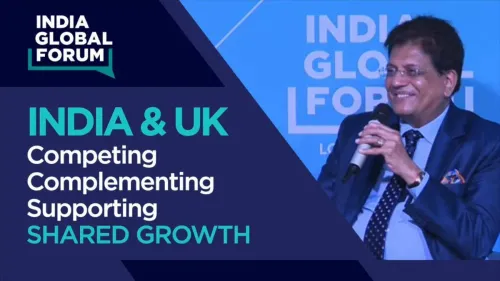
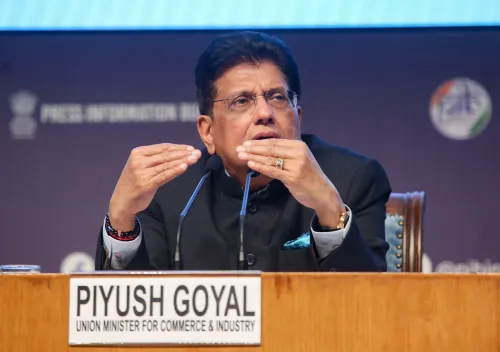
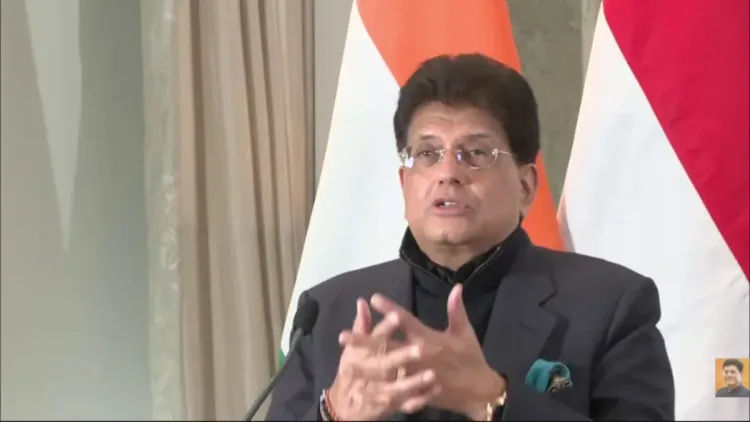
India's trade magnetism is no longer a talking point — it is a queue. Union Commerce and Industry Minister Piyush Goyal declared on Sunday, 25 October 2026 that the scramble for bilateral trade agreements with India has become so intense that he can only describe it in the language of the internet age: 'The FOMO is real! Countries don't want to miss out on a trade deal with India.'
From exception to expectation: India's FTA momentum
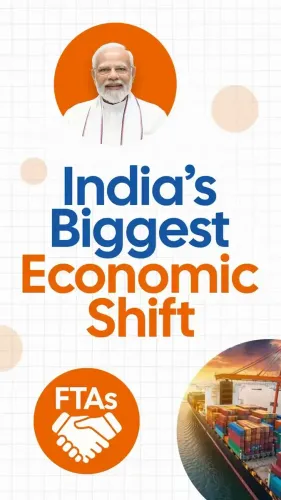
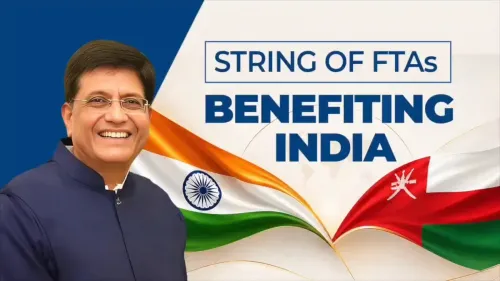
The remark lands against a backdrop of genuine deal-making velocity. India locked in two landmark agreements in 2022 — the India-UAE Comprehensive Economic Partnership Agreement and the India-Australia Economic Cooperation and Trade Agreement — signalling a decisive shift after years of relative FTA inactivity. Both deals delivered faster market access for Indian goods and set a template for future negotiations.
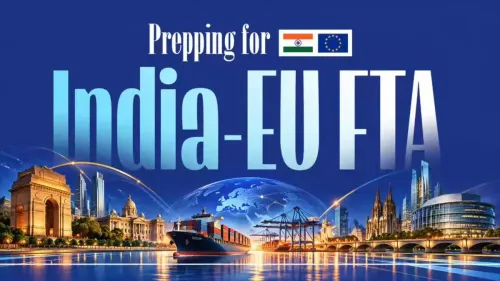
That template has since attracted a longer list of suitors. Talks with the United Kingdom and the European Union remain among the most closely watched, with exporters and industry bodies tracking every negotiating round for signals on tariff schedules, services access, and rules of origin. The Commerce Ministry has positioned India as a partner that can offer both a vast consumer market and a manufacturing base hungry for global supply-chain integration.
Why the 'FOMO' framing matters
Goyal's choice of phrase is deliberately punchy, but it encodes a real strategic calculation: as India's middle class expands and its share of global manufacturing rises, the cost of being locked out of preferential access grows steeper by the year. Countries that hesitate risk watching competitors secure lower tariffs and faster customs clearance while they negotiate from a weaker position.
India has used this leverage consciously — tying market access to reciprocal concessions and, in several cases, linking trade talks to broader geopolitical alignment. The message from the minister is that the queue is only getting longer, and patience in New Delhi is finite.
What Indian exporters are watching next
For Indian exporters — in sectors from pharmaceuticals and textiles to IT services and engineering goods — every new FTA translates directly into price competitiveness in foreign markets. The UK deal, in particular, has drawn sustained attention given the size of bilateral trade and the number of Indian diaspora-linked businesses on both sides.
Progress on the EU front would be even larger in scale, potentially opening the world's largest single market to Indian goods on more favourable terms than those available to non-FTA partners.
If the queue of countries is as long as the minister suggests, the real test is whether New Delhi can convert interest into signed, ratified, and implemented agreements — because FOMO, for all its urgency, does not automatically become a deal.
Point of View
Signalling that the Modi government intends to use demonstrated success as negotiating leverage in the larger UK and EU talks. Framing demand as coming from outside India also deflects domestic criticism that FTAs expose Indian industry to import competition, shifting the optics from concession to attraction. Whether the rhetoric accelerates actual signing timelines is the harder question, but the political intent to project economic indispensability is unmistakable.
NationPress
26 Oct 2026
Frequently Asked Questions
What did Piyush Goyal say about India trade deals?
Goyal posted on 25 October 2026 that countries are experiencing 'FOMO' — fear of missing out — on signing a trade deal with India, reflecting the high global demand for bilateral agreements with New Delhi.
Which countries has India signed FTAs with recently?
India signed the Comprehensive Economic Partnership Agreement with the UAE and the Economic Cooperation and Trade Agreement with Australia , both in 2022 , marking a significant acceleration in its FTA programme.
What is the status of the India-UK free trade agreement?
Negotiations between India and the UK on an FTA are ongoing and closely tracked by exporters on both sides; no final agreement had been announced as of the date of this report.
Is India negotiating a trade deal with the EU?
Yes, India and the European Union have been engaged in FTA talks; the negotiations cover tariffs, services, and investment, and are among the most consequential trade discussions India is currently involved in.
Who benefits from India signing more FTAs?
Indian exporters in sectors such as pharmaceuticals, textiles, IT services, and engineering goods stand to gain most directly through lower tariffs and better market access in partner countries.