Gujarat Regional Science Centres cross 25 lakh visitors in four years
Synopsis
Gujarat's four Regional Science Centres have crossed 25.64 lakh visitors in just four years — a figure that reveals how quickly state-backed science infrastructure can shift public engagement when it is deliberately placed in underserved regions, from Kutch's border districts to North Gujarat's rural belt.
Key Takeaways
Gujarat's four Regional Science Centres have collectively recorded more than 25.64 lakh visitors over four years.
The Patan centre leads with over 14.86 lakh visitors and engagement with more than 2,700 schools since its inauguration on 1 May 2022 .
The Bhuj centre has attracted international tourists from five countries and opened a public space observatory with a 24-inch telescope on 25 December 2024 .
The Bhavnagar centre spans 20 acres and runs a zero-waste, solar-powered campus aligned with NEP 2020 .
The Rajkot centre has recorded over 3.64 lakh visitors , using AR, VR and holography for student learning.
Gujarat's four Regional Science Centres have collectively welcomed more than 25.64 lakh visitors over the past four years, underscoring a sharp rise in public interest in science education and experiential learning across the state. The centres, established under the Gujarat Council on Science and Technology (GUJCOST), are located in Patan, Bhuj, Bhavnagar and Rajkot.
Network Overview and Scale
Spread across distinct geographical zones — from North Gujarat to the Kutch border district and the Saurashtra coast — the four centres were designed to extend science access beyond urban centres to rural and border communities. Their combined programming covers exhibitions, interactive demonstrations, workshops, and school outreach, targeting students, teachers and the general public alike.
Officials noted that the centres' development unfolded over 12 years, a period of expanded science outreach in Gujarat aligned with national initiatives to promote scientific temper. Chief Minister Bhupendra Patel and Science and Technology Minister Arjun Modhwadia have overseen continued state support for the expansion of science infrastructure.
Patan: North Gujarat's Science Hub
The Patan Regional Science Centre, inaugurated on 1 May 2022, has emerged as the network's busiest facility, recording more than 14.86 lakh visitors — the highest among the four centres. It has engaged with over 2,700 schools and reached more than seven lakh individuals through outreach and school-based programmes.
The centre runs Science Gram Sabhas targeting rural participation, with dedicated sessions for women, farmers and Divyang citizens. It has conducted more than 890 workshops, 579 lecture series and over 1,900 science shows, with hands-on training in robotics, DNA studies, hydroponics and mechatronics. In 2025, the facility installed a 200 kW solar power plant following recognition through the National Energy Conservation Award.
J.C. Pandya, then Mission Director of NHM, Gandhinagar, said: 'The Patan Regional Science Centre is providing science enthusiasts with an excellent experience through its remarkable and informative galleries.'
Bhuj: Science at the Border
The Bhuj Regional Science Centre, inaugurated on 28 August 2022, has drawn more than 2.57 lakh visitors, including international tourists from Nigeria, Australia, the United Kingdom, the United States and Saudi Arabia. It has engaged more than 1.37 lakh students from over 1,100 schools.
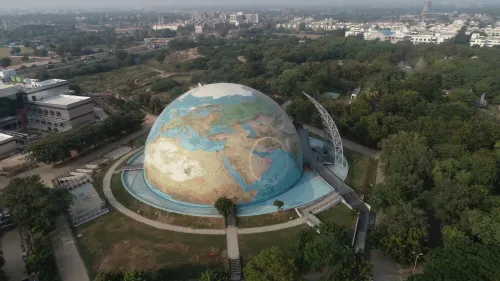
The centre features six thematic galleries, a 3D theatre and simulation-based exhibits in marine and submarine science. A public space observatory, inaugurated on 25 December 2024 and equipped with a 24-inch telescope, has allowed more than 3,500 visitors to observe celestial objects. Educational workshops in astronomy, physics and mental mathematics have drawn more than 2,500 participants.
Bhavnagar and Rajkot: Expanding the Footprint
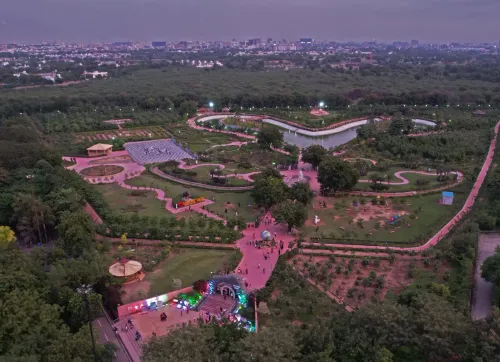
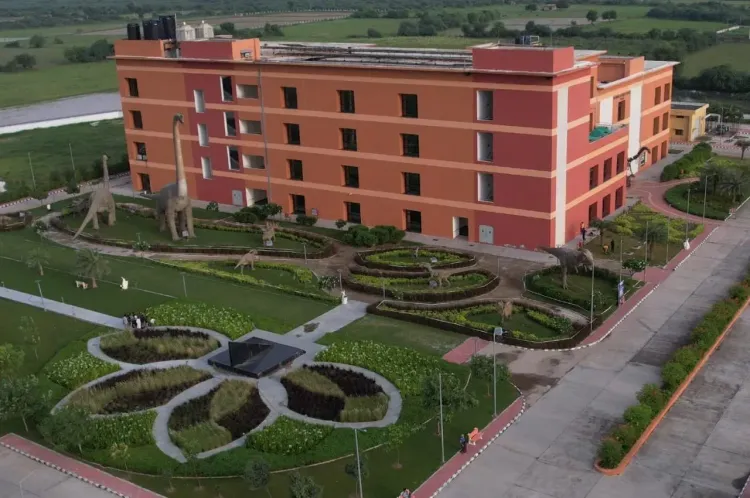
The Bhavnagar Regional Science Centre, inaugurated on 29 September 2022, spans 20 acres and has welcomed more than 2.90 lakh visitors. Its galleries cover marine science, biology, automobiles, electro-mechanics and Nobel Prize discoveries. Interactive installations include a 9D virtual reality simulator, a large aquarium and a piezoelectric floor system. The facility operates a 100 kW solar power plant, a zero water waste system and a plastic-free campus, and runs STEM programmes in artificial intelligence and robotics aligned with the National Education Policy 2020.
The Rajkot Regional Science Centre, inaugurated on 19 October 2022, has recorded more than 3.64 lakh visitors, including over 1.67 lakh students. It features galleries on robotics, machine engineering, life sciences and Nobel Prize discoveries, and uses augmented reality, virtual reality, holography and simulation-based environments to introduce students to drones and advanced engineering systems.
Broader Impact and What Comes Next
Together, the four centres represent one of India's more comprehensive state-level science outreach networks, combining physical infrastructure with community programming. Officials stated that the network's focus on rural reach and inquiry-based learning is central to its mandate going forward. Notably, this is also the first time the combined visitor count has crossed the 25 lakh milestone, a figure officials described as a marker of growing scientific curiosity among Gujarat's citizens. Further expansion of outreach programmes and infrastructure upgrades are expected as the centres mature.
Point of View
But the more telling metric is reach: over 2,700 schools engaged in Patan alone, and international footfall in Bhuj — a border district not typically on science-tourism maps. What this network demonstrates is that distributed infrastructure, rather than a single flagship centre, can move the needle on science literacy at scale. The real test will be whether the state sustains programming budgets as the centres age past their inauguration momentum, and whether rural outreach translates into measurable improvements in science outcomes at the school level — data that has not yet been publicly released.
NationPress
21 Oct 2026
Frequently Asked Questions
How many visitors have Gujarat's Regional Science Centres received?
Gujarat's four Regional Science Centres have collectively recorded more than 25.64 lakh visitors over four years. The centres are located in Patan, Bhuj, Bhavnagar and Rajkot, and were established under GUJCOST.
Which Gujarat Regional Science Centre has the highest footfall?
The Patan Regional Science Centre, inaugurated on 1 May 2022, leads the network with more than 14.86 lakh visitors. It has also engaged over 2,700 schools and reached more than seven lakh individuals through outreach programmes.
What facilities does the Bhuj Regional Science Centre offer?
The Bhuj centre features six thematic galleries, a 3D theatre, marine and submarine science exhibits, and a public space observatory with a 24-inch telescope inaugurated on 25 December 2024. It has also welcomed international visitors from countries including Australia, the UK, the US, Nigeria and Saudi Arabia.
How do the Gujarat science centres support rural and underserved communities?
The centres run targeted programmes such as Science Gram Sabhas in Patan, with dedicated sessions for women, farmers and Divyang citizens. Their geographic spread — from the Kutch border district to Saurashtra — is designed to bring science access to regions beyond major urban centres.
Are the Gujarat Regional Science Centres environmentally sustainable?
Yes, both the Patan and Bhavnagar centres have adopted sustainability measures. Patan installed a 200 kW solar power plant in 2025 after winning the National Energy Conservation Award, while Bhavnagar operates a 100 kW solar plant, a zero water waste system and a plastic-free campus.