Gujarat Science City crosses 1.43 crore visitors, new galleries planned
Synopsis
Gujarat Science City has quietly become one of India's most visited science destinations — 1.43 crore footfalls and counting. With 202 robots, a shark tunnel, a hybrid planetarium, and two new galleries on the way, Ahmedabad's science hub is no longer a regional attraction but a national benchmark for public science engagement.
Key Takeaways
Gujarat Science City in Ahmedabad has crossed 1.43 crore visitors since 2006, with the milestone recorded through May 2026 .
The campus was established on 10 August 1999 and expanded significantly during PM Narendra Modi's tenure as Chief Minister of Gujarat.
Key attractions include a Robotics Gallery with 202 robots , an Aquatic Gallery with a 28-metre shark tunnel , and an Astronomy Gallery spanning 12,797 sq metres with a 172-seat planetarium .
PM Modi visited the facility on 9 January 2017 and 27 September 2023 .
Upcoming additions include an Aviation and Defence Gallery and a Human and Biological Science Gallery .
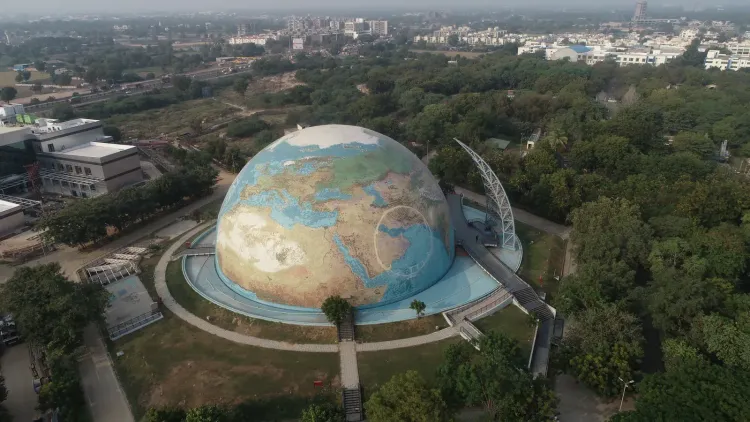
Gujarat Science City in Ahmedabad has surpassed 1.43 crore visitors since 2006, according to official data released in June 2026, cementing its position as one of India's largest science education and experiential learning destinations. Established on 10 August 1999, the facility has grown through successive phases of expansion into a sprawling multi-zone scientific campus.
Key Developments
The milestone — recorded through May 2026 — reflects two decades of sustained investment in public science engagement. The campus underwent significant expansion during the tenure of Prime Minister Narendra Modi as Chief Minister of Gujarat, with a deliberate shift from textbook-based instruction to hands-on, experience-driven learning. Officials described the centre as part of a broader state vision to promote scientific temper, innovation, and public understanding of science.
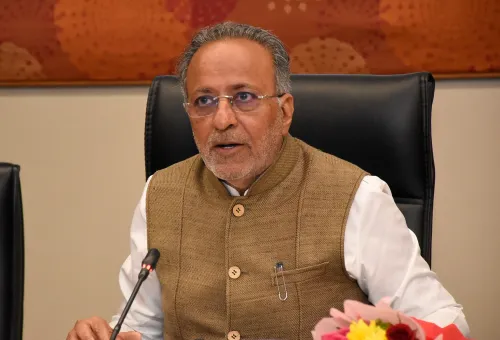
Chief Minister Bhupendra Patel and Science and Technology Minister Arjun Modhwadia have overseen the institution's continued growth as part of Gujarat's wider science and technology agenda.
What the Campus Offers
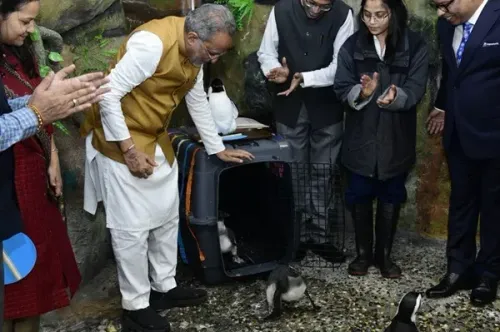
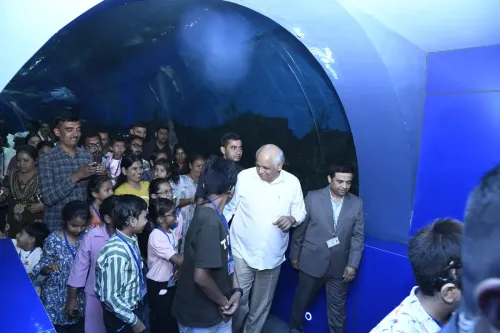
The facility now spans multiple thematic zones. The Aquatic Gallery houses 68 tanks representing 188 species, including over 11,600 fish and sharks, with a 28-metre-long shark tunnel and 10 marine zones covering Indian, Asian, and African ecosystems. It also features African penguins and a 5D theatre.
The Astronomy and Space Science Gallery spans 12,797 square metres, incorporating a 172-seat hybrid planetarium, a telescope-based observation facility, and more than 150 exhibits on space science and cosmology. The Robotics Gallery, covering 11,000 square metres, showcases 202 robots across 79 categories — including humanoid robots — alongside VR/AR installations and a robotic café where automated systems prepare and serve food.
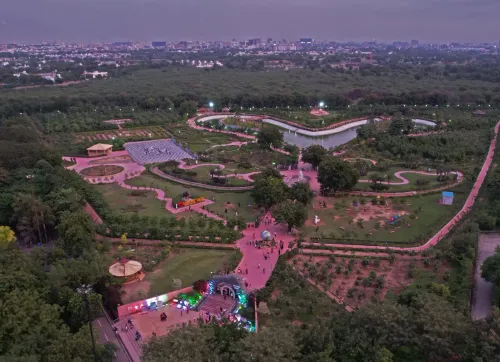
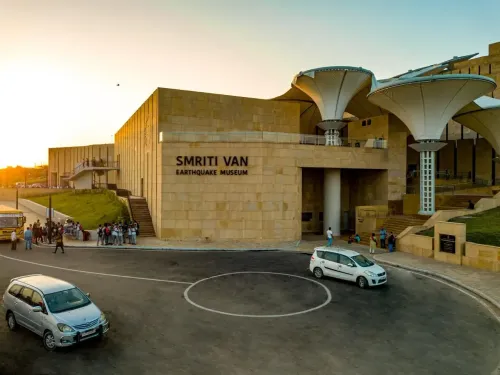
Other attractions include the Planet Earth gallery with exhibits on earthquakes, volcanoes, biodiversity, and human anatomy; a 4D theatre; a simulated underground coal mine; and a 20-acre Nature Park featuring a mist forest, butterfly garden, open gym, yoga and chess zones, and sculptures of extinct species including mammoths and sabre-toothed lions.
Educational infrastructure extends to an IMAX 3D theatre, a multimedia musical fountain with a 36x16 metre water screen and dual 3D projection screens, and Vigyan Bhavan, an open-air theatre seating approximately 1,200 people. The Nobel Dome accommodates 500 visitors for exhibitions and workshops. The Hall of Science functions as an open laboratory for experiments in light, motion, sound, and vision, while the Hall of Space offers a simulated 'Mission to Mars' experience.
Modi's Visits and Institutional Recognition
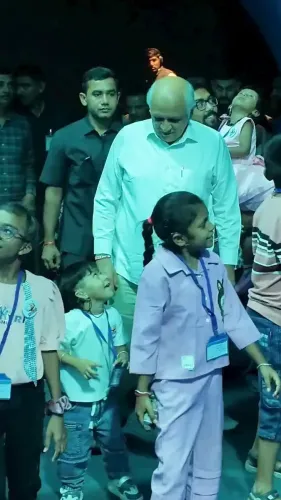
Prime Minister Modi visited the Science City on 9 January 2017 during the Nobel Prize Series event, and again on 27 September 2023 during the Vibrant Gujarat summit, where he reviewed developments and provided guidance on further expansion.
Professionals and visitors have spoken positively about the facility. Ashish Soni, Scientist/Engineer at SAC ISRO, said the Astronomy and Space Science Gallery 'satisfies the curiosity of knowledge of every individual, especially students,' noting its coverage from ancient astronomical concepts to modern developments. IAS officer Deepesh Kedia described his visit as 'beyond imagination,' adding that the planetarium presents the universe's history in a simplified and engaging format.
Upcoming Expansions
The state government has announced plans to add an Aviation and Defence Gallery and a Human and Biological Science Gallery, which will feature interactive displays on modern defence systems, aviation technology, and human biology. A digital future-themed gallery is also reportedly under development.
With visitor numbers climbing and new galleries on the horizon, Gujarat Science City is positioning itself as a national benchmark for public science communication and experiential education.
Point of View
But footfall alone does not measure learning outcomes — a distinction that matters as India debates the quality of its science education pipeline. Gujarat Science City's model of experience-driven engagement is the right instinct, yet independent assessments of whether visits translate into sustained scientific interest among students remain absent from official communications. The planned Aviation and Defence Gallery also raises a question worth watching: will it function as genuine science education or primarily as a showcase for state ambition? The answer will say a great deal about where this institution is headed.
NationPress
14 Sept 2026
Frequently Asked Questions
How many visitors has Gujarat Science City received?
Gujarat Science City has recorded more than 1.43 crore visitors between 2006 and May 2026, according to official data. This makes it one of the most visited science education facilities in India.
Where is Gujarat Science City located?
Gujarat Science City is located in Ahmedabad, Gujarat. It was established on 10 August 1999 and has since grown into a multi-zone scientific campus through successive phases of expansion.
What are the main attractions at Gujarat Science City?
The campus includes an Aquatic Gallery with a 28-metre shark tunnel and 188 species, a Robotics Gallery with 202 robots, a 12,797-square-metre Astronomy and Space Science Gallery with a 172-seat planetarium, a Planet Earth gallery, a 20-acre Nature Park, an IMAX 3D theatre, and a robotic café, among other facilities.
What new galleries are planned for Gujarat Science City?
The state government has announced plans for an Aviation and Defence Gallery and a Human and Biological Science Gallery, featuring interactive displays on defence systems, aviation technology, and human biology. A digital future-themed gallery is also reportedly under development.
When did PM Modi visit Gujarat Science City?
Prime Minister Narendra Modi visited Gujarat Science City on two occasions — on 9 January 2017 during the Nobel Prize Series event, and on 27 September 2023 during the Vibrant Gujarat summit, where he reviewed the facility's developments and provided guidance on further expansion.