Gujarat Minister Advocates for Universities to Become Innovation and Research Hubs
Synopsis
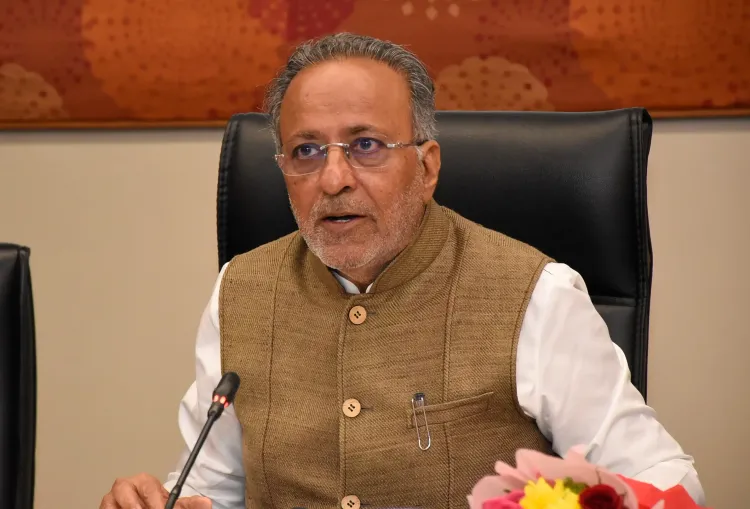
Gujarat's Science and Technology Minister, Arjun Modhwadia, emphasized the need for universities to transform into innovation and research centers during the first Vice Chancellors' meeting. This initiative aims to align educational institutions with global advancements and economic needs.
Key Takeaways
Universities must adapt to changing global research trends.
Investment in education is critical for fostering innovation.
Collaboration with industry enhances academic relevance.
STEM education is vital for future job preparedness.
Research can drive significant economic benefits.
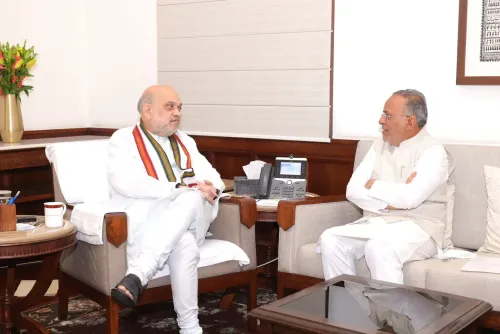
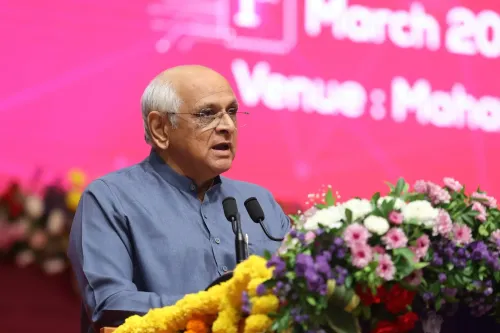
Gandhinagar, March 9 (NationPress) The evolution of universities into hubs for research, innovation, and entrepreneurship is crucial for adapting to the shifting dynamics of the global landscape, asserted Gujarat’s Science and Technology Minister, Arjun Modhwadia, during the inaugural Vice Chancellors’ meeting held on Monday. This one-day event aimed to devise strategies to enhance the science, technology, and innovation ecosystem within the state.
Chaired by Modhwadia, the meeting saw participation from state Education Minister Pradyuman Vaja, along with vice chancellors from state, central, deemed, and private universities, as well as senior officials from various science and technology institutions.
In his address, Modhwadia emphasized the necessity for universities to adapt to the swift changes in global research and development.
“Institutions of higher education should transcend their traditional role and emerge as robust centers of discovery, innovation, and entrepreneurship,” he remarked.
He noted that fostering scientific awareness and technological leadership is pivotal to achieving the Prime Minister’s vision of ‘Viksit Gujarat’ and ‘Viksit Bharat @2047.’
The minister reaffirmed the state government's commitment to ensuring that financial constraints do not impede research activities.
Citing the latest state budget, he mentioned that Chief Minister Bhupendra Patel’s administration has allocated a record Rs 62,000 crore to the education sector, the highest ever, to redefine educational directions.
Modhwadia also recalled the establishment of the Science and Technology Department in Gujarat in 2003, under the guidance of then-chief minister and current Prime Minister, Narendra Modi.
“Numerous new research initiatives have been launched since then, and universities should prepare the youth of the state to meet emerging technological demands,” he stated.
Highlighting the significance of research in driving economic growth, he pointed out that the contributions of agricultural universities in Gujarat have directly benefited farmers and citizens, urging other universities to follow suit.
“Gujarat is positioning itself as a key player in the semiconductor sector nationally, with research and development being integral to supporting this industry,” he added.
Modhwadia urged faculties from arts, commerce, and science disciplines to integrate courses on modern technologies, computers, and Artificial Intelligence (AI) to better equip students for future job markets.
He encouraged universities to align their endeavors with state policies and convert knowledge into tangible solutions for society, industry, and sustainable development.
Education Minister Vaja highlighted the transformative impact universities have in shaping the next generation of scientists, technologists, and innovators.
“Educational initiatives such as the Talent Pool programme and the Namo Saraswati Vigyan Sadhana Yojana have resulted in increased student attendance and new admissions in colleges,” Vaja noted.
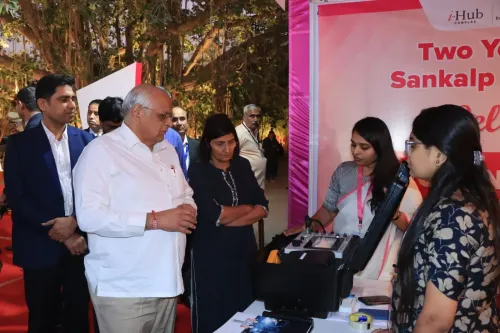
During the meeting, several institutions, including Gujarat Informatics Limited, Gujarat State Biotechnology Mission, Gujarat Biotechnology University, Gujarat Biotechnology Research Centre, the Gujarat Council on Science and Technology, the Institute of Seismological Research, Savli Technology and Business Incubator, and the Gujarat Council of Science City, showcased their work and potential research opportunities in the science and technology domain.
In an official ceremony, MoUs were signed between Gujarat Informatics Limited and Gujarat National Law University, focusing on areas including AI.
Discussions centered on enhancing STEM education, capacity building, creating new avenues for research and development, fostering innovation, start-ups, and entrepreneurship, nurturing a culture of Intellectual Property Rights, and expanding science communication and public engagement.
Vice Chancellors also shared insights on improving research quality, stimulating innovation among students, strengthening industry-academia collaborations, and effectively implementing science and technology programmes on university campuses.
Point of View
The call by Gujarat's Minister for universities to evolve into centers of research and innovation reflects a proactive approach. This strategy not only aims to enhance the educational framework but also aligns with national goals for technological advancement and economic growth. The emphasis on practical solutions and industry collaboration could set a precedent for educational reform across the country.
NationPress
20 Sept 2026
Frequently Asked Questions
What are the key objectives of the Vice Chancellors' meeting?
The meeting aimed to formulate strategies to strengthen the science, technology, and innovation ecosystem in Gujarat, encouraging universities to evolve into centers for research and entrepreneurship.
How much funding has the Gujarat government allocated to education?
The Gujarat government has allocated Rs 62,000 crore to the education sector, the highest allocation to date, aiming to provide new direction to education.
What areas did the discussion during the meeting focus on?
Discussions included strengthening STEM education, enhancing research and development opportunities, promoting innovation, and expanding science communication.
Why is research important for Gujarat's economy?
Research plays a vital role in economic development, as demonstrated by the contributions of agricultural universities, which have directly benefited farmers and the community.
What initiatives have been introduced to increase student participation in colleges?
Programs like the Talent Pool initiative and Namo Saraswati Vigyan Sadhana Yojana have successfully increased student attendance and admissions in colleges.