Tropic of Cancer Science Park in Gujarat draws 3,500 visitors in 2 months
Synopsis
A ₹8 crore open-air science park built precisely where the Tropic of Cancer crosses Gujarat has pulled in over 3,500 visitors in just two months — and summer vacation is still underway. The Salal village site lets visitors literally stand on a globally significant latitude line while learning astronomy through live exhibits, making it one of India's more unusual science tourism experiments.
Key Takeaways
The Tropic of Cancer Science Park in Salal village, Sabarkantha , recorded more than 3,500 visitors within its first two months of opening.
The park was inaugurated on 11 March by Chief Minister Bhupendra Patel and developed by GUJCOST under the state's Department of Science and Technology.
Total project cost is approximately ₹8 crore , spread across 5,930 square metres .
The Tropic of Cancer passes through 8 Indian states and 7 districts in Gujarat alone.
Officials expect visitor numbers to rise further during the ongoing summer vacation period.
The site is also expected to generate local employment and boost science tourism in the region.
Gujarat's newly inaugurated Tropic of Cancer Science Park at Salal village in Prantij taluka, Sabarkantha district, has welcomed more than 3,500 visitors within its first two months of opening, according to officials. Authorities expect footfall to climb further as the ongoing summer vacation draws students and families to the site.
Background and Development
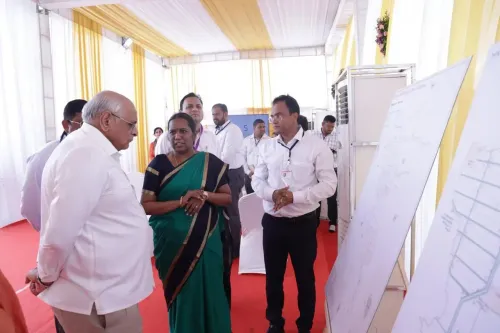
The park was developed by the Gujarat Council on Science and Technology (GUJCOST) under the state government's Department of Science and Technology, at an estimated cost of ₹8 crore over an area of 5,930 square metres. Chief Minister Bhupendra Patel formally inaugurated the facility on 11 March.
At the inauguration, Patel said that 'such initiatives were important for nurturing scientific temperament among citizens and students.' Officials also noted that Prime Minister Narendra Modi has consistently emphasised the need to promote scientific thinking and build understanding among children about modern science.
What the Park Offers
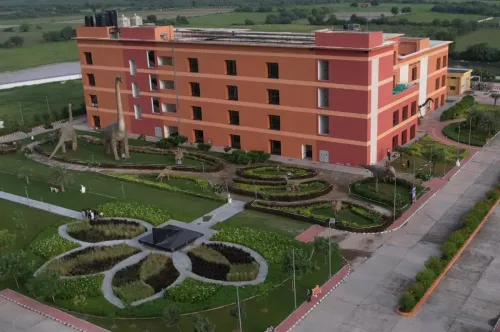
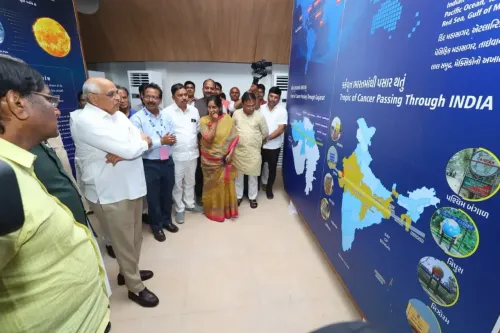
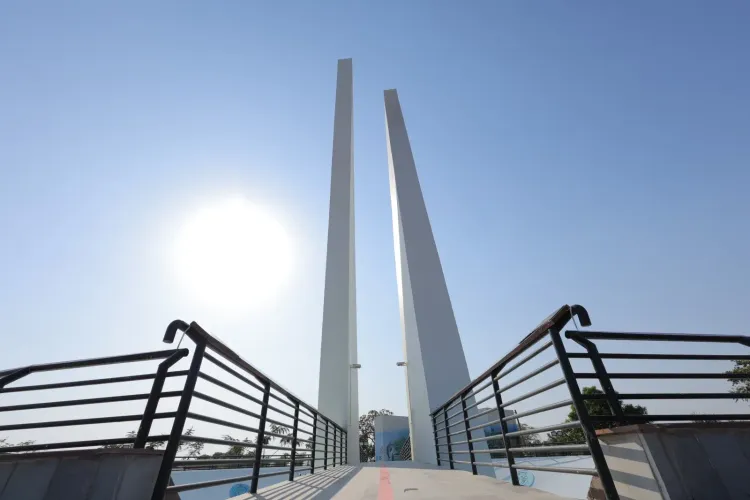
Designed as a self-explanatory, open-air science laboratory, the park features outdoor exhibits, astronomical structures, and visitor amenities. Through interactive displays and instruments, visitors can observe how the Earth's axial tilt drives seasonal change, how the Sun's movement and shadow patterns shift across the year, and how sundials can be used to measure time and track the Sun's position.
The site also allows visitors to physically stand on a latitude line of global significance — the Tropic of Cancer, which lies at 23.5 degrees north of the Equator. Beyond scientific exhibits, the park incorporates natural surroundings and spaces for cultural programmes. Officials describe it as an interactive educational and research centre aimed at explaining the relationship between the Earth and the Sun.
Geographical Significance of the Tropic of Cancer
The Tropic of Cancer, also known as the northern tropic, is the northernmost latitude at which the Sun can appear directly overhead at noon. The imaginary line passes through 16 countries, three continents, and six water bodies worldwide. Tropical regions, which lie between the Tropic of Cancer and the Tropic of Capricorn, cover approximately 40 per cent of the Earth's land area and are known for rich biodiversity.
In India, the Tropic of Cancer passes through eight states — Gujarat, Rajasthan, Madhya Pradesh, Chhattisgarh, Jharkhand, West Bengal, Tripura, and Mizoram. Within Gujarat, it traverses seven districts: Aravalli, Sabarkantha, Gandhinagar, Mehsana, Surendranagar, Patan, and Kutch. Officials noted that the line's passage through northern Gujarat contributes to the state's experience of both extreme heat and cold.
Broader Impact and Outlook
The government has positioned the park as a science tourism destination for students, tourists, and science enthusiasts, aiming to transform an abstract geographical concept into a tangible, experiential learning environment. Officials said the project is also expected to generate new local employment and development opportunities in the area. With summer vacation footfall still building, the site's visitor numbers are anticipated to grow considerably in the weeks ahead.
Point of View
500 visitors in two months is a promising start, but the real test is whether the Salal site retains its draw once the novelty fades. Gujarat's bet on geography-anchored science tourism is creative, but the park's long-term value will depend on curriculum linkages with schools and repeat programming that keeps the content fresh. The ₹8 crore investment is modest by infrastructure standards; the harder challenge is converting a one-time visit into lasting scientific curiosity among students.
NationPress
26 Sept 2026
Frequently Asked Questions
Where is the Tropic of Cancer Science Park located in Gujarat?
The park is located at Salal village in Prantij taluka, Sabarkantha district, Gujarat. It was built at the point where the Tropic of Cancer passes through the region, giving it both geographical and astronomical significance.
Who developed the Tropic of Cancer Science Park and what did it cost?
The park was developed by the Gujarat Council on Science and Technology (GUJCOST) under the state's Department of Science and Technology at an estimated cost of ₹8 crore. It covers an area of 5,930 square metres.
When was the Tropic of Cancer Science Park inaugurated?
Chief Minister Bhupendra Patel inaugurated the park on 11 March. Within two months of opening, it had already attracted more than 3,500 visitors.
Which Indian states does the Tropic of Cancer pass through?
The Tropic of Cancer passes through eight Indian states: Gujarat, Rajasthan, Madhya Pradesh, Chhattisgarh, Jharkhand, West Bengal, Tripura, and Mizoram. Within Gujarat, it traverses seven districts including Sabarkantha, Gandhinagar, and Kutch.
What can visitors learn or experience at the science park?
Visitors can explore outdoor exhibits and astronomical structures that explain the Earth's axial tilt, seasonal changes, and the Sun's movement. They can also observe sundials, understand how shadows shift across the year, and physically stand on the Tropic of Cancer latitude line.