Gujarat's 14 tribal districts to get Johar Cafes; 18,000+ to receive land rights
Synopsis
Gujarat is turning Birsa Munda's 151st birth anniversary into a governance event: 18,000+ tribal families get land titles, 14 Johar Cafes open to market indigenous food, ₹2,300 crore in projects are inaugurated — all in a single week spanning 55 Assembly constituencies and 14 tribal districts.
Key Takeaways
More than 18,000 tribal beneficiaries in Gujarat will receive 7/12 land ownership documents this year.
The state will launch 14 Johar Cafes in tribal districts to promote local cuisine and products.
Shabari Booths will be set up at weekly markets across all 14 tribal districts for scheme outreach and natural-farming product sales.
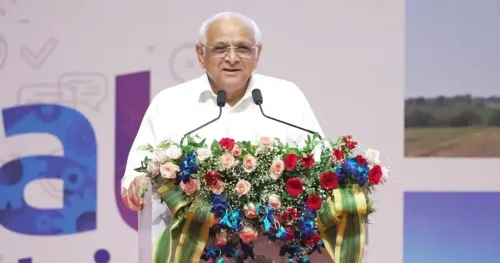
Development projects worth more than ₹2,300 crore will be inaugurated on 15 November in the presence of Chief Minister Bhupendra Patel .
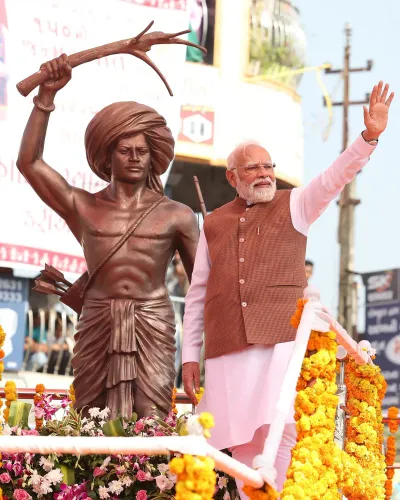
Statues of Birsa Munda will be installed in all tribal districts and municipal areas where none currently exist.
The Vanbandhu Kalyan Yojana budget has grown from ₹15,000 crore at its 2007 launch to ₹2 lakh crore cumulatively.
More than 18,000 tribal beneficiaries across Gujarat will receive land ownership documents with 7/12 land records this year, while the state government will launch 14 'Johar Cafes' to showcase local tribal cuisine and products — all as part of week-long celebrations marking the 151st birth anniversary of Bhagwan Birsa Munda. The events, running from 12 to 18 November, are anchored to National Tribal Pride Day and span all 14 tribal districts of the state.
Key Announcements
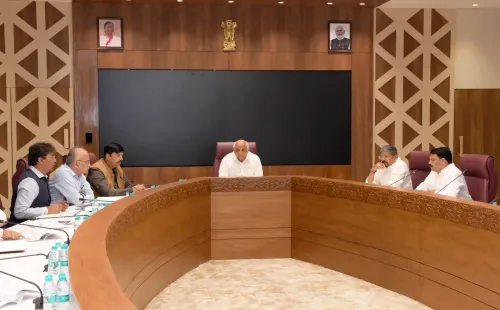
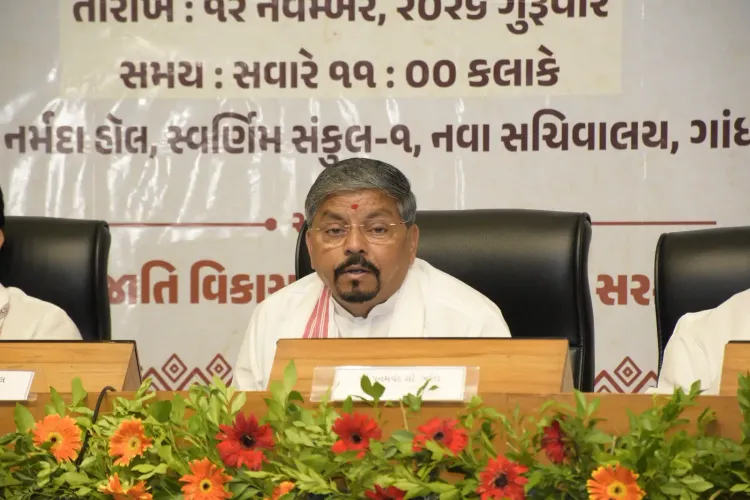
Tribal Development Minister Naresh Patel made the announcements at a press conference in Gandhinagar on Thursday, saying the land distribution initiative directly addresses a longstanding demand of the tribal community. 'The distribution of land ownership documents is aimed at fulfilling a demand of the tribal community,' he said.
On 15 November, development projects worth more than ₹2,300 crore will be inaugurated or have their foundation stones laid in the presence of Chief Minister Bhupendra Patel, Deputy Chief Minister Harsh Sanghavi, and other cabinet members.
What Are Johar Cafes and Shabari Booths
The 14 Johar Cafes will be established in tribal districts to promote indigenous food and locally produced goods, creating a commercial platform for tribal artisans and farmers. Alongside these, 'Shabari Booths' will be set up at weekly markets across all 14 tribal districts, functioning as information kiosks for government welfare schemes and as sales points for natural farming produce.
The dual initiative is designed to address both economic empowerment and policy outreach in areas that have historically seen limited institutional access.
Statues, Roads, and Hostels Named After Birsa Munda
The state government will install statues of Birsa Munda in all 14 tribal districts and municipal areas where none currently exist. Major roads connecting taluka and district headquarters, traffic circles, and hostels for tribal students will also be named after him, cementing the commemorative dimension of the campaign.
Minister Patel noted that Prime Minister Narendra Modi had accorded historical recognition to tribal revolutionaries by declaring 15 November as Tribal Pride Day. He highlighted Birsa Munda's struggle against British colonial rule — waged at the age of 25 — for the protection of water, forests, and land.
Week-Long Programme Schedule
The programme covers 55 Assembly constituencies in tribal districts, all 34 districts, and 17 municipal corporations. Youth meetings with approximately 500 participants each are planned across tribal constituencies on 13 November, focusing on Birsa Munda's life and legacy. Cleanliness drives are scheduled for 14 November from 9 am to 11 am at Munda's statues, followed by the felicitation of local saints and religious leaders.
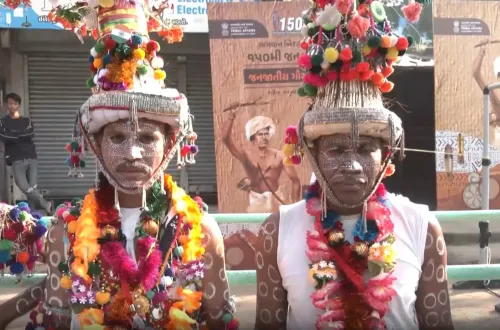
On 14 November evening, Birsa Munda's history will be read aloud in more than 4,500 tribal gram panchayats, accompanied by special aartis prepared in 12 to 13 tribal languages and lamp-lighting in households. Public meetings on 15 November will draw the Chief Minister, Deputy Chief Minister, and cabinet ministers to tribal and non-tribal districts alike. The week concludes with a conference of retired officials and professionals on 16 November, traditional sports competitions on 17 November, and women's meetings on 18 November, with around 500 tribal women expected per constituency.
Vanbandhu Kalyan Yojana and Broader Context
Ganpat Vasava, state president of the Bharatiya Janata Party (BJP)'s Tribal Morcha, said the celebrations aim to carry Birsa Munda's message of 'Our Land, Our Rule' to people across Gujarat. Minister Patel also highlighted that the Vanbandhu Kalyan Yojana, launched in 2007 with an initial allocation of ₹15,000 crore, had grown to a cumulative outlay of ₹2 lakh crore, with tribal students now accessing medical, engineering, and IIT-level higher education.
The scale of this year's commemoration — encompassing land rights, infrastructure spending, cultural infrastructure, and grassroots outreach — signals the Gujarat government's intent to position tribal welfare as a flagship agenda ahead of a politically active period.
Point of View
Cultural infrastructure, and ₹2,300 crore in project inaugurations under a single commemorative week is as much political choreography as it is policy delivery — with 55 Assembly constituencies explicitly in scope. The Vanbandhu Kalyan Yojana's budget growth from ₹15,000 crore to ₹2 lakh crore is a headline figure, but the per-capita and outcome data for Gujarat's tribal population — in health, employment, and forest-rights implementation — remain less prominently discussed. Land records distribution is meaningful, but the gap between documents issued and disputes resolved on the ground is where tribal welfare programmes have historically stalled. Whether the Johar Cafes and Shabari Booths translate into sustained income for tribal producers, or remain one-week fixtures, will be the real measure of this initiative.
NationPress
12 Nov 2026
Frequently Asked Questions
What are Johar Cafes in Gujarat?
Johar Cafes are government-backed outlets being established in Gujarat's 14 tribal districts to promote and market indigenous tribal food, cuisine, and locally produced goods. The state government plans to launch 14 such cafes as part of National Tribal Pride Day celebrations from 12 to 18 November.
What is the 7/12 land record and why are 18,000 tribal families receiving it?
The 7/12 extract is a legal land ownership document in Gujarat that serves as proof of title and cultivation rights. More than 18,000 tribal beneficiaries are set to receive these records this year, fulfilling a longstanding demand of the tribal community for formal tenure security over their land.
What is National Tribal Pride Day and when is it observed?
National Tribal Pride Day is observed on 15 November each year, coinciding with the birth anniversary of Bhagwan Birsa Munda, the tribal revolutionary who fought British colonial rule for the protection of water, forests, and land. Prime Minister Narendra Modi declared the day in recognition of the contribution of tribal revolutionaries.
How much is the Gujarat government spending on tribal projects during this period?
Development projects worth more than ₹2,300 crore are to be inaugurated or have their foundation stones laid on 15 November in the presence of Chief Minister Bhupendra Patel and Deputy Chief Minister Harsh Sanghavi.
What is the Vanbandhu Kalyan Yojana?
The Vanbandhu Kalyan Yojana is Gujarat's flagship tribal development scheme, originally launched in 2007 with an allocation of ₹15,000 crore. According to Tribal Development Minister Naresh Patel, its cumulative budget has since grown to ₹2 lakh crore, covering education, infrastructure, and welfare programmes for tribal communities.