Gujarat Aiming for a $1 Trillion Economy by 2030: Insights from CM Patel
Synopsis
Gujarat's Chief Minister Bhupendra Patel announces the state's ambitious goal to evolve into a $1 trillion economy by 2030, highlighting government support for industries and significant investments. Patel emphasizes the importance of inclusive development and strategic infrastructure improvements.
Key Takeaways
Gujarat aims to achieve a $1 trillion economy by 2030 .
The state contributes 8% to India's GDP .
Significant investments from companies like Micron Technology .
Gujarat accounts for 33% of total exports in India.
MSME growth from 1.85 lakh to 27.9 lakh since 2001.
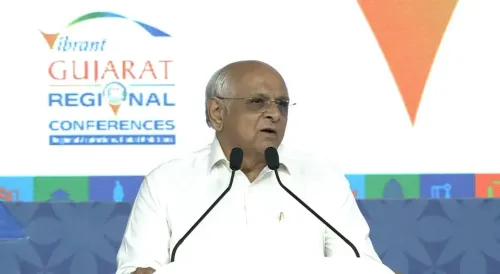
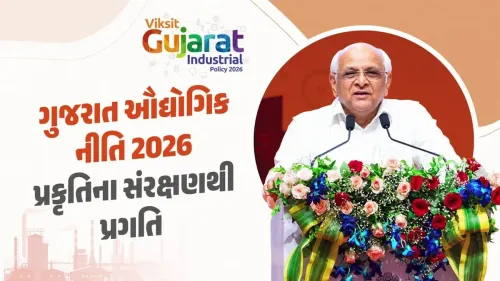
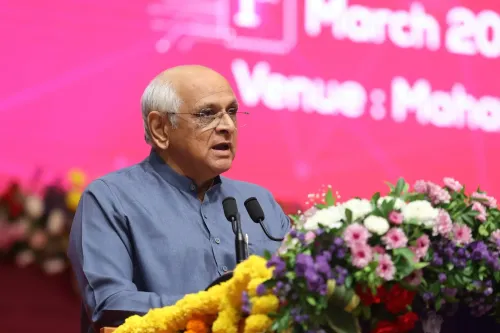
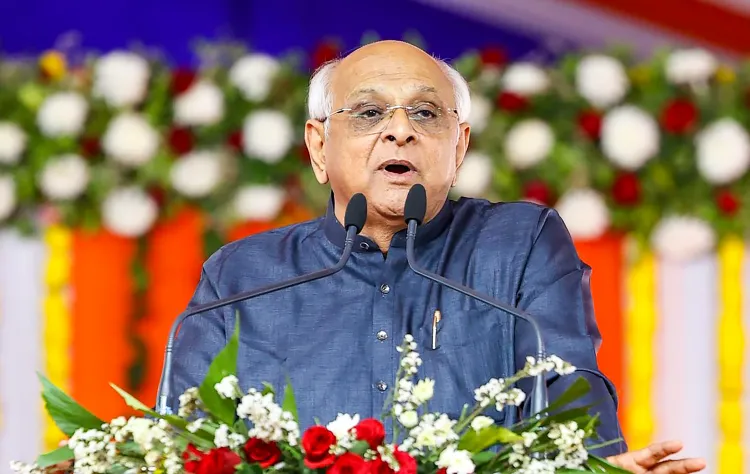
Ahmedabad, March 20 (NationPress) Gujarat is on a promising trajectory to achieve a $1 trillion economy by 2030, as stated by Chief Minister Bhupendra Patel on Friday. He emphasized that the state government is fully committed to supporting the industrial sector in realizing this ambitious goal.
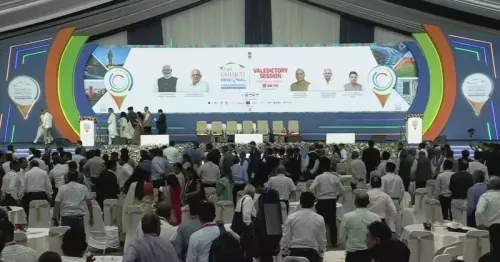
During the Annual Session of the Confederation of Indian Industry (CII) and the conference on ‘Gujarat @$1 Trillion Economy’ held in Ahmedabad, Patel remarked that the state is moving forward along the developmental path outlined by Prime Minister Narendra Modi.
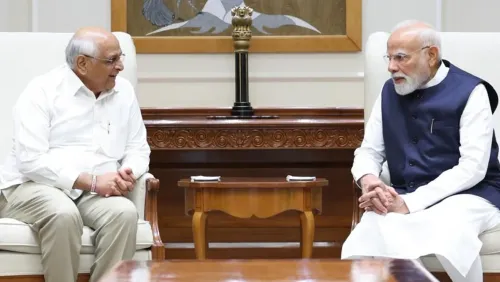
“By adhering to the developmental strategy envisioned by the Prime Minister, Gujarat is set to transform into a $1 trillion economy by 2030. The State Government is dedicated to providing all necessary assistance to industrialists to reach this target,” he declared.
Looking back on the evolution of industrial growth, Patel noted that earlier development had been restricted to the Vapi–Vadodara corridor.
“There was a time when progress in Gujarat was confined to the Vapi–Vadodara region. However, with a vision for inclusive growth, crucial infrastructure such as water and electricity has been enhanced,” he remarked.
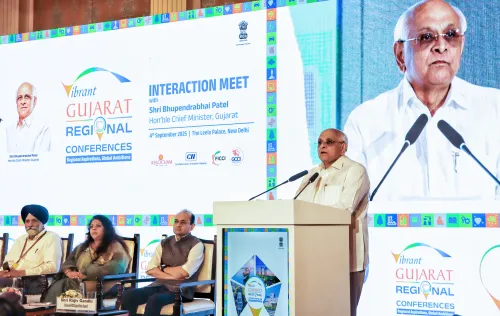
He pointed out that the Vibrant Gujarat Summit, which began in 2003, has been instrumental in drawing global investments, establishing the state as a favored hub for investors.
In recent developments, he highlighted Micron Technology's investments as a testament to the increasing global confidence in Gujarat.
“The strong global trust in the Prime Minister’s leadership has brought advanced sectors like semiconductors to India, particularly to Gujarat. What once seemed unattainable is now materializing in our state,” Patel stated.
The Chief Minister shared vital economic statistics, indicating that Gujarat contributes approximately 8 percent to India’s GDP, despite representing only about 5 percent of the nation’s population, with aspirations to elevate this contribution to over 10 percent.
He noted that the state is responsible for 17 percent of the country's manufacturing output and accounts for 33 percent of total exports, while managing 40 percent of the national cargo.
Sector-specific data revealed that Gujarat holds a 33 percent share in the chemical industry, contributes 19.2 percent to pharmaceutical exports, and is responsible for 80 percent of diamond exports.
The number of micro, small, and medium enterprises (MSMEs) has surged from 1.85 lakh in 2001–02 to 27.9 lakh currently, he added.
Labeling Gujarat as a “policy-driven state,” Patel stated that transparent policies have been developed to ensure clarity for industrialists at every step.
“Necessary adaptations are made in line with the changing demands,” he added, mentioning that the state has devised a roadmap aligned with the ambition of a 'developed India by 2047' and has started its implementation.
Point of View
Gujarat's aspirations to achieve a $1 trillion economy by 2030 reflect a significant commitment to industrial growth and infrastructure development. The Chief Minister's focus on inclusive development and attracting global investments underscores the state's strategic importance in India's economic landscape.
NationPress
26 Sept 2026
Frequently Asked Questions
What is Gujarat's economic target for 2030?
Gujarat aims to become a $1 trillion economy by 2030.
How much does Gujarat contribute to India's GDP?
Gujarat contributes approximately 8 percent to India's GDP.
What role does the Vibrant Gujarat Summit play?
The Vibrant Gujarat Summit has been instrumental in attracting global investments to the state.
What sectors does Gujarat excel in?
Gujarat has significant shares in the chemical, pharmaceutical, and diamond industries.
How has the number of MSMEs changed in Gujarat?
The number of MSMEs in Gujarat has grown from 1.85 lakh in 2001–02 to 27.9 lakh currently.