Gujarat plans ₹100-crore Marine Biotech Corridor in Porbandar over 5 years
Synopsis
Gujarat is betting ₹100 crore over five years on a 30-acre marine biotech hub at Porbandar's Mocha village — an ambitious attempt to turn seaweeds, microalgae, and saline ecosystems into pharmaceuticals, nutraceuticals, and biofertilisers while creating livelihoods for coastal fishing communities. The M-BRIC corridor, anchored by a CSIR-CSMCRI partnership, is one of India's most vertically integrated marine biotech bets yet.
Key Takeaways
The Gujarat government has proposed a ₹100-crore , five-year investment to establish the Marine Biotechnology Research and Innovation Corridor (M-BRIC) at Mocha village, Porbandar .
An MoU will be signed between GSBTM and CSIR-CSMCRI , with ministers Arjun Modhwadia and Jitu Vaghani present.
The primary hub will cover 30 acres , housing research labs, a seaweed-processing cluster, a brood bank, microalgal biofactories, and startup incubation facilities.
Target products include biofertilisers, nutraceuticals, cosmeceuticals, pharmaceutical intermediates, agar, alginate , and omega-3 fatty acids .
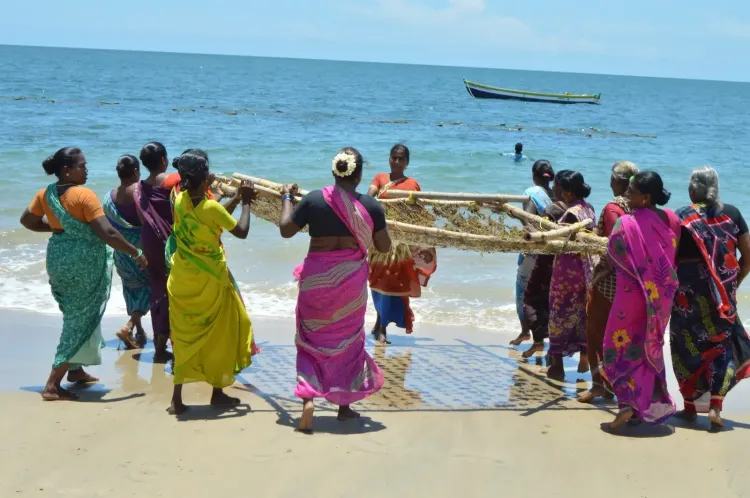
Capacity-building under the Seaweed Mission will target coastal youth, fishing communities, women-led enterprises, and MSMEs.
The project is aligned with India's Blue Economy priorities and the 'Viksit Bharat @2047' vision.
The Gujarat government has proposed a ₹100-crore investment over five years to establish the Marine Biotechnology Research and Innovation Corridor (M-BRIC) at Mocha village in Porbandar district, creating an integrated ecosystem for marine research, biomanufacturing, startup incubation, and coastal livelihood support. The initiative, announced on 8 October 2026, is being driven by the Gujarat State Biotechnology Mission (GSBTM) under the state's Department of Science and Technology.
The MoU and Key Partners
A memorandum of understanding is set to be signed between GSBTM and the Council of Scientific and Industrial Research–Central Salt and Marine Chemicals Research Institute (CSIR-CSMCRI) for formally establishing M-BRIC. The signing will take place in the presence of Science and Technology Minister Arjun Modhwadia and Agriculture and Farmers Welfare, Cooperation, and Animal Husbandry Minister Jitu Vaghani. CSIR-CSMCRI has been identified as the principal scientific knowledge partner, bringing expertise in seaweed biotechnology, marine bioproducts, saline agriculture, halophytes, bioprocessing, and technology transfer.
What the Mocha Hub Will Include
Mocha has been designated as the primary hub, with a proposed 30-acre ecosystem comprising research facilities, industrial infrastructure, field demonstration areas, processing units, and incubation support. The corridor is designed to span the full marine biotechnology value chain — from marine biodiversity exploration and scientific research through to technology development, pilot-scale validation, industrial scale-up, and commercialisation.
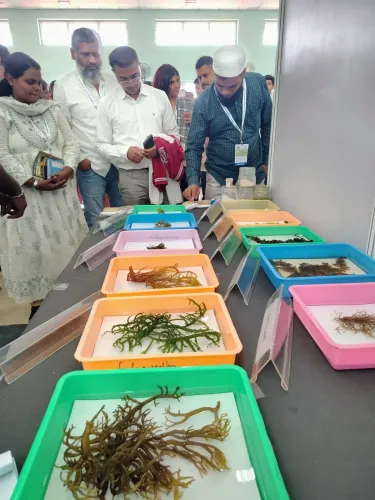
A dedicated seaweed-processing cluster is planned at Mocha, covering raw-material receipt, washing, pre-processing, extraction, drying, powdering, packaging, storage, and quality control. The ecosystem will also house a state-level seaweed brood bank supplying elite planting material of Kappaphycus alvarezii and Gracilaria dura. Marine microalgal biofactories are proposed to produce omega-3 fatty acids and other high-value bioactive compounds, while an integrated seaweed biorefinery would focus on phycocolloids, biostimulants, and other value-added products. Microalgal biorefineries are additionally proposed at salt-pan facilities associated with CSIR-CSMCRI in Bhavnagar.
Products, Applications, and Resource Base
The resources targeted include seaweeds, microalgae, marine microorganisms, and saline ecosystems. Planned applications span biofertilisers, biostimulants, nutraceuticals, cosmeceuticals, aquafeed, animal nutrition products, enzymes, biosurfactants, pharmaceutical intermediates, and marine-derived biomaterials. Seaweed-derived substances such as agar, alginate, and carrageenan are among the substances earmarked for value addition. Specialised activities and partnerships could also extend across the Saurashtra region and the wider Gujarat coastline.
Coastal Livelihoods and Capacity Building
The project envisions capacity-building programmes under the Seaweed Mission targeting coastal youth, seaweed farmers, fishing communities, women-led enterprises, MSMEs, entrepreneurs, students, and industry professionals. Training is proposed in seaweed cultivation, aquaculture, marine biotechnology, genomics, bioinformatics, marine diagnostics, bioprocessing, environmental monitoring, entrepreneurship, intellectual property, and technology commercialisation. Environmental monitoring, biodiversity assessment, and environmental impact assessment are also built into the ecosystem, alongside research on Blue Carbon and climate-resilient coastal development.
Policy Alignment and Broader Vision
M-BRIC is being developed in alignment with Gujarat's broader biotechnology ecosystem, the BioE3 framework, India's Blue Economy priorities, and the national 'Viksit Bharat @2047' vision. Notably, this positions Gujarat as one of the few states attempting to build a vertically integrated marine biotech cluster — from lab research to commercial manufacturing — under a single policy roof. The corridor's success will hinge on timely land allocation at Mocha, smooth operationalisation of the MoU with CSIR-CSMCRI, and attracting private investment to complement the state's ₹100-crore outlay.
Point of View
Raising questions about whether private capital can be mobilised in meaningful volume at Mocha. The real differentiator will be whether the CSIR-CSMCRI partnership translates into commercially licensable intellectual property rather than academic output alone. India's Blue Economy policy frameworks have historically been aspirational; Gujarat now has the opportunity to build the proof-of-concept that turns coastal biotech from a government talking point into an export-competitive industry.
NationPress
8 Oct 2026
Frequently Asked Questions
What is the Marine Biotechnology Research and Innovation Corridor (M-BRIC) in Gujarat?
M-BRIC is a proposed ₹100-crore, five-year initiative by the Gujarat State Biotechnology Mission (GSBTM) to establish an integrated marine biotech hub at Mocha village in Porbandar district. It will bring together marine research, biomanufacturing, startup incubation, and coastal livelihood programmes under a single 30-acre ecosystem.
Where exactly will M-BRIC be located and how large is the site?
The primary hub is planned at Mocha village in Porbandar district, covering approximately 30 acres. Specialised activities and partnerships could also extend across the Saurashtra region and the broader Gujarat coastline, with additional microalgal biorefineries proposed at CSIR-CSMCRI's salt-pan facilities in Bhavnagar.
What products will the M-BRIC corridor develop?
The corridor targets a wide range of applications including biofertilisers, biostimulants, nutraceuticals, cosmeceuticals, aquafeed, animal nutrition products, enzymes, biosurfactants, pharmaceutical intermediates, and marine-derived biomaterials. Seaweed-derived agar, alginate, and carrageenan are also earmarked for value addition, alongside omega-3 fatty acids from microalgal biofactories.
Who are the key institutional partners in M-BRIC?
The Gujarat State Biotechnology Mission (GSBTM) is the nodal agency, with CSIR-CSMCRI (Council of Scientific and Industrial Research–Central Salt and Marine Chemicals Research Institute) as the principal scientific knowledge partner. A formal MoU between the two institutions is set to be signed under the presence of ministers Arjun Modhwadia and Jitu Vaghani.
How will M-BRIC benefit coastal communities in Gujarat?
The project includes dedicated capacity-building programmes under the Seaweed Mission for coastal youth, seaweed farmers, fishing communities, women-led enterprises, MSMEs, and students. Training will cover seaweed cultivation, aquaculture, marine biotechnology, bioprocessing, entrepreneurship, and technology commercialisation, aiming to create alternative, high-value livelihoods along the Gujarat coast.