How has India's seaweed output tripled in a decade?
Synopsis
India's seaweed production has surged nearly threefold in the past ten years, reflecting the government's commitment to enhancing coastal livelihoods and bio-based industries. With significant policy support and a focus on large-scale cultivation and processing, the future of this sector looks promising.
Key Takeaways
Seaweed production in India has tripled over the past decade.
The government is positioning seaweed as a key sector for coastal livelihoods .
Kerala is actively promoting seaweed farming.
Large-scale processing facilities are essential for commercial growth.
International collaboration is crucial for expanding the seaweed value chain.
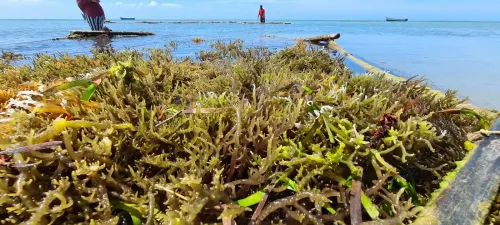
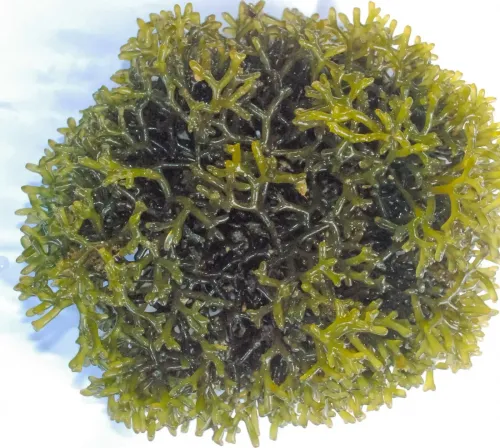
Kochi, January 29 (NationPress) The production of seaweed in India has experienced a remarkable increase, almost tripling from 18,890 tonnes in 2015 to 74,083 tonnes in 2024. This growth positions the sector as a crucial new foundation for coastal livelihoods and bio-based industries, according to Union Minister of State for Fisheries, George Kurian, in a statement made on Thursday.
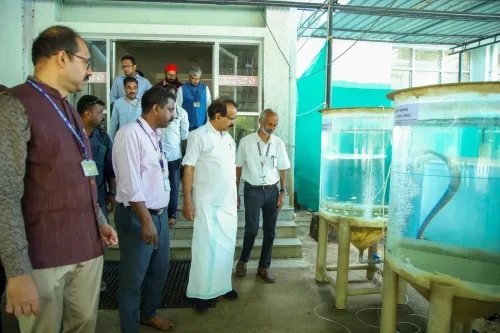
While addressing the 7th India International Seaweed Expo and Summit at the ICAR–Central Marine Fisheries Research Institute (CMFRI) via video conference, Kurian emphasized that India is on the verge of a substantial expansion in seaweed cultivation as well as downstream industries. This expansion is supported by policy initiatives aimed at increasing production, processing, and adding value.
The PM Dhan-Dhaanya Krishi Yojana has included seaweed in its output components, covering 100 aspirational districts nationwide.
In the state of Kerala, districts such as Kozhikode, Kannur, and Kasaragod have been earmarked under this initiative, indicating a significant effort to incorporate seaweed farming into wider rural and coastal development projects.
According to the Minister, the main focus will be to enhance farmer involvement, bolster supply chains, and create job opportunities, especially for fishers and women in coastal areas.
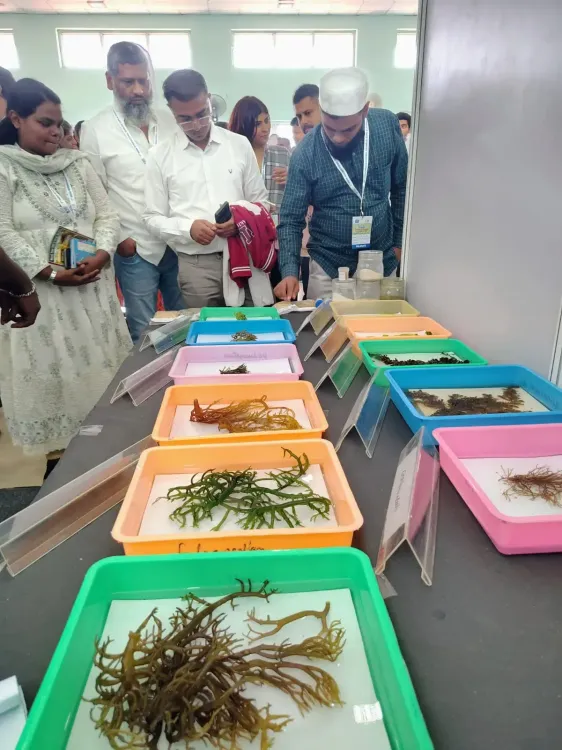
The expo is a collaborative effort organized by the Indian Chamber of Commerce, CMFRI, and the Central Salt & Marine Chemicals Research Institute (CSMCRI), attracting policymakers, scientists, and industry participants.
B.K. Behera, Chief Executive of the National Fisheries Development Board (NFDB), stressed the necessity of moving beyond small-scale operations and called for the establishment of large-scale processing facilities to facilitate commercial production.
He highlighted the importance of enhanced coordination among various ministries and executing bodies to expedite the growth of this sector and draw in private investments.
The expo highlighted the widening industrial applications of seaweeds, including food and nutraceutical products such as nutritional powders, thickeners, and gelling agents, as well as non-food uses like bio-fertilizers, animal feed, bioplastics, soaps, and aqua gels.
Many exhibitors showcased innovations in sustainable packaging and marine-based inputs.
With representatives from over 10 countries, including the US, Australia, France, and Indonesia, the summit serves as a B2B platform to foster partnerships throughout the seaweed value chain, from cultivation and processing to exports.
Point of View
It is clear that the government is making a concerted effort to position this sector as a vital contributor to both coastal economies and bio-based industries. This strategic focus may not only provide new employment opportunities but also enhance sustainability in rural development.
NationPress
8 Oct 2026
Frequently Asked Questions
What is the current seaweed production in India?
India's seaweed production has increased to 74,083 tonnes in 2024.
What initiatives support seaweed cultivation in India?
The PM Dhan-Dhaanya Krishi Yojana includes seaweed as an output component to support cultivation.
Which states in India are focusing on seaweed farming?
Kerala, particularly the districts of Kozhikode, Kannur, and Kasaragod, is focusing on seaweed farming.
How does the seaweed industry benefit coastal communities?
The seaweed industry creates job opportunities, especially for fishers and women in coastal regions.
What are the applications of seaweed?
Seaweed has applications in food, nutraceuticals, bio-fertilizers, animal feed, bioplastics, and more.