Gujarat targets Sickle Cell eradication by 2047 with pre-marital genetic screening push

Synopsis
Gujarat is betting on a cultural reframe — calling pre-marital genetic testing a 'medical horoscope' — to drive Sickle Cell eradication by 2047. With 5.5 lakh carriers and 30,000 active patients, the state is invoking its polio-free track record to argue the target is achievable, but eliminating a hereditary disorder is a far steeper challenge than a vaccine campaign.
Key Takeaways
Gujarat Health Minister Praful Pansheriya called for pre-marital genetic screening to prevent Sickle Cell transmission, framing it as a 'medical horoscope.' Gujarat currently has an estimated 5.5 lakh Sickle Cell carriers and around 30,000 active patients , according to Additional Chief Secretary Rajiv Topno .
The state is aligned with PM Modi's national mission to eliminate Sickle Cell Disease by 2047 .
Gujarat's screening programme dates to 2006 , when large-scale initiatives were launched under Modi's leadership as Chief Minister.
Officials drew a parallel with polio eradication — Gujarat's last polio case was recorded in 2007 .
Key pillars of the strategy include population screening, genetic counselling, public awareness, and community participation.
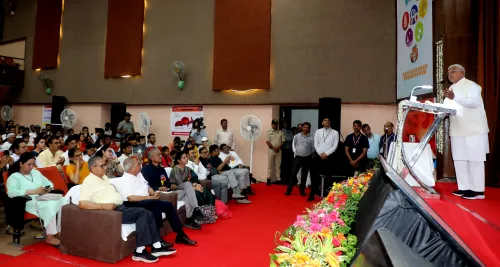
Gujarat is intensifying its campaign to eliminate Sickle Cell Disease by 2047, with State Health Minister Praful Pansheriya positioning pre-marital genetic screening as the cornerstone of the state's prevention strategy. The minister made the remarks at a patient interaction and guidance programme in Gandhinagar on 9 June, organised by the Health and Family Welfare Department and the National Health Mission.
The Case for a 'Medical Horoscope'
Pansheriya drew a pointed cultural parallel to make his case for genetic testing before marriage. 'Just as a traditional horoscope is obtained before marriage, a medical horoscope should also be obtained by checking whether a person is a Sickle Cell carrier or patient. This is the biggest weapon to eradicate genetic diseases such as Sickle Cell,' he said.
The minister argued that normalising carrier screening in the pre-marital stage — much like the customary practice of matching horoscopes — could prevent the hereditary disorder from being transmitted to future generations. The framing is deliberate: it seeks to embed a biomedical practice within a familiar social ritual, addressing a community where traditional customs carry significant weight.
Gujarat's Screening Legacy and Current Numbers
Additional Chief Secretary for Health, Rajiv Topno, said the state currently has an estimated 5.5 lakh Sickle Cell carriers and approximately 30,000 active patients. He noted that Gujarat's programme has received national recognition, and cautioned that eliminating a genetic disorder is considerably more complex than controlling vaccine-preventable diseases such as polio.
According to Topno, the path to the 2047 target rests on four pillars: population-wide screening, genetic counselling, sustained public awareness, and active community participation.
Pansheriya recalled that as far back as 2006, when awareness of the disorder was limited, Gujarat undertook large-scale screening initiatives under Prime Minister Narendra Modi's leadership as Chief Minister and built a comprehensive database of carriers and patients — an early investment that the state now credits as foundational to its current programme.
The Polio Parallel
The minister invoked Gujarat's record on polio eradication as a benchmark for what determined public health action can achieve. The state recorded its last polio case in 2007, after which sustained efforts by the health department rendered it polio-free. 'In the same way, Sickle Cell can become a thing of the past by 2047,' Pansheriya said.
This comes amid a broader national mission, championed by Prime Minister Modi, to eliminate Sickle Cell Disease across India by the centenary of independence. Gujarat, with its relatively advanced screening infrastructure and data systems, is positioning itself as a model state for the programme.
Message to Patients and Health Workers
Addressing those living with the condition, the minister emphasised that a Sickle Cell diagnosis need not define a person's quality of life. 'With proper care and treatment, people can live healthy lives despite the disease,' he said, adding that citizen health and well-being remains a top government priority.
Children affected by the disease presented a painting at the event depicting the daily challenges they face — a moment that underscored the human dimension behind the policy drive. Pansheriya also commended health department personnel for their implementation work on the ground.
With guidelines, counselling infrastructure, and community outreach now being scaled, the state's next milestone will be measurable reductions in new carrier births — the clearest indicator of whether the pre-marital screening strategy is translating into outcomes.
Point of View
Precisely where Sickle Cell burden is highest. Gujarat's 5.5 lakh carrier figure and 30,000 active patients suggest the disease is far from residual. The polio analogy, while motivating, obscures a crucial difference — polio was eliminated through a universal vaccine, while Sickle Cell eradication requires behaviour change at the most intimate level of human decision-making. Whether the 2047 target is achievable depends less on political will and more on whether genetic counselling infrastructure reaches the last mile before the next generation of carrier marriages takes place.
NationPress
26 Oct 2026
Frequently Asked Questions
What is Gujarat's Sickle Cell eradication target and strategy?
Gujarat aims to eliminate Sickle Cell Disease by 2047, in line with the national mission. The state's primary prevention strategy centres on pre-marital genetic screening to identify carriers and prevent the hereditary disorder from being passed to future generations.
How many Sickle Cell carriers and patients does Gujarat currently have?
According to Additional Chief Secretary for Health Rajiv Topno, Gujarat has an estimated 5.5 lakh Sickle Cell carriers and around 30,000 active patients. The state has maintained a database of carriers since 2006.
What did Health Minister Praful Pansheriya mean by a 'medical horoscope'?
Pansheriya used the term to advocate for making genetic screening a standard step before marriage, comparable to the traditional practice of matching horoscopes. The idea is to check whether a prospective partner is a Sickle Cell carrier or patient before the wedding.
Why is eliminating Sickle Cell harder than eradicating polio?
Officials, including Additional Chief Secretary Topno, noted that eliminating a genetic disorder is significantly more challenging than controlling vaccine-preventable illnesses. Polio eradication relied on a universal vaccine, whereas Sickle Cell prevention requires sustained behaviour change, genetic counselling, and community participation over generations.
When did Gujarat begin its Sickle Cell screening programme?
Gujarat launched large-scale screening initiatives in 2006, when awareness of the disorder was limited, under then-Chief Minister Narendra Modi. Those efforts produced a comprehensive database of carriers and patients that underpins the current programme.