Gujarat sickle cell programme crosses 1.11 crore screenings in two decades
Synopsis
Gujarat's sickle cell programme — the country's first large-scale state-led initiative, launched in 2006 — has now screened over 1.11 crore people. With monthly patient aid raised fivefold to ₹2,500 and a dedicated research centre planned at Surat, the state is doubling down as India races toward its 2047 elimination target.
Key Takeaways
Gujarat's sickle cell programme has screened more than 1.11 crore people since its launch in 2006 .
Over 23 lakh screenings were conducted in the past five years under Chief Minister Bhupendra Patel .
The state has 30,512 registered patients and has disbursed ₹18.15 crore to 13,040 beneficiaries under its Patient Assistance Scheme.
Monthly patient assistance was raised from ₹500 to ₹2,500 in the 2024-25 financial year .
The Centre launched the National Sickle Cell Anaemia Elimination Mission on 1 July 2023 , with over 7 crore screenings nationally and 2.46 lakh patients identified so far.
Gujarat plans a Centre of Competence, Research and Counselling at Surat Civil Hospital to advance clinical research and genetic counselling.
Gujarat's sickle cell control programme has screened more than 1.11 crore people since its launch two decades ago, making it one of the largest and longest-running state-led initiatives against hereditary blood disorders in India. The milestone, highlighted ahead of World Sickle Cell Awareness Day on 19 June, positions Gujarat as a foundational model for the country's broader elimination drive targeting 2047.
Scale and Reach of the Programme
The initiative was launched in 2006 under then Gujarat Chief Minister and current Prime Minister Narendra Modi, becoming the first large-scale state-led sickle cell control effort in India. Under the current administration of Chief Minister Bhupendra Patel, more than 23 lakh screenings have been conducted over the past five years alone, pushing the cumulative total past 1.11 crore. The state currently has 30,512 registered patients under the programme.
Healthcare Infrastructure Deployed
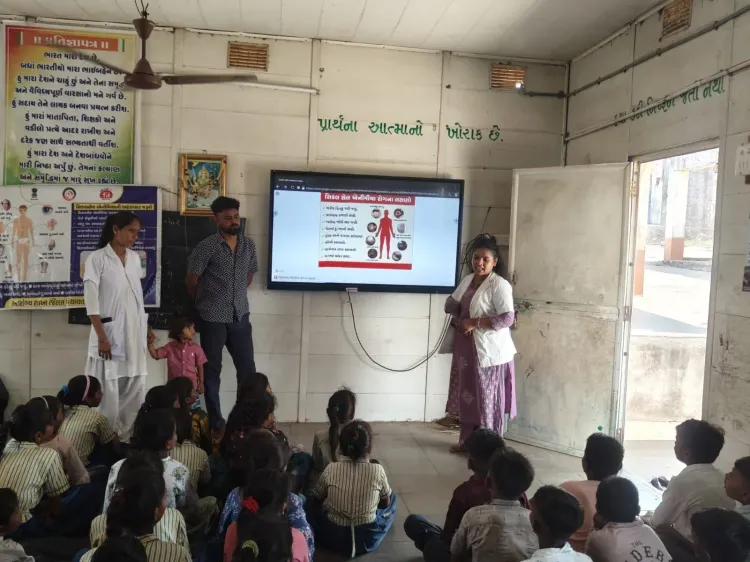
Initial screening using DTT tests is now available at all Primary Health Centres across Gujarat. The state has deployed 41 High-Performance Liquid Chromatography (HPLC) and mini-electrophoresis machines across 14 tribal districts, where sickle cell disease is most prevalent. Dedicated day-care centres for patients are operational in Valsad, Navsari, and Dang-Rumla. Additionally, 180 dedicated counsellors have been placed at Primary Health Centres to reduce the risk of genetic transmission to future generations.
Financial Support for Patients
Under the state's Patient Assistance Scheme, a total of ₹18.15 crore has been disbursed to 13,040 beneficiaries. In the 2024-25 financial year, the monthly lifelong assistance for patients was raised from ₹500 to ₹2,500 — a fivefold increase. State Health Minister Praful Pansheriya has encouraged young people to determine their sickle cell status before marriage, describing the test as an important 'medical horoscope.'
Expert Assessment: The Gujarat Model
Speaking on the occasion of World Sickle Cell Awareness Day 2026, observed globally under the theme 'Closing the Survival Gap: Equity in Sickle Cell Disease', Padma Shri awardee and translational scientist Dr Yazdi Italia said the Gujarat programme had demonstrated how healthcare services could be successfully delivered to remote tribal populations.
'In 2006, Gujarat established an important milestone by launching a holistic Sickle Cell Control Programme. The programme introduced free screening in rural and tribal areas, early diagnosis, genetic and ethical counselling, vaccination, availability of medicines such as folic acid and hydroxyurea, and regular follow-up services,' Dr Italia said. He added that the Gujarat model significantly reduced pain crises, complications, and hospitalisations, and later became the basis for national adoption through the National Health Mission.
National Mission and the Road to 2047
The Centre launched the National Sickle Cell Anaemia Elimination Mission on 1 July 2023, with the objective of substantially reducing the disease burden by 2047. According to national programme data, more than 7 crore people have been screened in high-prevalence states across India. Authorities have identified more than 2.46 lakh patients with sickle cell disease and over 20 lakh individuals carrying the sickle cell trait. The mission, alongside the Ayushman Bharat scheme, provides free screening, diagnosis, treatment, blood transfusion services, ambulance support, and complication management. Gujarat has also confirmed plans to establish a specialised Centre of Competence, Research and Counselling at Surat Civil Hospital to strengthen clinical research and genetic counselling as the long-term elimination goal draws closer.
Point of View
512 registered patients and only 13,040 beneficiaries receiving financial assistance, a significant share of those identified may not be receiving sustained care. The fivefold hike in monthly aid to ₹2,500 is welcome, but at that level it barely covers transport costs to a district hospital. As India chases the 2047 elimination target, the question is whether the Gujarat model's diagnostic success can be matched by equally robust long-term disease management — particularly for the over 20 lakh trait carriers nationally who are not yet patients but represent the next generation of risk.
NationPress
17 Sept 2026
Frequently Asked Questions
What is Gujarat's sickle cell programme and how large is it?
Gujarat's sickle cell control programme, launched in 2006, is the first large-scale state-led initiative of its kind in India. It has screened more than 1.11 crore people cumulatively and currently has 30,512 registered patients, with screening available at all Primary Health Centres across the state.
How much financial aid does Gujarat provide to sickle cell patients?
Under the Patient Assistance Scheme, Gujarat has disbursed ₹18.15 crore to 13,040 beneficiaries. From the 2024-25 financial year, the monthly lifelong assistance was increased fivefold — from ₹500 to ₹2,500 per patient.
What is the National Sickle Cell Anaemia Elimination Mission?
The Centre launched the National Sickle Cell Anaemia Elimination Mission on 1 July 2023 with the goal of substantially reducing India's sickle cell disease burden by 2047. More than 7 crore people have been screened nationally, with over 2.46 lakh patients and 20 lakh trait carriers identified so far.
Why is sickle cell disease particularly prevalent in tribal communities?
Sickle cell disease is a hereditary blood disorder with historically higher prevalence among tribal populations in India due to genetic inheritance patterns. Gujarat's programme targets 14 tribal districts with specialised HPLC machines and 180 dedicated counsellors at Primary Health Centres to address this concentration.
What new facilities is Gujarat planning for sickle cell care?
Gujarat has confirmed plans to establish a Centre of Competence, Research and Counselling at Surat Civil Hospital. The centre will focus on strengthening clinical research, advanced treatment, and genetic counselling services as part of the state's long-term sickle cell elimination strategy.