MP CM Marks World Sickle Cell Day, Cites State Elimination Drive
Synopsis
On World Sickle Cell Anemia Day, 19 June 2026, the Chief Minister's Office of Madhya Pradesh reaffirmed the state's commitment to screening and eliminating sickle cell anaemia, citing PM Modi's National Sickle Cell Anaemia Elimination Mission targeting 7 crore people by 2047, with tribal communities as the primary focus.
Key Takeaways
World Sickle Cell Anemia Day is observed on 19 June every year, as designated by the WHO.
Madhya Pradesh has one of India's highest sickle cell trait prevalences, concentrated in its large Scheduled Tribe population .
The National Sickle Cell Anaemia Elimination Mission , announced in Union Budget 2023 , targets screening of 7 crore people aged 0–40 years.
The national elimination deadline is set for 2047 , aligned with India's centenary of independence.
Madhya Pradesh has run state-wide haemoglobinopathy screening camps under the National Health Mission since 2018 .
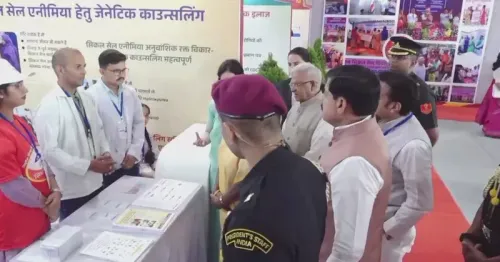
Screening is integrated into existing primary health infrastructure, including outreach by ASHA workers in remote tribal blocks.
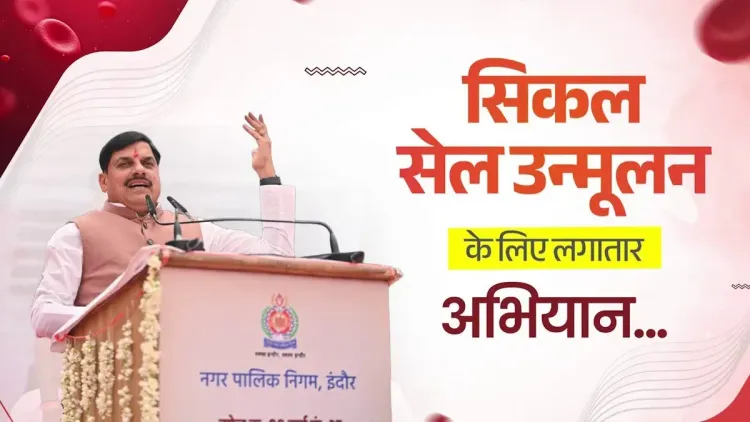
The Chief Minister's Office of Madhya Pradesh, on the occasion of World Sickle Cell Anemia Day, 19 June 2026, reaffirmed the state government's commitment to screening and eliminating sickle cell anaemia, crediting the leadership of Prime Minister Narendra Modi for driving the initiative at the national level.
Context
World Sickle Cell Anemia Day is observed every year on 19 June, as established by the World Health Organisation, to raise awareness about sickle cell disease — a hereditary blood disorder that causes red blood cells to deform and obstruct blood flow. Madhya Pradesh is among the states with the highest prevalence of sickle cell trait in India, largely concentrated in its substantial Scheduled Tribe population.
The Chief Minister's Office posted on X, quoting Chief Minister Dr Mohan Yadav: 'प्रदेश सरकार सिकल सेल एनीमिया की स्क्रीनिंग के साथ-साथ इस बीमारी के उन्मूलन के लिए लगातार कार्य कर रही है' ('The state government is continuously working for the screening as well as elimination of sickle cell anaemia.')
Policy Backdrop
The statement aligns with the National Sickle Cell Anaemia Elimination Mission, announced in the Union Budget 2023 by the central government. The mission targets screening of 7 crore people aged 0–40 years, with a focus on tribal districts across central India, and sets an elimination goal by 2047.
Madhya Pradesh had already begun state-wide haemoglobinopathy screening camps under the National Health Mission framework from 2018 onwards. The current drive integrates these efforts into existing primary health infrastructure and district-level camps, reflecting a broader shift toward preventive genetic interventions within the Ayushman Bharat framework.
Stakeholders and Impact
Tribal communities across Madhya Pradesh — one of India's states with the largest Adivasi populations — stand as the primary beneficiaries of the screening and counselling programmes. Rural health workers and Accredited Social Health Activists (ASHAs) form the frontline of outreach, conducting camps in remote blocks where disease burden is highest.
Early detection through screening allows carriers and affected individuals to receive genetic counselling, reducing the transmission risk to future generations. The integration of sickle cell screening into routine health delivery marks a significant departure from earlier, siloed pilot programmes.
What's Next
Observers will watch for the release of annual screening coverage data for Madhya Pradesh's tribal blocks, which would offer a measurable indicator of mission progress. Any supplementary budget allocations for dedicated genetic counselling centres at the district level would signal deeper state-level commitment beyond awareness campaigns.
As India approaches its 2047 elimination target, the pace of screening in high-prevalence states like Madhya Pradesh will be a critical benchmark for the national mission's credibility and reach.
Point of View
CM Mohan Yadav reinforces the BJP's narrative of health governance reaching India's most marginalised communities. Madhya Pradesh's early entry into haemoglobinopathy screening since 2018 gives the state a head start, but the real test lies in translating awareness into measurable screening coverage data. The 2047 elimination target, while ambitious, frames sickle cell policy as a long-arc commitment that will outlast multiple electoral cycles.
NationPress
19 Sept 2026
Frequently Asked Questions
What is World Sickle Cell Anemia Day and when is it observed?
World Sickle Cell Anemia Day is observed on 19 June every year. It was established by the World Health Organisation to raise global awareness about sickle cell disease, a hereditary blood disorder affecting red blood cells.
What is the National Sickle Cell Anaemia Elimination Mission in India?
The National Sickle Cell Anaemia Elimination Mission was announced in the Union Budget 2023 . It targets screening of 7 crore people aged 0–40 years, with a focus on tribal districts, and aims to eliminate the disease in India by 2047 .
Why is sickle cell anaemia a major concern in Madhya Pradesh?
Madhya Pradesh has one of the highest prevalences of sickle cell trait in India because of its large Scheduled Tribe population , among whom the genetic condition is significantly more common than in the general population.
What is Madhya Pradesh doing to fight sickle cell anaemia?
The state has been conducting haemoglobinopathy screening camps under the National Health Mission since 2018 . These efforts are now integrated into the national elimination mission, using primary health infrastructure and ASHA workers to reach remote tribal blocks.
What is CM Mohan Yadav's role in the sickle cell elimination programme?
Chief Minister Dr Mohan Yadav , who has led Madhya Pradesh since December 2023 , is overseeing the state-level implementation of the central sickle cell elimination mission, reaffirming the commitment on World Sickle Cell Anemia Day 2026.