CM Mohan Yadav Marks World Sickle Cell Day, Cites Modi's Gujarat Legacy
Synopsis
On World Sickle Cell Day, Madhya Pradesh CM Dr. Mohan Yadav invoked PM Modi's early Gujarat campaign against sickle cell anaemia and reaffirmed the state's commitment to the national elimination mission targeting 7 crore tribal-area residents by 2047.
Key Takeaways
Mohan Yadav posted on World Sickle Cell Day, 19 June 2026 , linking PM Modi 's Gujarat-era campaign to current state efforts.
PM Narendra Modi served as Chief Minister of Gujarat from 2001 to 2014 , during which period early sickle cell initiatives were undertaken alongside Mangubhai Patel .
The National Sickle Cell Anaemia Elimination Mission , launched in 2023 , aims to screen 7 crore people aged 0-40 in tribal districts by 2047 .
Sickle cell anaemia disproportionately affects Scheduled Tribe communities in Madhya Pradesh and Gujarat .
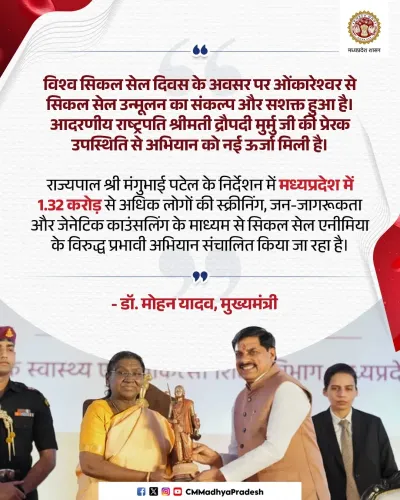
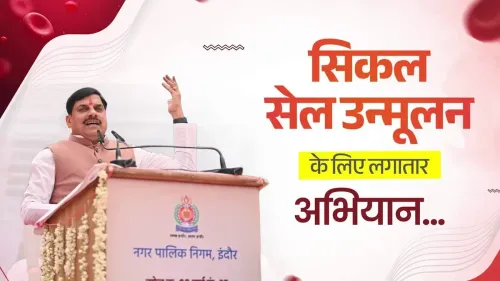
Madhya Pradesh government says it is 'continuously giving momentum' to anti-sickle cell efforts in the state.
District-level screening roll-out and state budget allocations for 2026-27 will be key metrics to watch.
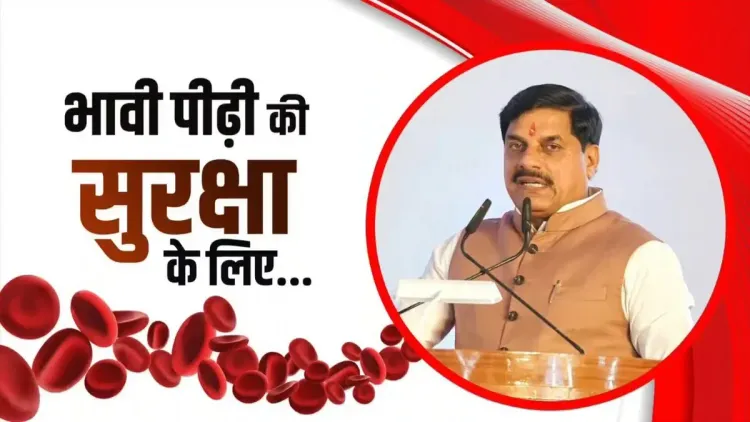
Madhya Pradesh Chief Minister Dr. Mohan Yadav on Friday, 19 June 2026, marked World Sickle Cell Day by invoking Prime Minister Narendra Modi's early anti-sickle cell efforts in Gujarat and reaffirming the state government's commitment to accelerating its own fight against the disease.
Context
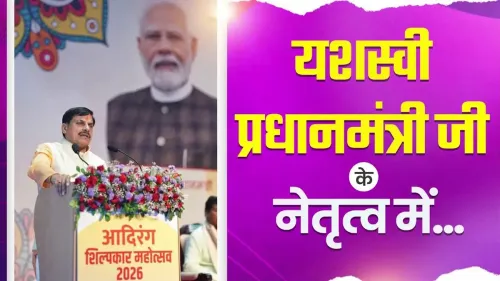
In his post, Dr. Yadav recalled that when Narendra Modi was Chief Minister of Gujarat — a tenure that lasted from 2001 to 2014 — he had worked alongside Mangubhai Patel to run a campaign against sickle cell anaemia. The Chief Minister wrote: 'Yashasvi Pradhanmantri Shri Narendra Modi ji jab Gujarat ke Mukhyamantri the, tab unhone Shri Mangubhai Patel ji ke saath milkar Sickle Cell Anaemia se ladai ke liye abhiyan chalaya tha' — ('When the illustrious Prime Minister Shri Narendra Modi was Chief Minister of Gujarat, he ran a campaign to fight sickle cell anaemia together with Shri Mangubhai Patel.')
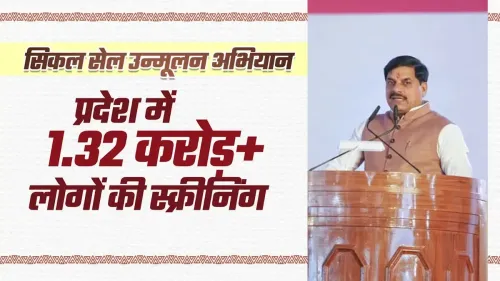
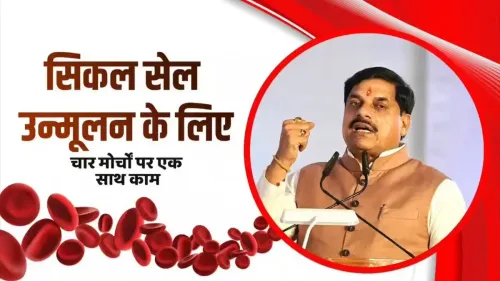
Dr. Yadav added that the Madhya Pradesh government is 'continuously giving momentum' to efforts in this direction. The post was accompanied by a video and tagged #WorldSickleCellDay.
Policy Backdrop
Sickle cell anaemia is a hereditary blood disorder with disproportionately high prevalence among Scheduled Tribe communities across central and western India, including large swathes of Madhya Pradesh and Gujarat. The disease causes chronic pain, organ damage, and shortened life expectancy, making it a long-standing public-health concern in tribal belts.
At the national level, the Government of India launched the National Sickle Cell Anaemia Elimination Mission in 2023, targeting the screening of 7 crore people aged 0 to 40 in tribal districts across the country, with an elimination deadline of 2047. The mission integrates genetic counselling and treatment support with existing tribal welfare infrastructure.
Stakeholders and Impact
The communities most directly affected are tribal populations in Madhya Pradesh's districts with high Scheduled Tribe density, where carrier rates for the sickle cell trait can be significantly elevated compared to the general population. Effective screening and counselling can prevent new cases by enabling informed reproductive choices.
Mangubhai Patel, the Gujarat politician cited by Dr. Yadav, has been associated with early institutional efforts to address sickle cell disease in the tribal communities of Gujarat. The Chief Minister's reference draws a political and programmatic lineage connecting those state-level initiatives to the current national mission championed by Prime Minister Modi.
What's Next
Attention will now turn to the district-level roll-out of screening camps and hydroxyurea distribution under the National Sickle Cell Anaemia Elimination Mission across Madhya Pradesh's tribal regions. State budget allocations for genetic counselling centres in 2026-27 will be a key indicator of how seriously the government is scaling its commitment beyond symbolic observances.
As World Sickle Cell Day focuses global attention on the disease, Dr. Yadav's statement signals that Madhya Pradesh intends to position itself as an active partner in the Centre's elimination drive — with the political narrative firmly anchored in the continuity of BJP-led governance from the state to the national level.
Point of View
Reinforcing the BJP's narrative of long-term tribal welfare stewardship. By name-checking Mangubhai Patel alongside Modi, the Chief Minister also gestures toward Gujarat's OBC and tribal political constituencies. The post arrives as the National Sickle Cell Anaemia Elimination Mission enters a critical implementation phase, meaning state-level political messaging will be tested against on-the-ground delivery. Whether Madhya Pradesh's programme spending and screening numbers match the rhetorical momentum will be the real measure of this commitment.
NationPress
18 Sept 2026
Frequently Asked Questions
What is World Sickle Cell Day?
World Sickle Cell Day is observed every year on 19 June to raise awareness about sickle cell anaemia, a hereditary blood disorder that particularly affects tribal and certain other communities globally.
What did CM Mohan Yadav say on World Sickle Cell Day 2026?
CM Dr. Mohan Yadav recalled that PM Narendra Modi , when he was Chief Minister of Gujarat , ran a campaign against sickle cell anaemia with Mangubhai Patel , and stated that the Madhya Pradesh government is continuously accelerating its own efforts against the disease.
What is the National Sickle Cell Anaemia Elimination Mission?
The National Sickle Cell Anaemia Elimination Mission is a central government scheme launched in 2023 that aims to screen 7 crore people aged 0 to 40 in tribal districts across India, with a target to eliminate the disease by 2047 .
Why is sickle cell anaemia a concern in Madhya Pradesh?
Sickle cell anaemia has a high prevalence among Scheduled Tribe communities in Madhya Pradesh , making it a significant public-health issue in the state's tribal belts, where carrier rates are considerably higher than in the general population.
Who is Mangubhai Patel?
Mangubhai Patel is a Gujarat politician who has been associated with early institutional efforts to address sickle cell disease among tribal communities in the state, and was cited by CM Mohan Yadav as a collaborator in PM Modi 's Gujarat-era campaign.