CM Mohan Yadav to attend World Sickle Cell Day event at Omkareshwar

Synopsis
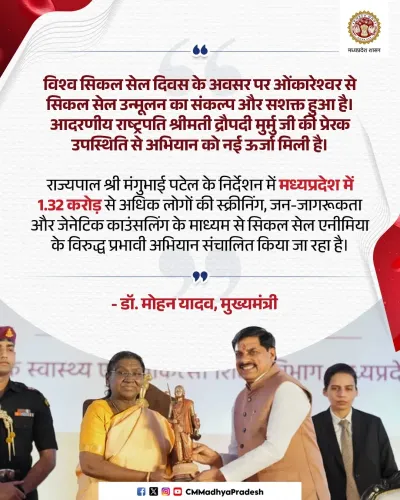
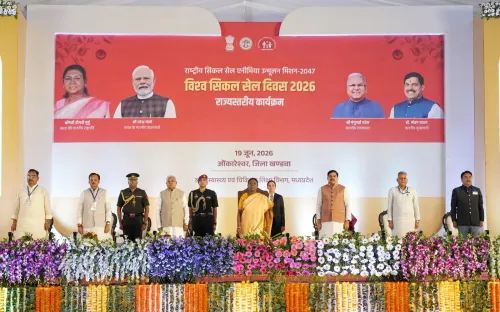
Madhya Pradesh CM Dr. Mohan Yadav will join President Draupadi Murmu and Governor Mangubhai Patel at a state-level World Sickle Cell Day event in Omkareshwar, Khandwa on 19 June 2026, reinforcing India's push to eliminate the disease from tribal communities by 2047.
Key Takeaways
Madhya Pradesh CM Dr.
Mohan Yadav will attend the state-level World Sickle Cell Day ceremony at Omkareshwar, Khandwa on 19 June 2026 at 10:20 AM .
President Draupadi Murmu will be the chief guest; Governor Mangubhai Patel will also be present.
The Union government's National Sickle Cell Anaemia Elimination Mission , launched in 2023 , targets screening 7 crore people aged 0–40 by 2047 .
Sickle cell anaemia prevalence exceeds 10 percent in several Scheduled Tribe communities of central India; Madhya Pradesh has the country's largest tribal population.
Khandwa district and its neighbours are high-burden areas prioritised under the national mission for screening camps and hydroxyurea distribution.
President Murmu is the first person from a Scheduled Tribe community to hold India's highest constitutional office, adding symbolic significance to her chief-guest role.
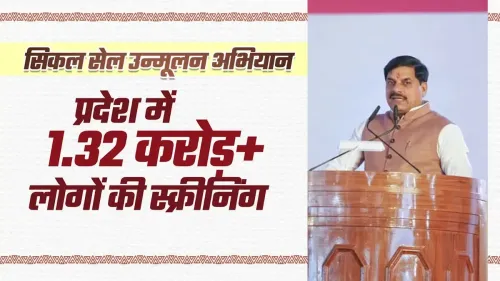
Madhya Pradesh Chief Minister Dr. Mohan Yadav announced on Friday, 19 June 2026, that he will participate in a state-level ceremony marking World Sickle Cell Day at Omkareshwar in Khandwa district, with President Draupadi Murmu as the chief guest and Governor Mangubhai Patel in attendance. The event is scheduled to begin at 10:20 AM.
Context
In his post, Dr. Yadav described the occasion as a step toward 'सिकल सेल मुक्त भविष्य' — 'a sickle-cell-free future' — and confirmed his participation in the state-level function being held under the chief patronage of President Murmu. The presence of the President at a state health event underscores the national significance attached to sickle cell eradication efforts, particularly in tribal-majority states like Madhya Pradesh.
World Sickle Cell Day is observed every year on 19 June, a date established by the United Nations in 2008 to raise global awareness of sickle cell disease and improve access to care for affected communities.
Policy Backdrop
The event sits within a wider national push launched in 2023, when the Union government introduced the National Sickle Cell Anaemia Elimination Mission, targeting the screening of 7 crore people aged 0–40 years with the goal of eliminating the disease as a public-health problem by 2047. Madhya Pradesh, which has the largest Scheduled Tribe population of any state in the country, was among the first to be prioritised under the mission for district-level camps, genetic counselling, and hydroxyurea distribution.
Sickle cell anaemia prevalence exceeds 10 percent in several tribal communities of central India. Districts such as Khandwa and its neighbours in the region are among the high-burden areas where integrated screening and treatment drives have been rolled out through primary-health and tribal welfare channels.
Stakeholders and Impact
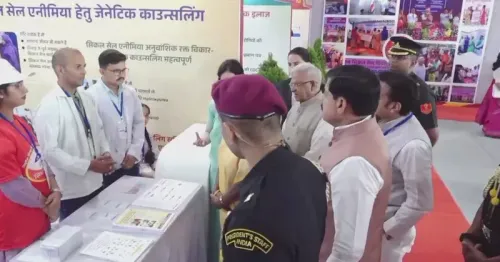
The communities most directly affected are Scheduled Tribe populations across Madhya Pradesh's Malwa-Nimar belt, where sickle cell trait and disease rates are disproportionately high. For these families, state-level observances carry practical significance: they typically accompany mass screening camps, distribution of medicines, and genetic counselling sessions at the block level.
The choice of Omkareshwar — a revered pilgrimage town on the Narmada river — as the venue lends symbolic weight to the programme, connecting a sacred geography central to tribal and Hindu cultural identity with a public-health message aimed at the same communities.
President Draupadi Murmu, herself the first person from a Scheduled Tribe community to hold the nation's highest constitutional office, brings particular resonance to the occasion. Her presence signals the highest level of political and symbolic commitment to the welfare of tribal populations affected by the disease.
What's Next
Attention will now turn to whether the Omkareshwar ceremony is accompanied by concrete state-level announcements — such as dedicated sickle-cell clinics, enhanced hydroxyurea supply chains, or expanded screening targets for 2026–27 — in high-prevalence blocks across Khandwa and neighbouring tribal districts. The event also sets the stage for Madhya Pradesh to demonstrate measurable progress under the national elimination mission ahead of its 2047 deadline, with the President's attendance likely to invite scrutiny of implementation on the ground.
Point of View
The Governor, and the Chief Minister at a single district-level health event in Omkareshwar is a deliberate signal that sickle cell elimination is no longer a peripheral welfare concern but a flagship political commitment. For the BJP, the optics are carefully calibrated: President Murmu's tribal identity makes her the most resonant possible face for a programme targeting communities where the disease is most prevalent. Madhya Pradesh's positioning as the lead state under the national mission also reflects its electoral arithmetic — tribal constituencies are a decisive factor in the state's assembly and Lok Sabha outcomes. The 2047 elimination deadline, tied to 'Viksit Bharat', means progress will be benchmarked publicly, raising the stakes for delivery on screening and treatment beyond ceremonial observances.
NationPress
18 Sept 2026
Frequently Asked Questions
What is World Sickle Cell Day and when is it observed?
World Sickle Cell Day is observed every year on 19 June . It was established by the United Nations in 2008 to raise awareness of sickle cell disease and improve access to treatment and care globally.
What is the National Sickle Cell Anaemia Elimination Mission?
The National Sickle Cell Anaemia Elimination Mission was launched by the Union government in 2023 . It aims to screen 7 crore people aged 0–40 years and eliminate sickle cell disease as a public-health problem in India by 2047 .
Why is Madhya Pradesh a focus area for sickle cell programmes?
Madhya Pradesh has the largest Scheduled Tribe population of any Indian state, and sickle cell anaemia prevalence exceeds 10 percent in several tribal communities of central India. The state has been prioritised under the national mission for mass screening camps, genetic counselling, and hydroxyurea distribution.
Why was Omkareshwar chosen as the venue for the 2026 World Sickle Cell Day event?
Omkareshwar in Khandwa district is a major pilgrimage town on the Narmada river and holds deep cultural significance for tribal and Hindu communities. Its selection connects a geography central to the region's identity with a public-health message directed at the same communities.
Who is attending the World Sickle Cell Day event in Omkareshwar?
President Draupadi Murmu will be the chief guest, Governor Mangubhai Patel will be present in an honorary capacity, and Madhya Pradesh Chief Minister Dr. Mohan Yadav will participate in the state-level ceremony on 19 June 2026 .