CM Mohan Yadav hosts World Sickle Cell Day event in Omkareshwar
Synopsis
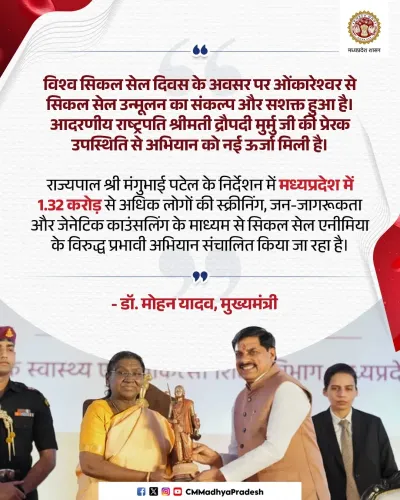
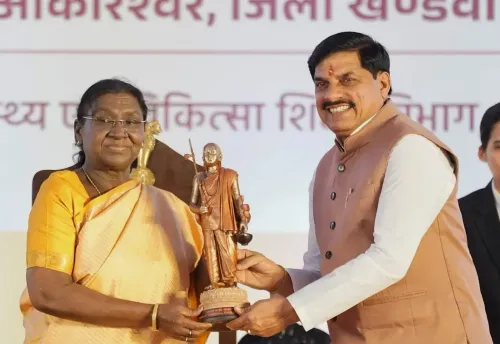
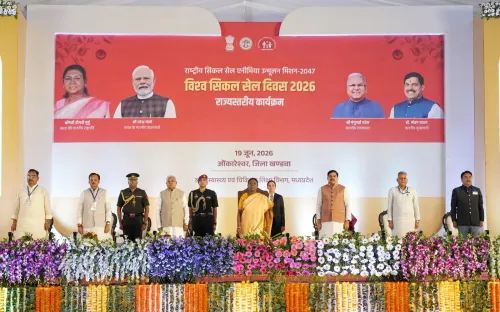
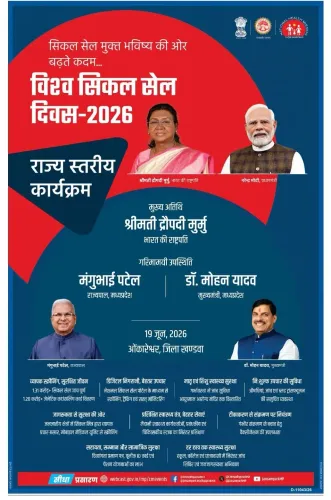
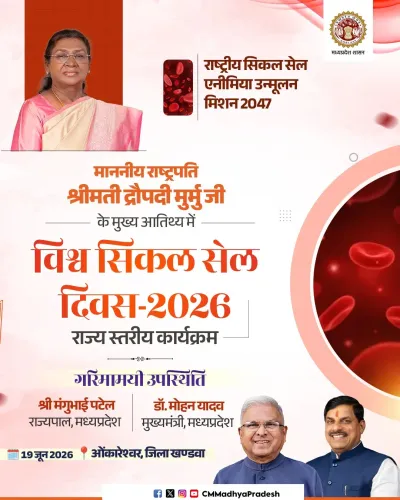
Madhya Pradesh CM Dr. Mohan Yadav hosted a state-level World Sickle Cell Day programme at Omkareshwar, Khandwa on 19 June 2026, with President Draupadi Murmu as chief guest, spotlighting the National Sickle Cell Anaemia Elimination Mission targeting 7 crore screenings by 2047.
Key Takeaways
Madhya Pradesh held a state-level World Sickle Cell Day programme on 19 June 2026 at Omkareshwar, Khandwa district .
Draupadi Murmu , India's first tribal head of state, attended as chief guest.
The event is linked to the National Sickle Cell Anaemia Elimination Mission , launched in January 2023 .
The mission aims to screen 7 crore people aged 0-40 across 17 states and eliminate sickle cell disease by 2047 .
Sickle cell anaemia disproportionately affects tribal communities in central India, including in Khandwa district .
District-wise screening progress and possible budget allocations for genetic counselling centres are expected later in 2026 .
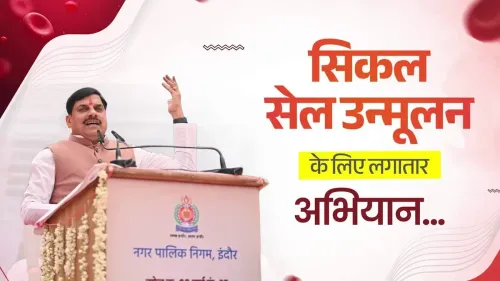
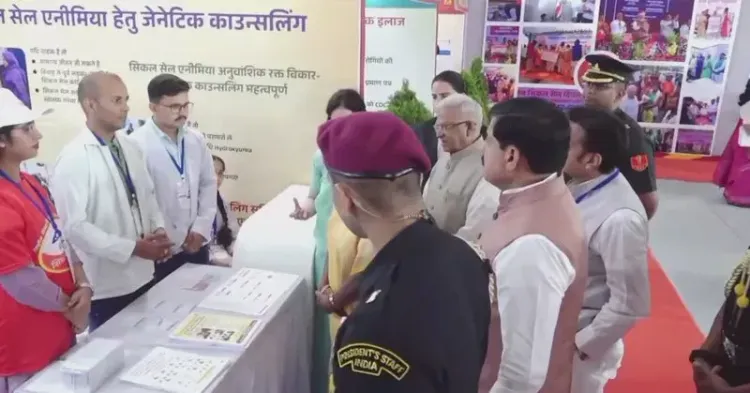
Madhya Pradesh Chief Minister Dr. Mohan Yadav on Friday, 19 June 2026, announced a state-level programme at Omkareshwar, Khandwa district, marking World Sickle Cell Day under the chief guest presence of President Smt. Draupadi Murmu. The event, streamed live, brought together top constitutional and state leadership to spotlight the fight against sickle cell anaemia in Madhya Pradesh.
Context
World Sickle Cell Day is observed every year on 19 June, a date established by the World Health Organisation in 2008 to raise global awareness of sickle cell disease. CM Yadav's post, in Hindi, announced the event as a rashtriya star karyakram (state-level programme) hosted at the sacred Jyotirlinga town of Omkareshwar on the banks of the Narmada river in Khandwa district. The choice of venue carries symbolic weight: Khandwa has a substantial Scheduled Tribe population and is among the districts in Madhya Pradesh where sickle cell prevalence is relatively high.
President Draupadi Murmu, India's first tribal head of state since 2022, has consistently championed events focused on tribal welfare and health. Her participation as chief guest at the Omkareshwar programme underscores the government's framing of sickle cell elimination as both a public health imperative and a tribal development priority.
Policy Backdrop
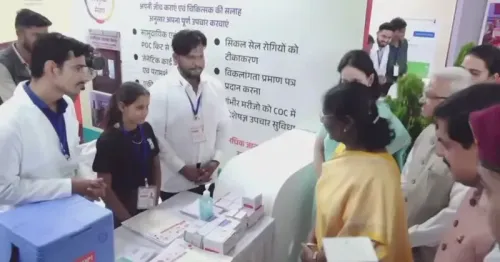
The event is anchored to the National Sickle Cell Anaemia Elimination Mission, a central scheme launched by Prime Minister Narendra Modi in January 2023 at the National Tribal Conclave in Jashpur, Chhattisgarh. The mission targets screening of 7 crore people aged 0 to 40 across 17 high-prevalence states, with a goal of eliminating the disease by 2047. Madhya Pradesh has integrated the national mission into its public health system through mass screening and genetic counselling drives in tribal districts.
Sickle cell anaemia is a hereditary blood disorder that disproportionately affects tribal communities across central India. Unlike many non-communicable diseases, it can be detected early through low-cost screening and managed through counselling, making community outreach programmes like this state-level event critical to the mission's success.
Stakeholders and Impact
The primary beneficiaries of the mission are tribal communities in Madhya Pradesh and across central India, where the genetic disorder is most prevalent. Mass screening drives conducted under the mission help identify carriers and affected individuals, enabling timely medical intervention and pre-marital genetic counselling to reduce intergenerational transmission.
State-level events of this scale — attended by the President and the Chief Minister — serve a dual purpose: accelerating administrative momentum for district-level screening targets and raising community awareness in areas where health literacy around genetic disorders remains limited. For Khandwa district and surrounding tribal blocks, the Omkareshwar programme signals continued state attention to local health infrastructure.
What's Next
District-wise screening progress reports and a possible mid-term review of the mission's targets are expected later in 2026. Observers will watch for any state budget commitments toward dedicated genetic counselling centres in tribal blocks, as well as follow-up outreach programmes in other high-prevalence districts of Madhya Pradesh. The Omkareshwar event is likely to set the tone for how the state escalates its elimination drive in the second half of the year.
Point of View
Not merely an administrative exercise. President Murmu's participation reinforces the Centre's narrative of tribal empowerment under the 2047 elimination mission, lending constitutional weight to what is otherwise a public health drive. For CM Mohan Yadav, the event offers an opportunity to demonstrate alignment with the national mission's targets while anchoring his government's tribal outreach credentials ahead of future electoral cycles. The broader pattern — pairing health policy with symbolic geography like a Jyotirlinga town — reflects how Indian governments increasingly blend cultural resonance with developmental messaging.
NationPress
18 Sept 2026
Frequently Asked Questions
What is World Sickle Cell Day and when is it observed?
World Sickle Cell Day is observed every year on 19 June . It was established by the World Health Organisation in 2008 to raise global awareness about sickle cell disease, a hereditary blood disorder that affects millions worldwide, particularly in tribal and certain ethnic communities.
What is the National Sickle Cell Anaemia Elimination Mission?
The National Sickle Cell Anaemia Elimination Mission is a central government scheme launched by Prime Minister Narendra Modi in January 2023 . It aims to screen 7 crore people aged 0 to 40 across 17 high-prevalence states and eliminate sickle cell disease in India by 2047 .
Why was the World Sickle Cell Day event held in Omkareshwar, Khandwa?
Khandwa district , where Omkareshwar is located, has a substantial Scheduled Tribe population and relatively high sickle cell prevalence. Hosting the event there aligns with the mission's focus on tribal communities and amplifies outreach in a high-need area of Madhya Pradesh.
Who is President Draupadi Murmu and why did she attend?
Smt. Draupadi Murmu has been the President of India since 2022 and is the country's first tribal head of state. She regularly participates in events focused on tribal welfare and health, making her participation as chief guest at the Omkareshwar event a natural extension of that role.
How does sickle cell anaemia affect tribal communities in Madhya Pradesh?
Sickle cell anaemia is a genetic blood disorder that disproportionately affects tribal populations across central India, including in Madhya Pradesh. It is passed from parents to children, and districts with high tribal populations such as Khandwa report higher prevalence, making mass screening and genetic counselling critical interventions.