CM Mohan Yadav: MP fighting sickle cell on four fronts
Synopsis
On World Sickle Cell Day, Madhya Pradesh CM Dr. Mohan Yadav announced the state is working on four simultaneous fronts to eliminate sickle cell anaemia, aligning with the Central government's national mission targeting eradication by 2047.
Key Takeaways
Madhya Pradesh CM Dr.
Mohan Yadav announced a four-front state strategy to eradicate sickle cell anaemia on World Sickle Cell Day, 19 June 2026 .
Madhya Pradesh has one of India's highest sickle cell disease burdens, concentrated in tribal districts.
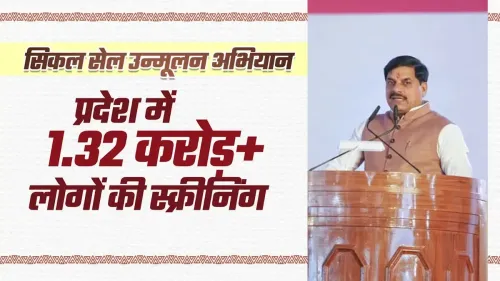
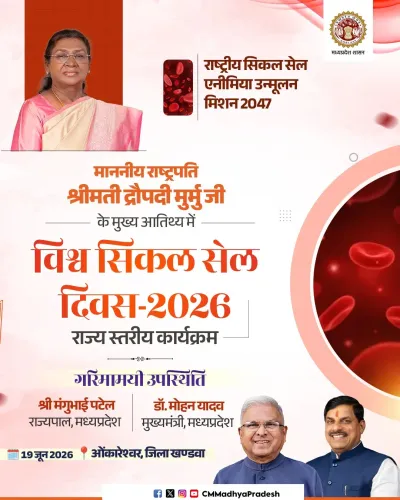
The National Sickle Cell Anaemia Elimination Mission , launched in 2023 , aims to screen 7 crore people aged 0–40 and eliminate the disease by 2047 .
Sickle cell anaemia is prevalent across the tribal belt spanning Madhya Pradesh , Chhattisgarh , Odisha , and Maharashtra .
State-level implementation will focus on screening camps, counselling centres, and integration with district health societies.
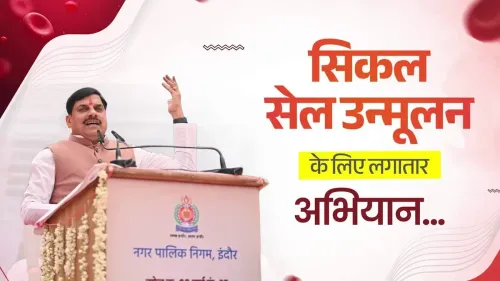
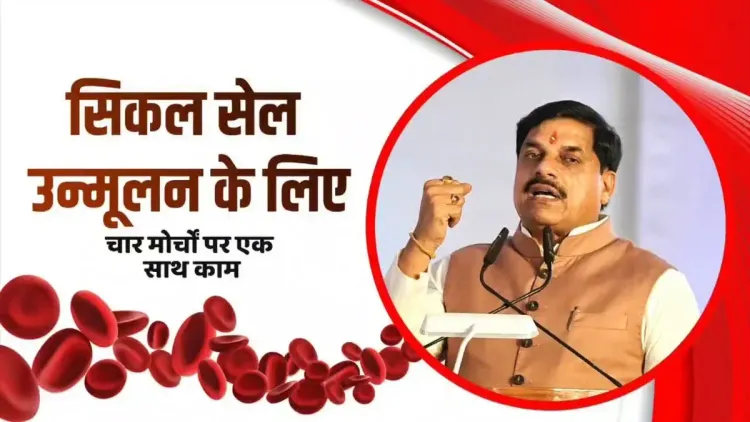
Madhya Pradesh Chief Minister Dr. Mohan Yadav on Friday, 19 June 2026 — World Sickle Cell Day — declared that the state government is simultaneously working on four fronts to eradicate sickle cell anaemia from its roots, underlining the disease as a priority public health challenge for the state.
Context
In his post, Dr. Mohan Yadav stated — 'सिकल सेल एनीमिया को जड़ से समाप्त करने के लिए प्रदेश सरकार एक साथ चार मोर्चों पर काम कर रही है' ('To eliminate sickle cell anaemia from the roots, the state government is working simultaneously on four fronts') — signalling a coordinated, multi-pronged approach rather than a single-stream intervention. The post was shared on World Sickle Cell Day, the annual global observance held every 19 June to raise awareness of the genetic blood disorder.
Madhya Pradesh carries one of the highest burdens of sickle cell disease in the country, concentrated heavily in the state's tribal districts. The disease, which causes chronic anaemia and organ damage, disproportionately affects tribal communities across central India.
Policy Backdrop
The Central government launched the National Sickle Cell Anaemia Elimination Mission in 2023 with the goal of eliminating the disease by 2047. The mission targets the screening of 7 crore people aged 0 to 40 years, alongside genetic counselling for carriers and affected individuals.
Madhya Pradesh, along with Chhattisgarh, Odisha, and Maharashtra, forms the core of India's tribal belt where sickle cell prevalence is highest. State governments in this belt have been tasked with integrating the national mission into district health societies and conducting ground-level screening camps.
Dr. Mohan Yadav, who took charge as Chief Minister in December 2023, has aligned the state's health agenda with the Central mission, framing elimination by 2047 — India's centenary of independence — as a concrete target rather than an aspirational goal.
Stakeholders and Impact
The primary beneficiaries of the state's four-front strategy are Madhya Pradesh's tribal populations, who bear a disproportionate genetic risk for sickle cell disease. Early screening and pre-marital counselling are considered the most effective tools to prevent new cases in successive generations.
Beyond tribal communities, the initiative also addresses sickle cell patients already living with the condition, for whom treatment access, regular blood transfusions, and hydroxyurea therapy remain critical needs. Effective implementation at the district level will determine whether the state's stated ambition translates into measurable reductions in disease prevalence.
What's Next
Attention will now turn to the state government's rollout of the specific four work-streams referenced by Dr. Mohan Yadav, including the scale and reach of screening camps, the establishment of counselling centres, and integration with district health infrastructure. Progress on these fronts will be closely watched as Madhya Pradesh positions itself as a model for sickle cell elimination in tribal India ahead of the 2047 national deadline.
Point of View
Reinforcing the BJP's tribal outreach narrative in a state where tribal voters are a significant constituency. By framing the intervention as four simultaneous fronts, the Chief Minister signals institutional seriousness beyond routine awareness drives — though the specifics of those fronts remain to be made public. This fits a broader pattern of Central and state BJP governments using health missions as both policy instruments and political signals in tribal-majority regions. The real test will be in district-level implementation data, which will determine whether the rhetoric translates into measurable progress.
NationPress
19 Sept 2026
Frequently Asked Questions
What is World Sickle Cell Day and when is it observed?
World Sickle Cell Day is observed every year on 19 June to raise global awareness about sickle cell disease, its prevention, and the challenges faced by patients and their families.
What is the National Sickle Cell Anaemia Elimination Mission?
The National Sickle Cell Anaemia Elimination Mission was launched by the Government of India in 2023 with the goal of eliminating sickle cell anaemia by 2047 through screening 7 crore people aged 0–40 and providing genetic counselling.
Why is sickle cell anaemia a major problem in Madhya Pradesh?
Madhya Pradesh has a large tribal population that is genetically more susceptible to sickle cell disease. The state falls within the central Indian tribal belt — alongside Chhattisgarh , Odisha , and Maharashtra — where the disease's prevalence is among the highest in the country.
What did CM Mohan Yadav say about sickle cell on World Sickle Cell Day 2026?
CM Dr. Mohan Yadav stated on 19 June 2026 that the Madhya Pradesh government is working simultaneously on four fronts to eliminate sickle cell anaemia from its roots, posting his message in Hindi on the occasion of World Sickle Cell Day .
How is sickle cell anaemia treated and prevented in India?
Prevention primarily involves genetic screening and pre-marital counselling to identify carriers. Treatment for those already affected includes regular blood transfusions, hydroxyurea therapy, and supportive care — all of which are being scaled up under the national elimination mission.