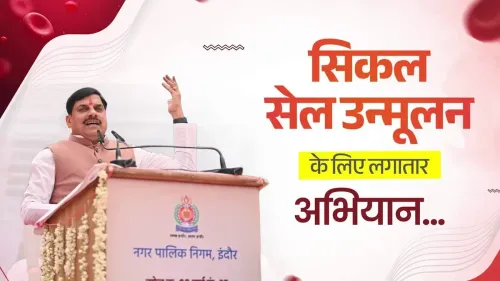
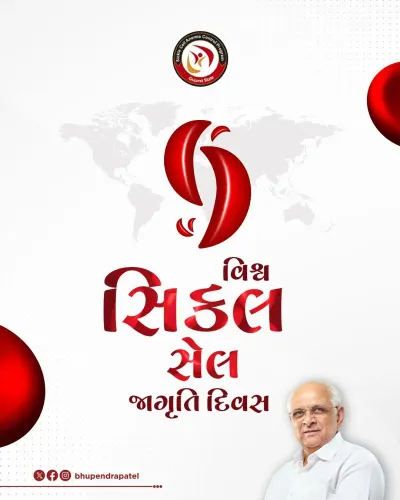
CM Bhajan Lal Calls for Sickle Cell-Free India on World Sickle Cell Day
Synopsis
On World Sickle Cell Day, Rajasthan CM Bhajan Lal Sharma urged citizens to back PM Modi's National Sickle Cell Anaemia Elimination Mission, which targets screening 7 crore people in tribal districts and eliminating the disease by 2047.
Key Takeaways
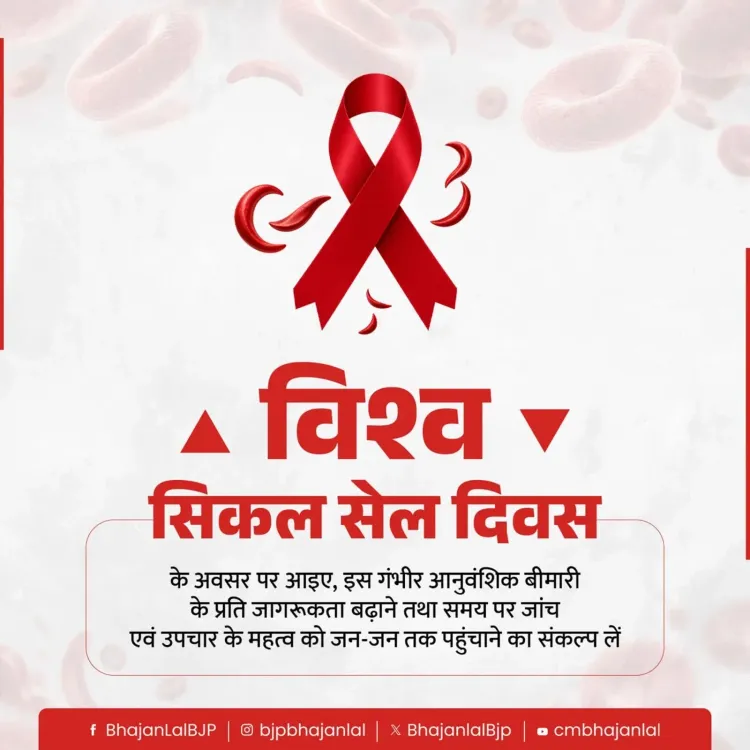
Rajasthan CM Bhajan Lal Sharma posted on World Sickle Cell Day, 19 June 2026 , calling for a pledge on awareness, screening, and treatment of sickle cell disease.
He highlighted the National Sickle Cell Anaemia Elimination Mission led by Prime Minister Narendra Modi as the vehicle for achieving a sickle cell-free India.
The mission, announced in Union Budget 2023-24 , targets screening of 7 crore people in tribal districts with an elimination deadline of 2047 .
Rajasthan , along with Madhya Pradesh and Chhattisgarh, is a key implementation state due to its significant tribal population.
The programme integrates mass screening, genetic counselling, and early detection with Ayushman Bharat digital health infrastructure.
State health departments and frontline workers are central to translating the Central mission into community-level impact.
Rajasthan Chief Minister Bhajan Lal Sharma on Friday, 19 June 2026, marked World Sickle Cell Day by calling on citizens to pledge support for awareness, timely screening, and better treatment of sickle cell disease, while highlighting the Central government's national elimination mission led by Prime Minister Narendra Modi.
Context
World Sickle Cell Day, observed annually on 19 June, is a global health observance dedicated to raising awareness about sickle cell disease — a serious hereditary blood disorder that causes abnormally shaped red blood cells, leading to chronic pain, anaemia, and organ damage. Sharma's post, written in Hindi, urged citizens to 'is gambhir aanuvansik bimari ke prati jagrukta badhane' ('spread awareness about this serious genetic disease') and commit to timely diagnosis and care.
The Chief Minister specifically invoked the national campaign being run under Prime Minister Modi's leadership, calling on people to become partners in realising the vision of a 'Sickle Cell Mukt Bharat' — a Sickle Cell-Free India.
Policy Backdrop
The National Sickle Cell Anaemia Elimination Mission was announced in the Union Budget 2023-24 with a target of eliminating the disease by 2047 — the centenary of India's independence. The mission aims to screen approximately 7 crore people across tribal districts in states including Rajasthan, Madhya Pradesh, and Chhattisgarh, where sickle cell disease is disproportionately prevalent among Scheduled Tribe communities.
The programme integrates mass screening, genetic counselling, and early identification with the broader Ayushman Bharat digital health infrastructure, representing one of the largest targeted genetic disease interventions under the National Health Mission. Haemoglobinopathies such as sickle cell anaemia have long posed a significant public health burden in India's tribal belt, making early detection and community outreach central to the mission's design.
Stakeholders and Impact
Rajasthan, home to a substantial tribal population, is among the states where implementation of the elimination mission carries particular significance. Tribal communities — the primary demographic affected — stand to benefit most from expanded screening camps, access to genetic counselling, and integration with government health schemes.
State health departments play a pivotal role in translating the Central mission into ground-level action, coordinating screening drives, training frontline health workers, and ensuring follow-up care for those identified as carriers or patients. Sharma's public statement on the occasion signals the Rajasthan government's alignment with the national programme's objectives.
What's Next
State-level data on screening camp rollouts and Rajasthan-specific action plan updates are expected to emerge during annual National Health Mission review meetings. The Union government's 2047 elimination target will require sustained momentum in awareness campaigns, especially in remote tribal regions where healthcare access remains limited.
Chief Minister Sharma's call to action on World Sickle Cell Day underscores the growing emphasis on preventive and genetic health in India's public health agenda — a shift that, if backed by consistent state-level execution, could meaningfully reduce the disease burden on the country's most vulnerable communities.
Point of View
Reinforcing the BJP's broader narrative of science-backed, inclusion-focused welfare targeting marginalised tribal communities. By invoking the 2047 elimination target, the messaging ties a public health goal to India's independence centenary — a framing that has become a recurring motif in the ruling party's long-horizon governance pitch. For Rajasthan, a state with substantial Scheduled Tribe constituencies, visible engagement with the sickle cell mission carries both administrative and electoral resonance. The post signals that state governments are being nudged to amplify Central health priorities through their own communication channels, creating a layered federal advocacy structure around the programme.
NationPress
19 Sept 2026
Frequently Asked Questions
What is World Sickle Cell Day and when is it observed?
World Sickle Cell Day is observed every year on 19 June to raise global awareness about sickle cell disease, a serious hereditary blood disorder affecting red blood cells.
What is the National Sickle Cell Anaemia Elimination Mission?
The National Sickle Cell Anaemia Elimination Mission is a Central government programme announced in Union Budget 2023-24 that aims to eliminate sickle cell anaemia in India by 2047 by screening approximately 7 crore people in tribal districts.
Why is sickle cell disease a concern in Rajasthan?
Rajasthan has a significant tribal population, and sickle cell disease is disproportionately prevalent among Scheduled Tribe communities, making the state a priority for screening and elimination efforts under the national mission.
What did Rajasthan CM Bhajan Lal Sharma say on World Sickle Cell Day 2026?
CM Bhajan Lal Sharma urged citizens to pledge to spread awareness, promote timely screening, and support better treatment for sickle cell disease, while backing PM Modi's mission to create a Sickle Cell Mukt Bharat (Sickle Cell-Free India).
How does the sickle cell mission connect to Ayushman Bharat?
The National Sickle Cell Anaemia Elimination Mission integrates its screening, genetic counselling, and early detection activities with the Ayushman Bharat digital health infrastructure to ensure continuity of care for identified patients and carriers.