Gujarat's Swadeshi Mela Expands to 152 Municipalities by March 15
Synopsis
Gujarat's Swadeshi Mela has gained significant traction, having recorded over Rs 83 lakh in sales across 38 municipalities. The initiative aims to promote local artisans and products ahead of its March 15 deadline, showcasing the state's commitment to the 'Vocal for Local' campaign.
Key Takeaways
Gujarat's Swadeshi Mela aims to empower local artisans.
Over Rs 83 lakh in sales recorded so far.
Fairs will be held in all 152 municipalities by March 15.
Initiative is part of the 'Vocal for Local' campaign.
Public participation is growing significantly.
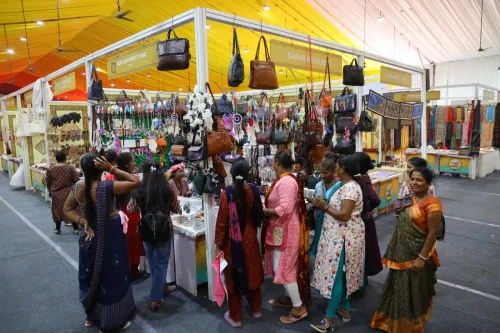
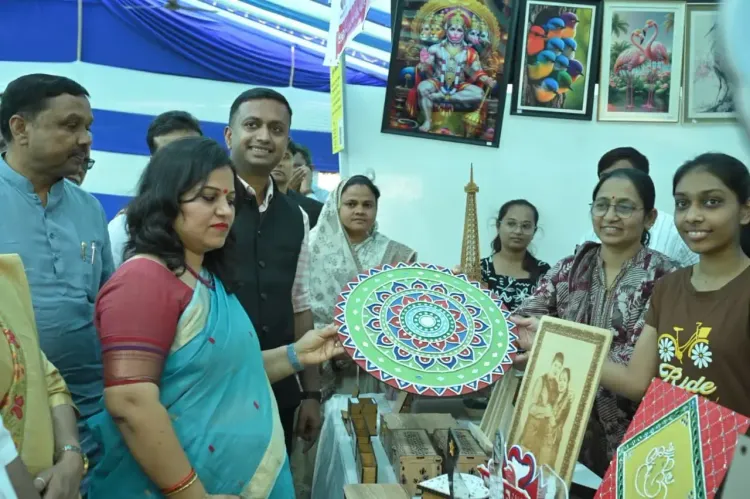
Gandhinagar, Feb 25 (NationPress) Gujarat has seen remarkable momentum in its state-wide Swadeshi Mela (shopping festival), achieving over Rs 83 lakh in sales across 38 municipalities so far, as it approaches its March 15 deadline.
Officials indicate that these Swadeshi Fairs are organized under the Gujarat Urban Livelihood Mission, which operates under the Urban Development and Urban Housing Department.
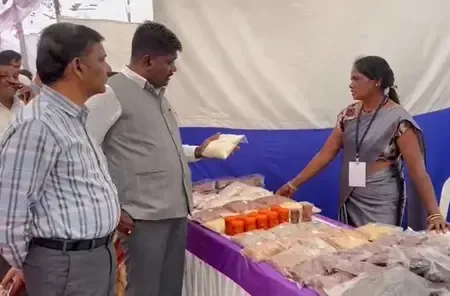
This initiative is designed to create a well-structured marketplace for both rural and urban artisans, handicraft makers, self-help groups, and small traders to exhibit and sell local products.
By the 15th of March, it is planned that Swadeshi Fairs will take place in all 152 municipalities throughout the state.
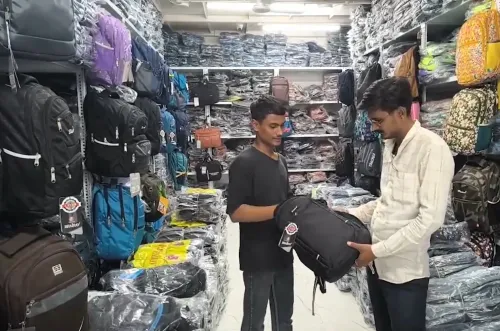
As part of the preparations, over 1,500 stalls have been designated for self-help groups, more than 1,400 for street vendors, around 1,200 for food and refreshments, and over 1,650 for artisans showcasing indigenous goods.
To date, fairs have already been initiated in 38 municipalities, including areas within Ahmedabad, Bhavnagar, Gandhinagar, Rajkot, Surat, and Vadodara.
These events have attracted over one lakh visitors, resulting in sales that exceed Rs 83 lakh.
According to officials, these numbers reflect an increasing public engagement in the 'Vocal for Local' campaign.
This program builds upon the success of the plastic-free Swadeshi Festivals held last year during the Dussehra to Diwali period in 16 cities.
Those festivals drew more than 40.50 lakh visitors and reported sales topping Rs 10 crore.
Prime Minister Narendra Modi has urged citizens to embrace indigenous products as part of the 'Vocal for Local' initiative that aims to foster a self-reliant India.
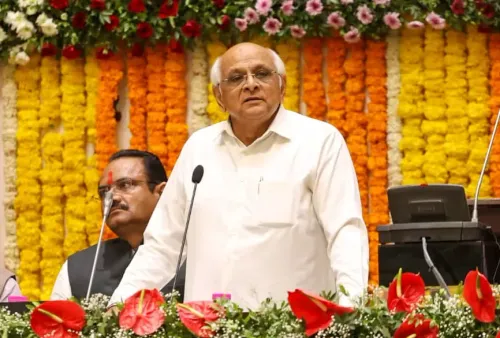
The Gujarat government, led by Chief Minister Bhupendra Patel, has launched several programs including the Gujarat Atmanirbhar Yatra, G-Maitri Yojana, and Mahila Udyog Sahay Yojana to bolster support for artisans and small businesses.
These fairs are envisioned not merely as trading venues but as a strategy to enhance the local economy by broadening opportunities for small producers and vendors across urban regions in the state.
Point of View
It is noteworthy that the Gujarat government's Swadeshi Mela initiative demonstrates a strong commitment to boosting local artisans and promoting indigenous products. The initiative is gaining momentum, reflecting a significant public response to the 'Vocal for Local' campaign, which aligns with broader national goals of self-reliance.
NationPress
20 Sept 2026
Frequently Asked Questions
What is the Swadeshi Mela?
The Swadeshi Mela is a shopping festival organized by the Gujarat government to provide a marketplace for local artisans and small traders to sell indigenous products.
When will the Swadeshi Mela be held?
The Swadeshi Mela is set to be held in all 152 municipalities of Gujarat by March 15.
How much revenue has the Swadeshi Mela generated so far?
The Swadeshi Mela has generated over Rs 83 lakh in sales across 38 municipalities.
Who is organizing the Swadeshi Mela?
The Swadeshi Mela is organized under the Gujarat Urban Livelihood Mission, which is part of the Urban Development and Urban Housing Department.
What is the aim of the Swadeshi Mela?
The aim of the Swadeshi Mela is to enhance local economies by providing opportunities for artisans, self-help groups, and small vendors to showcase and sell their products.