Kashmir before and after 2019 must be judged by facts: Delhi Speaker Vijender Gupta
Synopsis
Delhi Assembly Speaker Vijender Gupta used a Syama Prasad Mookerjee birth anniversary seminar at Delhi University to make a pointed case: the changes in Jammu and Kashmir since 2019 must be assessed through facts and historical evidence, not political assumptions — framing the abrogation of Article 370 as the long-delayed fulfilment of Mookerjee's six-decade-old conviction.
Key Takeaways
Delhi Assembly Speaker Vijender Gupta called for a fact-based comparison of Jammu and Kashmir before and after 2019 on 13 October 2026 .
He described the effective abrogation of Article 370 as the fulfilment of Syama Prasad Mookerjee's conviction from 1952–53 .
The seminar marks the 125th Birth Anniversary of Mookerjee, organised by Sahitya Akademi at Shyama Prasad Mukherji College for Women, Delhi University .
Gupta emphasised that the 'Viksit Bharat' vision must encompass educational excellence and institutional accountability beyond economic metrics.
The two-day event is held under the theme 'Intellectual Legacy, National Vision and the Journey towards Viksit Bharat' .
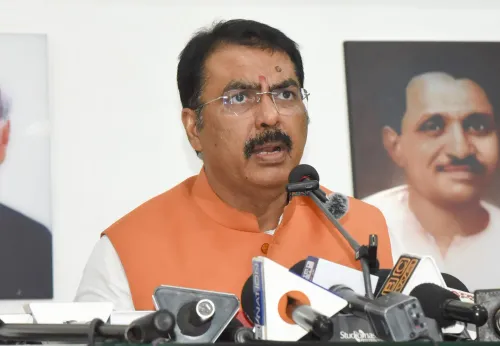
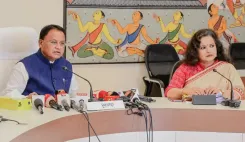
Delhi Assembly Speaker Vijender Gupta on Tuesday, 13 October 2026, called on citizens — and especially the younger generation — to assess Jammu and Kashmir before and after 2019 through verifiable evidence and historical context, rather than political assumptions. Speaking at the inaugural session of a two-day seminar at Shyama Prasad Mukherji College for Women, Delhi University, Gupta underscored the importance of understanding the constitutional changes introduced in Kashmir under Prime Minister Narendra Modi in August 2019.
The Context: Mookerjee's 125th Birth Anniversary
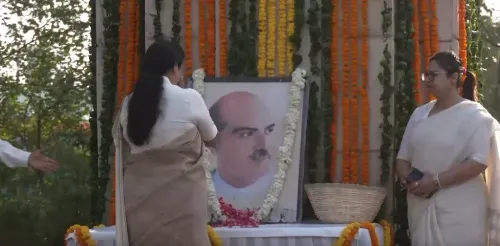
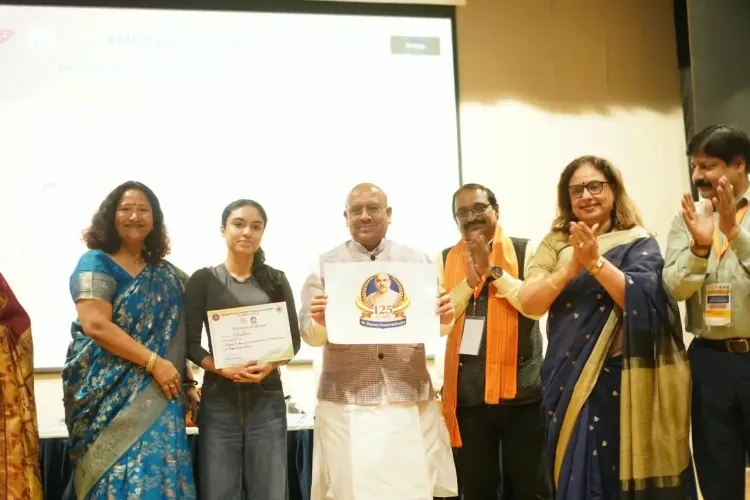
The seminar was organised by Sahitya Akademi in association with Shyama Prasad Mukherji College for Women to commemorate the 125th Birth Anniversary of Syama Prasad Mookerjee. Held under the theme 'Intellectual Legacy, National Vision and the Journey towards Viksit Bharat', the event brought together academicians, scholars and students for deliberations on Mookerjee's intellectual legacy and the continuing relevance of his ideas to India's future.
The inaugural ceremony was attended by Varun Gulati, Sahitya Akademi Secretary; K.G. Suresh, India Habitat Centre Director; and Balaram Pani, Delhi University's Dean of Colleges.
Gupta's Core Argument on Article 370
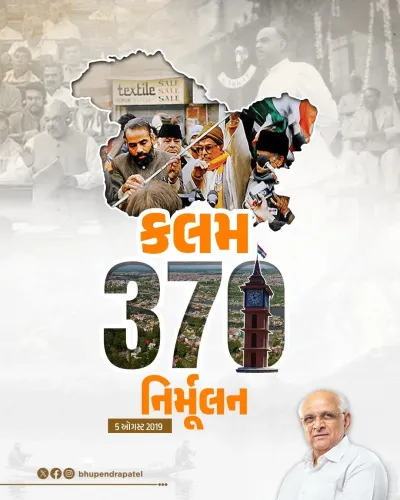
Gupta described the Centre's decision to effectively abrogate Article 370 in 2019 — with Union Home Minister Amit Shah steering the Parliamentary process — as the culmination of a struggle initiated more than six decades earlier by Mookerjee himself. He argued that changes in governance, development, public institutions and opportunities in Jammu and Kashmir must be examined through fact-based comparison rather than partisan assumptions.
'The younger generation, in particular, must be acquainted with the circumstances in which Mookerjee pursued his convictions and the larger constitutional questions surrounding the movement,' Gupta said.
He recalled Mookerjee's lifelong commitment to national integration and described the 2019 constitutional changes as the fulfilment of an aspiration that had shaped Mookerjee's political movement in 1952–53.
Mookerjee's Legacy: Education and Institution-Building
Gupta stressed that Mookerjee's legacy extended well beyond politics. Calling him a 'distinguished educationist and former Vice-Chancellor of the University of Calcutta,' Gupta said Mookerjee regarded scholarship and institutional excellence as foundations of nation-building.
The Delhi Assembly Speaker emphasised that universities must foster independent inquiry, informed debate and critical engagement — both with history and with contemporary challenges facing India.
Vision of 'Viksit Bharat'
Gupta argued that the vision of 'Viksit Bharat' must extend beyond economic growth and technological advancement to encompass educational excellence, scientific research, institutional accountability and equitable opportunities. The seminar's two-day format is expected to deepen discussion on how Mookerjee's ideas continue to inform contemporary national discourse.
Point of View
The speech attempts to insulate the BJP's position from purely ideological critique. The call for 'verifiable evidence' is rhetorically interesting: it implicitly challenges critics to engage on developmental metrics in J&K, a terrain where the government believes the data favours its narrative. Whether that confidence is warranted depends on which indicators — elections, security incidents, investment flows, or civil liberties benchmarks — one chooses to foreground.
NationPress
13 Oct 2026
Frequently Asked Questions
What did Delhi Assembly Speaker Vijender Gupta say about Kashmir and 2019?
Gupta called on citizens and especially young people to examine Jammu and Kashmir before and after 2019 through verifiable facts and historical context. He argued that changes in governance, development, public institutions and opportunities in J&K should be assessed on evidence rather than political assumptions.
What is the connection between Syama Prasad Mookerjee and Article 370?
Syama Prasad Mookerjee led a political movement in 1952–53 opposing the special constitutional status granted to Jammu and Kashmir and advocating for full national integration. Gupta described the 2019 abrogation of Article 370 as the fulfilment of the conviction Mookerjee pursued during that movement.
Where was the seminar on Mookerjee's 125th birth anniversary held?
The two-day seminar was held at Shyama Prasad Mukherji College for Women, Delhi University, organised by Sahitya Akademi in association with the college. It runs under the theme 'Intellectual Legacy, National Vision and the Journey towards Viksit Bharat'.
Who attended the inaugural session of the Mookerjee seminar?
The inaugural session was attended by Varun Gulati (Sahitya Akademi Secretary), K.G. Suresh (India Habitat Centre Director), and Balaram Pani (Delhi University's Dean of Colleges), along with academicians, scholars and students.
What is the 'Viksit Bharat' vision that Gupta referred to?
Gupta described 'Viksit Bharat' as a national vision that must go beyond economic growth and technology to include educational excellence, scientific research, institutional accountability and equitable opportunities. He linked this broader vision to Mookerjee's legacy as an educationist and institution-builder.