Gwalior Telecom Zone draws ₹3,611 crore investment, to generate 15,000 jobs
Synopsis
Madhya Pradesh's Gwalior Telecom Manufacturing Zone just landed ₹3,611 crore in investment proposals for its first phase alone — with 25 investors already holding allotment letters and a second phase of 450 acres already in motion. If the 15,000-job projection holds, Gwalior could emerge as a credible node in India's telecom manufacturing map, sitting 20 minutes from an international airport and soon 50 minutes from Agra.
Key Takeaways
The first phase of the Gwalior Telecom Manufacturing Zone (TMZ) has drawn investment proposals worth ₹3,611 crore , projected to create over 15,000 jobs .
Chief Minister Mohan Yadav and Union Minister Jyotiraditya Scindia launched both phases at an investors' meet in Bhopal on 19 November 2026 .
Allotment letters were handed to 25 investors for Phase 1 ( 170 acres ); Phase 2 will cover 450 acres .
The Centre has contributed ₹493 crore for the first phase; ownership is split 51% state and 49% Centre .
Madhya Pradesh has removed 27 compliance requirements and 925 laws to ease the business environment.
Electronics manufacturing has grown seven-fold and mobile manufacturing 35-fold nationally since 2014, with exports rising from ₹38,000 crore to ₹4.24 lakh crore .
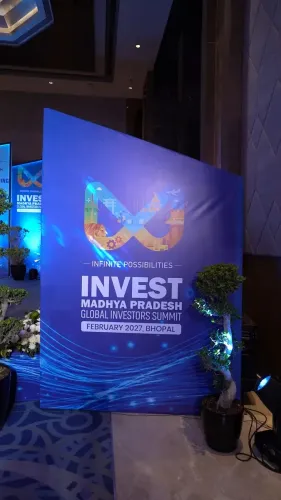
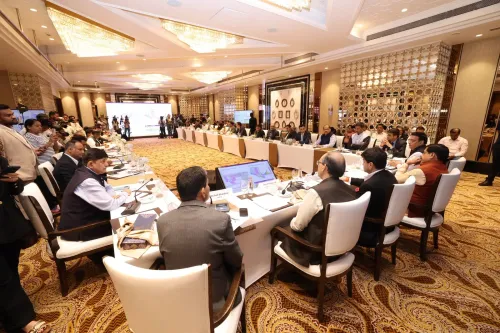
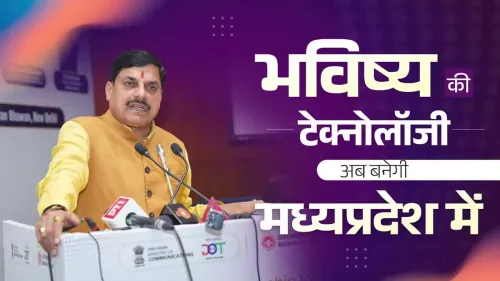
The first phase of the Gwalior Telecom Manufacturing Zone (TMZ) in Madhya Pradesh has attracted investment proposals worth ₹3,611 crore, expected to generate more than 15,000 jobs, Chief Minister Mohan Yadav announced on Thursday, 19 November 2026. The launch, held at an investors' meet in Bhopal, marks a significant step in India's push to build domestic telecom manufacturing capacity.
Key Developments at the Launch
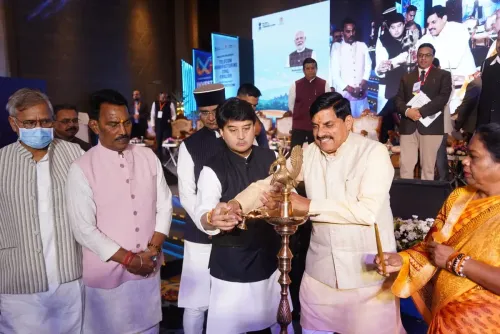
Chief Minister Mohan Yadav and Union Communications Minister Jyotiraditya Scindia jointly launched the first phase of the project at the Bhopal investors' meet, and also formally initiated its second phase, to be developed over 450 acres. Yadav handed over allotment letters to 25 investors for the first phase, which spans 170 acres. The zone is being jointly developed by the state and Central governments, with participation ratios of 51 per cent and 49 per cent respectively. The Union Telecom Department has contributed ₹493 crore towards the first phase, according to Additional Secretary Shyamal Mishra.
What the Government Said
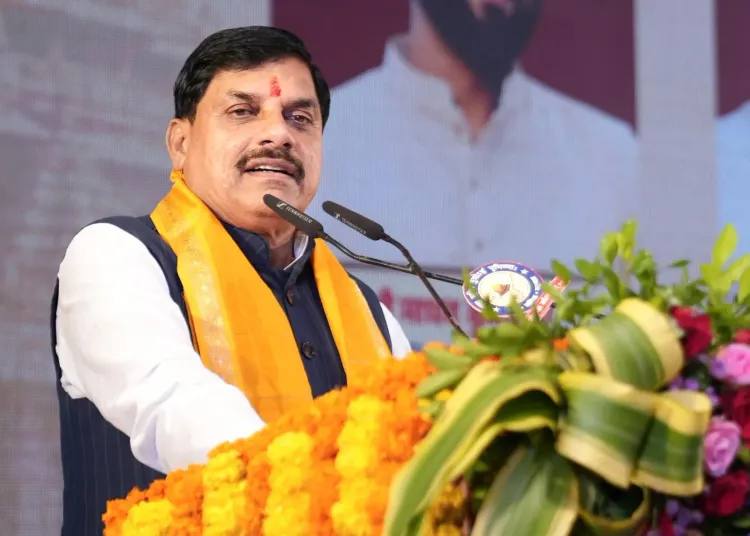
Addressing investors, Yadav emphasised implementation over announcements. 'Under the leadership of Prime Minister Narendra Modi, the country is changing. With the strength of the double-engine government, Madhya Pradesh is not limited to announcements but is taking development projects to the ground at a rapid pace,' he said. He noted that the state government signed an agreement with the Union Telecom Ministry in July 2026 and issued allotment letters for the first phase within four to five months — a timeline he cited as evidence of execution speed. Yadav also said the state had removed around 27 unnecessary compliance requirements and 925 laws to ease the business environment, alongside offering land, electricity, and water at affordable rates.
India's Telecom and Electronics Growth in Context
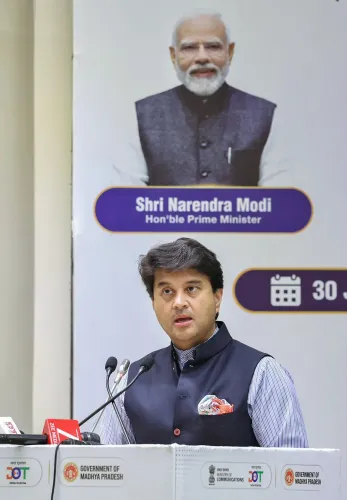
Scindia highlighted the broader momentum in India's telecom sector, noting that broadband subscribers had grown from six crore in 2014 to 102 crore, while Internet connections had risen from 25 crore to 110 crore. Around 50 crore people are currently using 5G services in the country. 'India is moving from being the largest consumer of telecom services to becoming a service provider,' Scindia said. On the manufacturing side, Yadav pointed to a seven-fold increase in electronics manufacturing and a 35-fold rise in mobile manufacturing since 2014, with exports of electronic equipment climbing from ₹38,000 crore to ₹4.24 lakh crore.
Infrastructure and Location Advantage
Scindia highlighted Gwalior's strategic location and transport connectivity as key draws for industry. The upcoming Gwalior-Agra Expressway is expected to reduce travel time between the two cities to roughly 50 minutes, while the manufacturing zone sits approximately 20 minutes from Gwalior International Airport. The zone will feature a plug-and-play facility and dedicated research and development infrastructure to support telecom manufacturing businesses.
What Comes Next
With allotment letters already in hand for the first phase and the second phase formally initiated, attention now shifts to actual ground-level execution and whether the projected 15,000-plus jobs materialise on the stated timeline. Industry observers will closely track disbursement of the Centre's ₹493 crore contribution and the pace of construction across both phases.
Point of View
611 crore figure is a proposal tally, not committed capital — a distinction that matters when benchmarking against past investors' meet announcements that have frequently exceeded ground-level disbursements. Madhya Pradesh's decision to issue allotment letters within four to five months of signing the July 2026 MoU is a genuinely faster cadence than the state's historical norm, but the real test is construction pace and actual hiring. Gwalior's proximity to Delhi-NCR and the Agra corridor is a structural advantage that could make this zone stickier than typical greenfield announcements. However, with 50 crore 5G users already on the network and domestic demand robust, the window for becoming a meaningful telecom equipment exporter — not just a consumer-market supplier — is both real and time-limited.
NationPress
19 Nov 2026
Frequently Asked Questions
What is the Gwalior Telecom Manufacturing Zone (TMZ)?
The Gwalior Telecom Manufacturing Zone is a joint state-Centre industrial project in Madhya Pradesh designed to build domestic telecom equipment manufacturing capacity. Its first phase spans 170 acres and has attracted investment proposals worth ₹3,611 crore, while its second phase will cover 450 acres.
How many jobs will the Gwalior TMZ create?
The first phase of the Gwalior TMZ is projected to create more than 15,000 jobs, according to Chief Minister Mohan Yadav. The figure is based on investment proposals received; actual employment outcomes will depend on the pace of construction and operations.
Who are the key officials behind the project?
Chief Minister Mohan Yadav and Union Communications Minister Jyotiraditya Scindia jointly launched both phases of the zone at an investors' meet in Bhopal on 19 November 2026. The Centre's contribution of ₹493 crore for Phase 1 was confirmed by Union Telecom Department Additional Secretary Shyamal Mishra.
What is the ownership structure of the Gwalior TMZ?
The zone is being jointly developed by the Madhya Pradesh state government and the Central government, with the state holding a 51 per cent stake and the Centre holding 49 per cent. The two governments signed an agreement in July 2026.
What infrastructure advantages does Gwalior offer for telecom manufacturing?
Gwalior offers strong transport connectivity, including proximity to the upcoming Gwalior-Agra Expressway that will cut travel time between the two cities to around 50 minutes. The TMZ is also approximately 20 minutes from Gwalior International Airport, and the zone will include plug-and-play facilities and R&D infrastructure.