Haldwani women turn festivals into self-reliance
Synopsis
The Chief Minister's Office of Uttarakhand on 18 November 2026 spotlighted the Mangalam Gram Sangathan of Golaapar, Haldwani, whose women turned Diwali and Navratri into self-employment opportunities, offering a replicable model of rural women's self-reliance in Nainital district.
Key Takeaways
Mangalam Gram Sangathan , a women's collective based in Golaapar, Haldwani, Nainital district , was highlighted by the Uttarakhand CMO on 18 November 2026 .
The group converted Navratri and Diwali festive seasons into self-employment opportunities, exemplifying rural women's enterprise.
Their model is described as 'aatmanirbharta ki ek anukaraneey misaal' — an exemplary model of self-reliance.
Festival-linked micro-enterprise is a recurring pattern in Uttarakhand's hill districts, where women's self-help groups anchor rural livelihoods.
Official CMO recognition can accelerate replication of this model across other hill districts such as Pithoragarh, Chamoli, and Bageshwar.
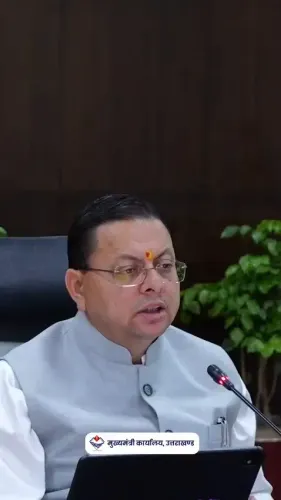
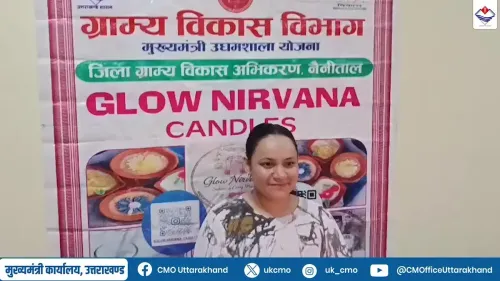
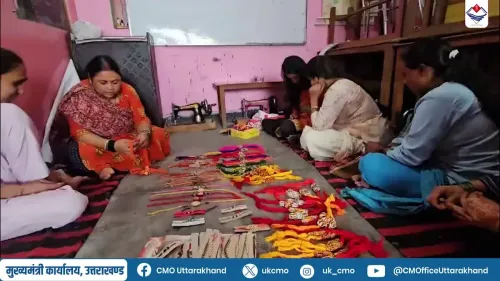
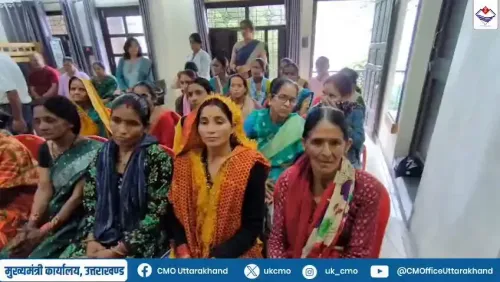
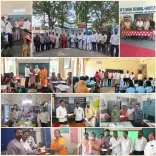
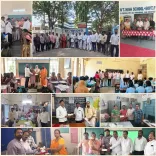
In the foothills of Uttarakhand, a group of women in Haldwani's Golaapar locality did not wait for opportunity — they built it out of Diwali and Navratri. The Chief Minister's Office of Uttarakhand on Wednesday, 18 November 2026, spotlighted the Mangalam Gram Sangathan, a women's collective from Nainital district, for transforming two of India's biggest festive seasons into a springboard for economic independence.
The CMO's post declared that the women of Mangalam Gram Sangathan had set 'aatmanirbharta ki ek anukaraneey misaal' — 'an exemplary model of self-reliance' — by converting the sacred occasions of Diwali and Navratri into concrete self-employment opportunities.Who is Mangalam Gram Sangathan?
The Mangalam Gram Sangathan is a women's group rooted in Golaapar, Haldwani, a town that serves as one of the main commercial gateways to the Kumaon hills in Nainital district. The collective exemplifies a wider pattern across Uttarakhand's hill districts, where women's self-help groups and micro-enterprises have emerged as anchors of rural livelihoods — particularly in areas where male outmigration is high and steady income is scarce.
Festivals as an economic lever
The timing is deliberate and smart. Navratri and Diwali together generate a surge in demand for handmade goods — diyas, decorations, food items, ritual materials — that mass manufacturing cannot fully satisfy. By channelling collective effort into festival-season production and sales, groups like Mangalam Gram Sangathan tap a predictable, high-footfall window to generate meaningful seasonal income.
Uttarakhand's state government has long backed women's self-help groups and rural livelihood missions as a development priority. Festival-linked enterprise is increasingly seen as one of the most replicable models — low capital entry, strong community knowledge, and a ready local market.
A template worth watching
What makes the CMO's decision to amplify this story significant is the signal it sends: state-level visibility can accelerate replication. When a grassroots success in Nainital gets official recognition, it becomes a blueprint for similar collectives in Pithoragarh, Chamoli, Bageshwar, and other hill districts still searching for sustainable women-led livelihood models.
The women of Golaapar did not simply survive the festive season — they owned it. That is the kind of story rural Uttarakhand needs more of.
Point of View
Particularly in hill districts hollowed by outmigration. The festival-economy angle is especially shrewd: it frames cultural tradition not as social ritual but as economic infrastructure. If the state follows visibility with tangible linkages to rural livelihood programmes, the Golaapar model could genuinely scale — but that follow-through is the real test.
NationPress
18 Nov 2026
Frequently Asked Questions
What is Mangalam Gram Sangathan in Haldwani?
Mangalam Gram Sangathan is a women's self-help collective based in Golaapar, Haldwani, Nainital district, Uttarakhand, known for leveraging festive seasons like Navratri and Diwali to create self-employment opportunities for its members.
Why did the Uttarakhand CMO highlight Golaapar women?
The Chief Minister's Office of Uttarakhand highlighted the Mangalam Gram Sangathan on 18 November 2026 because the group transformed Diwali and Navratri into concrete self-employment ventures, presenting an exemplary model of women's self-reliance.
How do women's groups in Uttarakhand use festivals for income?
Women's self-help groups in Uttarakhand use the surge in demand for handmade goods — diyas, decorations, ritual items — during Navratri and Diwali to produce and sell locally, generating seasonal income with low capital requirements.
What is aatmanirbharta in the context of Uttarakhand women?
In this context, 'aatmanirbharta' means self-reliance — the ability of women's collectives to generate their own livelihoods independently through micro-enterprise, reducing dependence on external income sources in hill districts.
Can the Haldwani women's self-employment model be replicated in other Uttarakhand districts?
Yes, the festival-linked micro-enterprise model is considered replicable, particularly in hill districts like Pithoragarh, Chamoli, and Bageshwar where outmigration is high and women-led livelihoods are a development priority.